Planning showers and laundry for a field training exercise
Hygiene support is easy to leave until last when planning an exercise, and it is one of the first things troops notice when it is missing. A good plan sets shower and laundry capacity before the main body arrives.
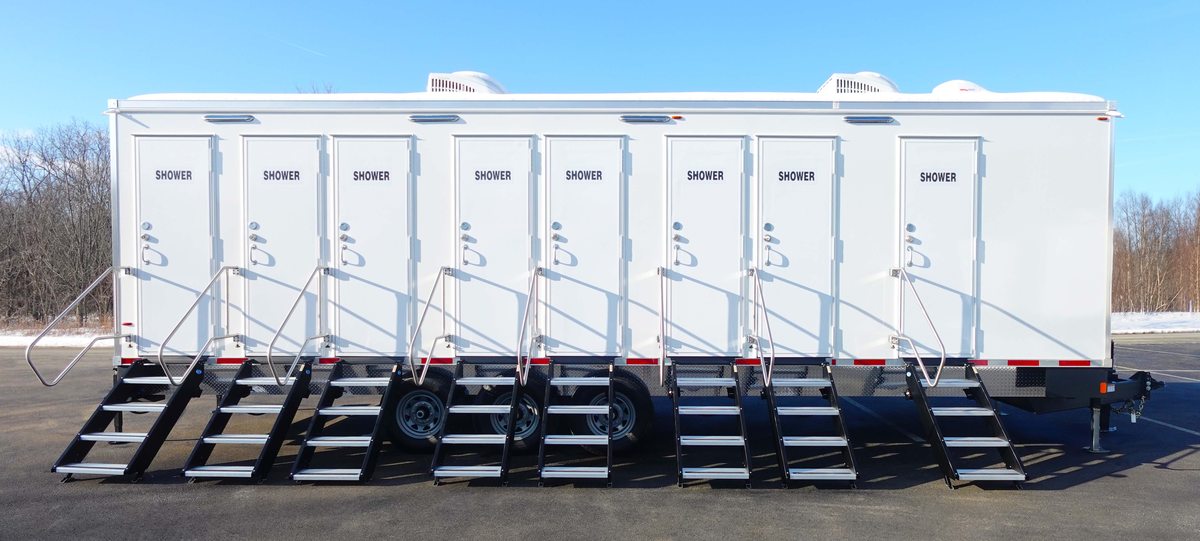
Start with the head count and the length of the exercise. Where showers are required, the federal standard of one shower per 10 people of each sex gives a floor. A site of 300 needs about 30 stalls, or four eight stall trailers.
Next, plan the timing. Troops come back from training in waves, and each wave wants a shower at once. Lay out the trailers so several lines can move at the same time, and place laundry right next to the showers.
Then plan water and waste. Field sites rarely have hookups, so the trailers will run on their own tanks. Pick a service lane where the water truck and pump truck can reach every unit without crossing the training area.
Finally, plan for the end. When the exercise ends, the vendor should drain, clean and pull the units quickly so the site can be cleared on schedule. Set the pickup date in the order from the start.
Keep a short checklist for the exercise officer: head count, dates, site map, service lane, gate contact and range control windows. With those six items, a vendor can quote and plan in one pass.
Sources: 29 CFR 1926.51 Sanitation
Getting contractor deliveries through the gate
Most delays on military deliveries happen at the gate, not on the road. A few steps before delivery day keep trucks moving.
Send driver names and vehicle details to the installation contact ahead of time. Many visitor centers run background checks on contractor drivers, and some need several days to process them.
Make sure drivers carry the identification the installation accepts. Rules vary by site, so confirm them with the contact rather than guessing.
Plan for vehicle inspection. Commercial trucks towing trailers are often inspected at the gate. Build that time into the delivery window so it does not push delivery into a restricted range window.
Confirm escort needs. Some areas require an escort from the gate to the site. Schedule the delivery when the escort is available, and share the escort's contact with the driver.
It also helps to keep the same drivers on the order. Drivers who already hold access at an installation get through the gate faster on each service visit.
Sources: U.S. Department of Defense
Keeping barracks livable during a renovation
Barracks renovations are necessary, and they are hard on the people who live there. Service members still need restrooms and showers close to where they sleep.
Place temporary trailers as close to the building as the facilities office allows, on firm ground with lighting for night use. A short, lit walk matters to people using the trailers at night.
Connect to building water and power where allowed. That cuts refill trips and keeps water hot. Where it is not allowed, self-contained trailers with generators still work.
Service early. Morning service before physical training or first formation means clean units when the rush hits.
Plan the phases. When the renovation moves floor by floor, move the trailers with it so the walk stays short.
When the renovation ends, walk the site with the vendor before pickup and confirm every connection to the building is removed and capped.
Sources: U.S. Army
Water and hygiene during installation emergencies
Installations are small cities with housing, schools and workplaces. When the water system fails, the installation needs the same emergency support a city does.
The Red Hill fuel leak on Oahu in November 2021 showed how long a water emergency can last. Families were moved out of their homes, and the cleanup and defueling ran for years afterward.
Plan drinking water first. Water station trailers filled from a safe source outside the affected system can serve housing areas and workplaces.
Then plan hygiene. Families and workers still need showers and laundry when the tap water is not safe to use. Shower and laundry trailers with their own tanks fill that gap.
Keep a vendor on call. Installations that have a registered vendor with a 24/7 line on file can move in the first hours of an emergency instead of the first days.
Once the emergency passes, plan the handoff back to normal service with the housing office, so units come out as buildings come back online instead of all at once.
Sources: EPA Red Hill
Sleeping space for units when barracks run short
Annual training and large exercises often bring more people than a site has beds. Tents work in some places, but heat, cold and wind make rest hard, and rest is what keeps people safe in training.
Bunkhouse trailers offer a middle path. Our bunkhouse trailer is 34 feet long, runs three air conditioning units and sleeps twelve, which gives a squad a cool, quiet place to sleep.
Place bunkhouse trailers near the shower and restroom trailers so night trips are short. Keep them away from generators and vehicle parking to cut noise.
Plan power for the air conditioning. In desert heat, the units need steady power through the day for troops sleeping after a night mission.
Order them with the showers. A single order that covers sleeping, showers, laundry and restrooms keeps the whole site on one plan and one invoice.
If the unit trains through the night, ask for blackout curtains and quiet generator placement so day sleepers can rest.