How to size a shower unit for a Hawaii operation
Size is the first question. Not the price. How many people, and how fast do they need to cycle through? Get that wrong and you either pay for stalls nobody uses or leave a line standing in the rain. Sizing a shower unit for a Hawaii site starts with headcount and the clock, then works out from there.
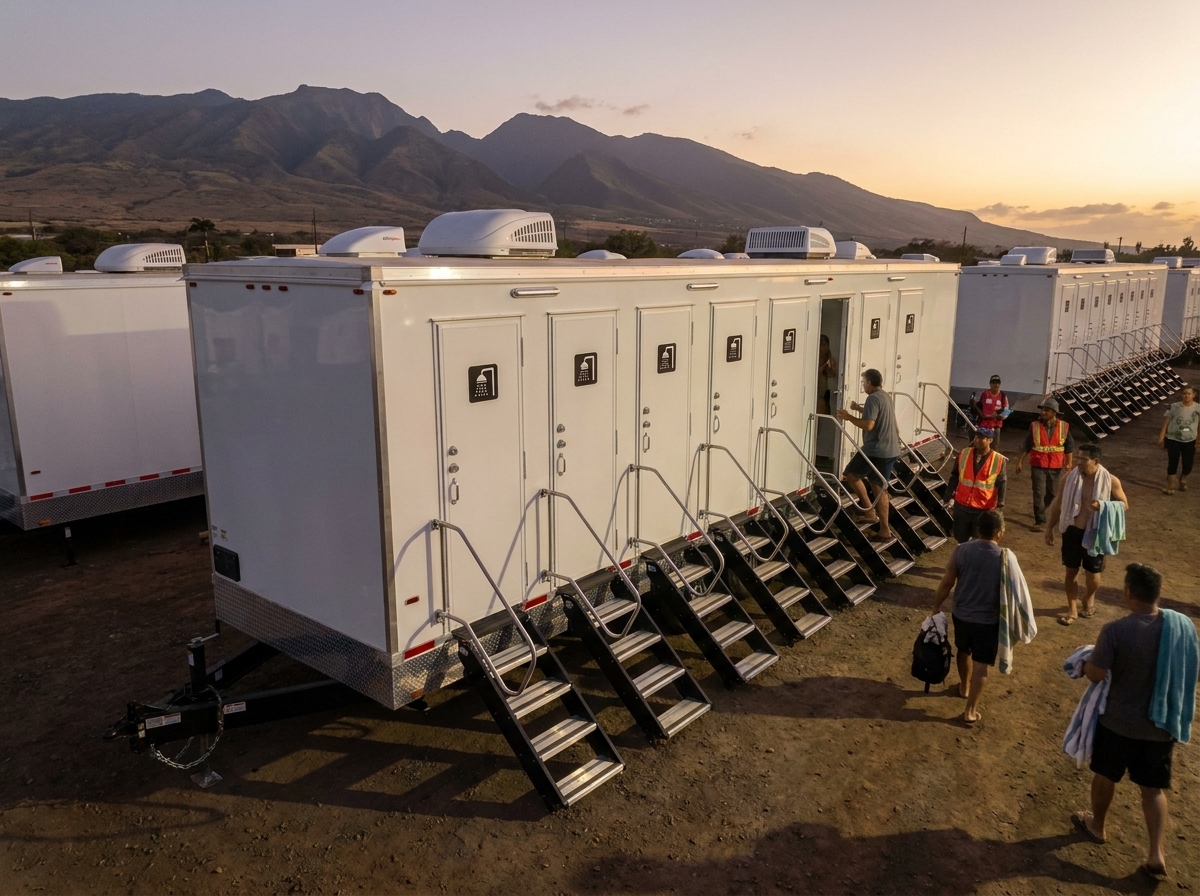
Start with the peak, not the average. A camp might hold forty people all day, but if thirty of them hit the showers in the same hour after a shift, the unit has to handle thirty. So we ask about the shift pattern first. A steady trickle and a hard shift change call for very different setups, even at the same headcount.
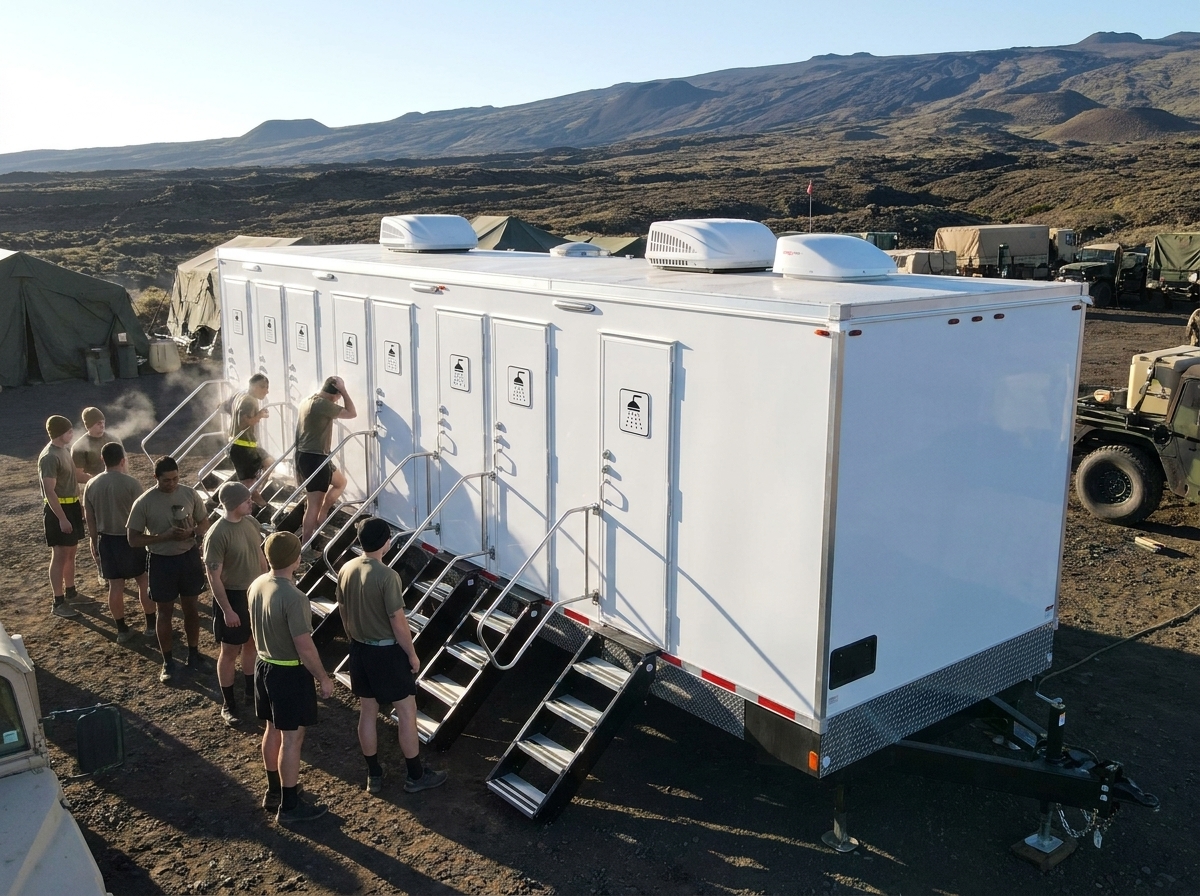
Turnover rate is the number people forget. A large multi-stall unit can turn over dozens of showers an hour, because it runs continuous hot water and enough stalls to keep the line moving. A single stall cannot. And on a tight window, throughput matters more than the raw count of bodies on site.
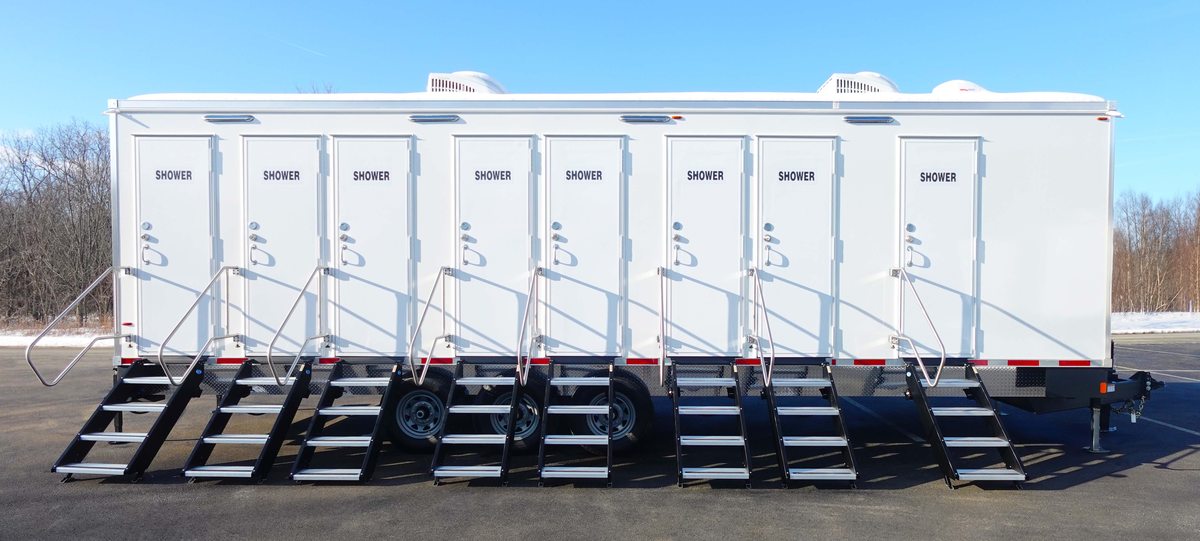
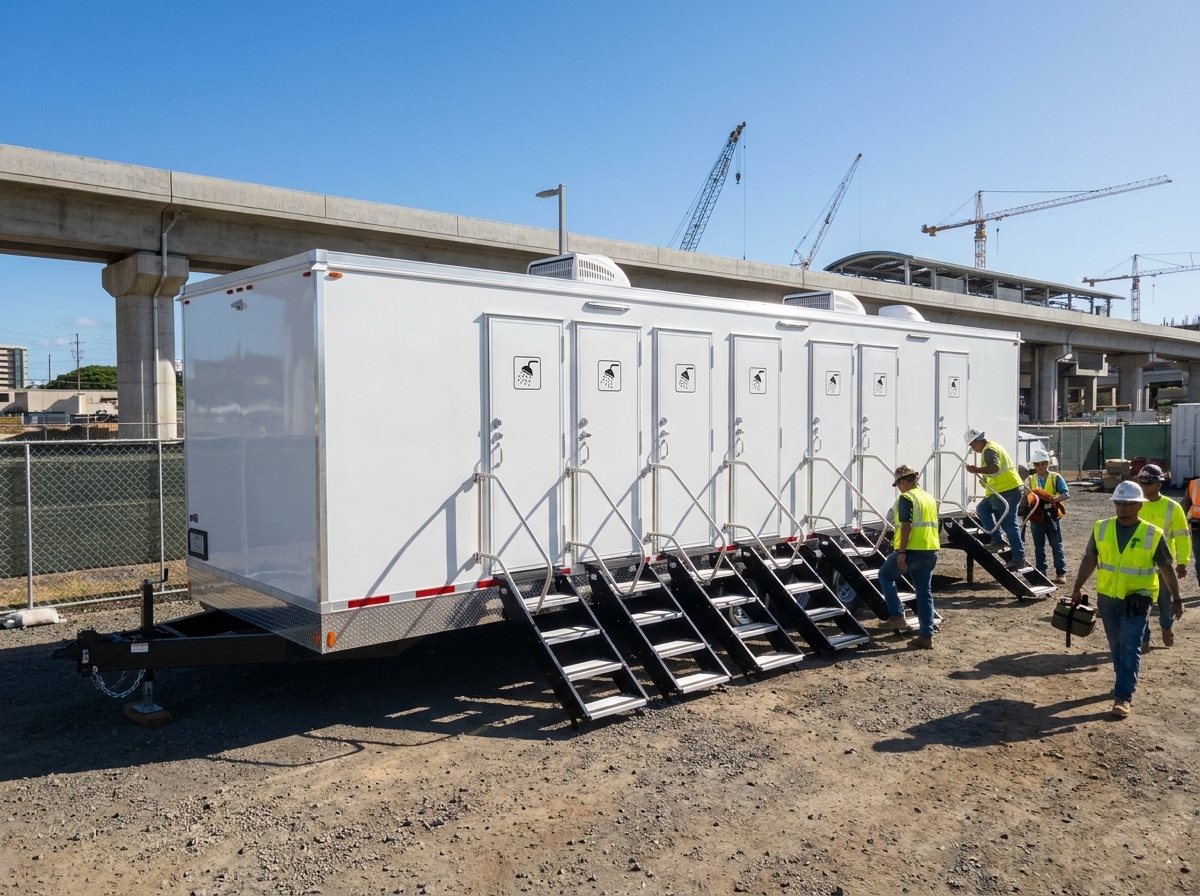
Say you have got a small specialty crew of six on a remote job. A single ADA suite covers them, and it doubles as your accessible stall. Now say that crew grows to sixty as the job ramps. That is an eight-stall block, maybe two. We plan the step-ups so you are not swapping units every few weeks.
Water resupply sets a real limit on a remote site. A self-contained unit carries its own fresh water and heats it onboard, but the tank is finite. The more showers per day, the more often we top it off. On a site far from a hydrant, we build that resupply run into the service schedule so the hot water never quits mid-shift.
Accessibility is part of sizing, not an add-on. Every plan needs at least one stall a person in a wheelchair can roll into. On a shelter or a mixed crew, that is not optional. We fold an ADA suite into the count from the start, so you are covered without scrambling later.
Combos change the math too. A shower and restroom combo, or a shower and laundry combo, puts more than one function on a single footprint. On a cramped island laydown yard where space is tight, that trade can be worth more than a few extra stalls. We walk through what the site can actually fit.
So the sizing conversation is short and specific. Tell us the headcount, the shift windows, whether anyone needs an accessible stall, and how remote the site is. From that we pick the unit, the number of stalls, and the resupply cadence. Then we adjust as the crew grows or shrinks, so you pay for the capacity you use and not a stall more.
Sources: Hawaii Emergency Management Agency · FEMA Maui Wildfires DR-4724-HI
What to ask before you rent a shower trailer in Hawaii
Renting a shower trailer here is easy to get wrong. The unit looks the same in every brochure. What separates a smooth rental from a bad one is the stuff you ask about before you sign. Here is the short list we wish every buyer ran through, with any provider.
Ask if the unit is truly self-contained. Can it run with no water and no power hookup, off its own tanks, and heat the water onboard? On a lot of Hawaii sites there is no hydrant and no grid to plug into. If the answer is no, the unit is wrong for most work out here.
Ask about hot water, specifically. Not whether it has hot water, but how much and for how long. A unit that runs out halfway through a shift change is worse than useless. You want continuous high-output hot water sized to the crowd, so the last person in line still gets a warm shower.
Ask where the greywater goes. Every shower produces wastewater, and in Hawaii it cannot just hit the ground. The provider should capture all of it onboard and haul it to a permitted facility. If they get vague here, that is your problem to inherit later, not theirs.
Ask about accessibility. At least one stall should be a true ADA suite, with ramp entry, a roll-in threshold, a fold-down seat, and grab bars. On a shelter or a public site it may be required. Even on a crew site it is the right call, and you want to know it is available before you need it.
Ask about service, not just delivery. Who cleans it, restocks it, and pumps it, and how often? A shower block that is spotless on day one and ignored after that turns into a health problem fast. Daily service should be part of the deal, not an extra you chase down mid-project.
Ask how they handle the ocean. If your site is on a neighbor island, the unit ships by barge, and the barge schedule sets your delivery date. A provider who plans the sailing window, the port pickup, and the staging is the difference between a unit that lands ready and one stuck at a harbor.
Ask what one bill actually covers. The clean version is delivery, setup, daily service, restocking, greywater and waste handling, and pickup, all in one line with one accountable partner. If those pieces are split across vendors, you are the one holding it together when something slips.
And ask for a name. Who answers the phone at 2 a.m. when a storm moves your timeline? Get a real person and a real number before you commit. If a provider clears all of these, the rental itself is the easy part.
Sources: US Army Garrison Hawaii · SAM.gov federal contracting
Site prep and daily service for a Hawaii shower rental
A shower unit is only as good as the pad it sits on and the service behind it. Get the site prep right and delivery is boring, which is what you want. Get it wrong and the truck cannot even reach the spot. So before we roll, we walk through what the ground needs and what happens after the unit lands.
The truck needs a way in. A shower trailer is heavy, and it comes on a rig that needs room to pull in, drop the unit, and back out. We ask about the access road, any tight turns, and soft ground early, because a beautiful spot the truck cannot reach is no spot at all.
The pad has to be reasonably level and firm. Gravel, packed dirt, or pavement all work. Soft mud does not. On a remote Hawaii lot we look at drainage too, since a heavy rain can turn a fine pad into a bog overnight. A little planning here saves a stuck truck later.
Hookups are optional. If the site has water and power, we can tie in. If it does not, the unit runs off its own tanks and onboard heat. We confirm it before delivery no matter what, so nobody stands around a dry unit wondering where the water was supposed to come from.
Spacing makes a bigger difference than it sounds. You want the entry steps clear, room for a line that does not block traffic, and enough gap for the service truck to reach the tanks. On a cramped laydown yard we lay this out on paper first, so the unit does not box in the rest of the site.
Then the real work starts, and it is daily. Someone cleans the stalls, restocks the soap and paper, checks the hot water, and pumps the tanks on a set schedule. That keeps a shower block sanitary through a long job. A unit nobody services is a unit crews stop using by week two.
Waste and greywater get handled every service run, not saved up. We pump it, haul it to a permitted facility, and keep the records clean. Hawaii wastewater rules are strict about where this can go, so we take that whole problem off the client's plate rather than leaving it for an inspector to find.
Conditions change the service plan. A humid coastal site fights mildew and salt. A cold, high site needs the water system watched so nothing freezes overnight. We match the cadence to the place, because a schedule that works at sea level is not the one a mountain camp needs.
And when the job wraps, teardown is ours too. We pump the tanks a final time, load the unit, and leave the pad the way we found it. Tell us the site and we will tell you exactly what to prep, so the day the trailer arrives there is nothing left to figure out but where to point it.
Sources: Honolulu Authority for Rapid Transportation · Hawaii DOH Wastewater Branch
Getting off-grid hot showers to a neighbor island
Between most Hawaii job sites there is an ocean. That one fact rewrites how a shower rental works here. A unit needed on a neighbor island cannot just be towed over. It ships by barge, and it has to keep making hot water once it lands, often with nothing to plug into.
Start with the crossing. Freight moves by barge through carriers like Young Brothers, under Hawaii Public Utilities Commission oversight. Sailings run on fixed schedules with hard cutoffs. Miss one and delivery slides several days. So we stage a unit to catch a specific sailing instead of hoping it makes the next one.
Staging is the quiet half of the job. A unit often waits at a harbor or a yard before and after a sailing, and on a neighbor island that ground can be state land under DLNR or a private lot. We arrange that space ahead of time, so the unit keeps moving through the port instead of getting hung up with nowhere to sit.
Then it has to run with no grid. Once the unit is on site, the ocean stops being the problem and the hookups do. A self-contained shower unit carries its own fresh water, heats it onboard, and captures all greywater. It does not care whether there is a hydrant or a power drop within a mile.
Hot water is the part crews actually feel. The unit heats its own supply and keeps it flowing, so a private stall stays warm from the first shower to the last. On a cold, high site or a wet coastal one, that onboard heat is the difference between a real shower and a miserable one.
Fuel and water are what off-grid really means. The unit needs its tanks kept full and its heat source fed, and on a remote island lot that is a planned resupply run, not a guess. We fold those runs into the service schedule, so the hot water does not quit halfway through a shift.
Weather and demand tighten the whole system. Barge capacity gets scarce around holidays and after a disaster, which is exactly when showers are needed most, and rough seas can hold a sailing. So we build a buffer into the delivery plan and keep an eye on expedited options when a job cannot wait.
This is why a neighbor-island quote should read differently from an Oahu one. It has to account for the barge window, the port pickup, and the resupply runs that keep an off-grid unit going, not just the trailer and the daily clean. When those are planned up front, there are no surprises the week the unit ships.
So the pitch is simple. Give us the island, the site, and the headcount, and let the logistics conversation be part of the rental, not an afterthought. Then a self-contained unit lands on schedule and pours hot water on a lot where, a week earlier, there was no water at all.
Sources: Young Brothers interisland shipping · Hawaii DLNR