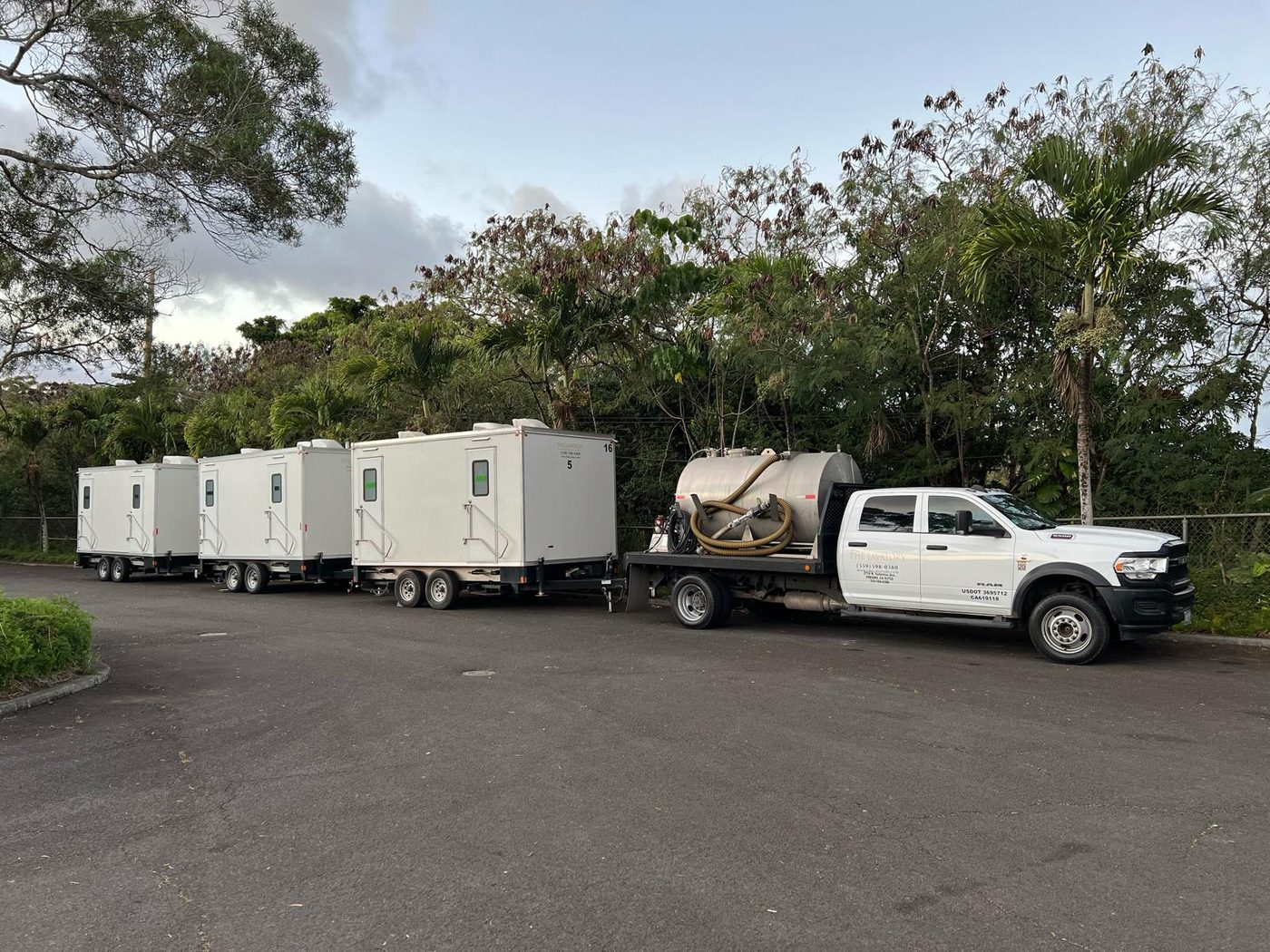
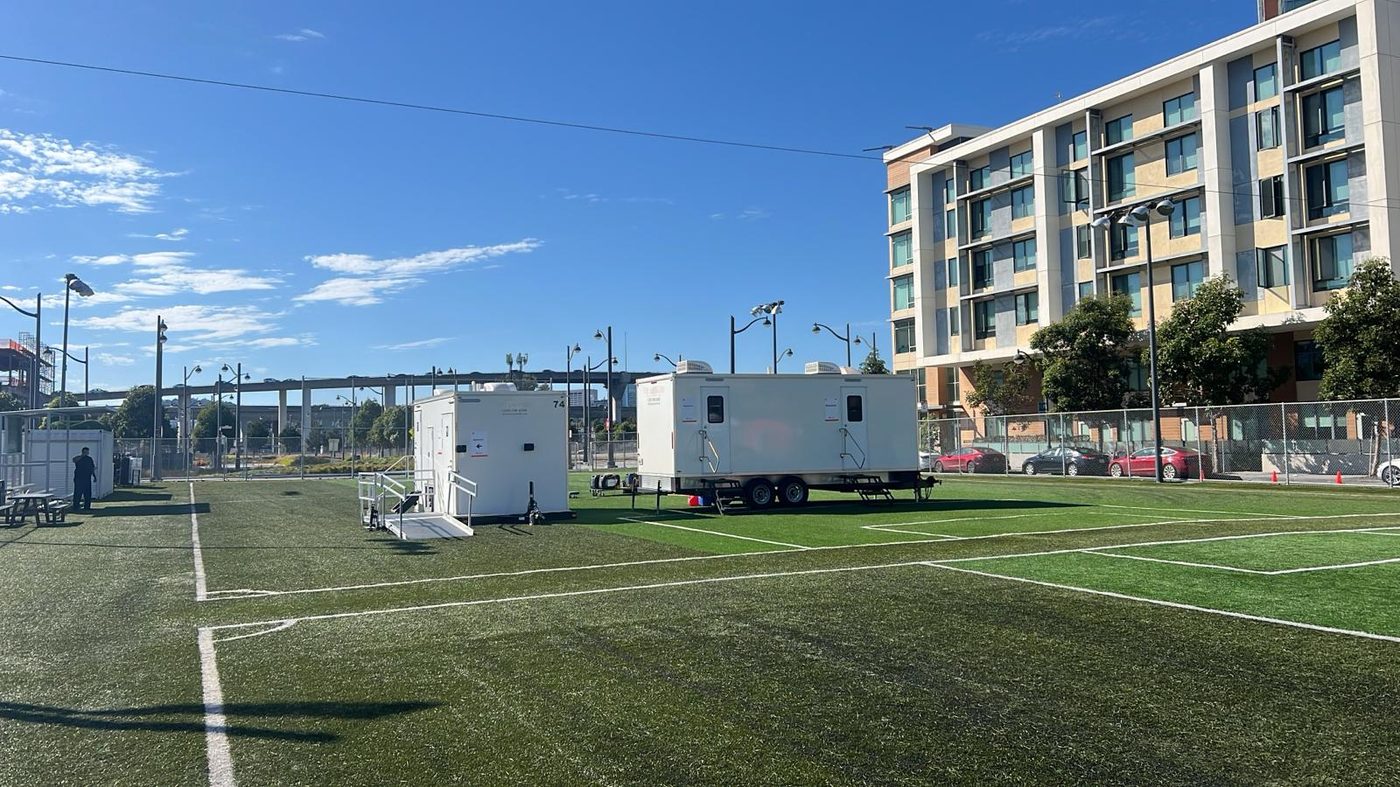
When the work is remote and the motels are full (or an hour away), we deliver the beds. Six private cabins, twelve berths, ordinary power, and a camp plan that pairs sleep with showers, restrooms and laundry from one fleet.
Nobody budgets for fatigue, but every incident report ends up mentioning it. When the nearest vacant room sits an hour from the gate, a twelve hour shift quietly becomes a fourteen hour day. The last two hours happen at highway speed, on heavy eyelids. Our bunkhouse trailer rentals close that gap. The beds come to the work. Crews walk to their berth, charge their phones, sleep behind their own door and clock in eleven minutes after waking up. So the schedule holds and the overtime math improves. The drive home stops being the riskiest task on the job.


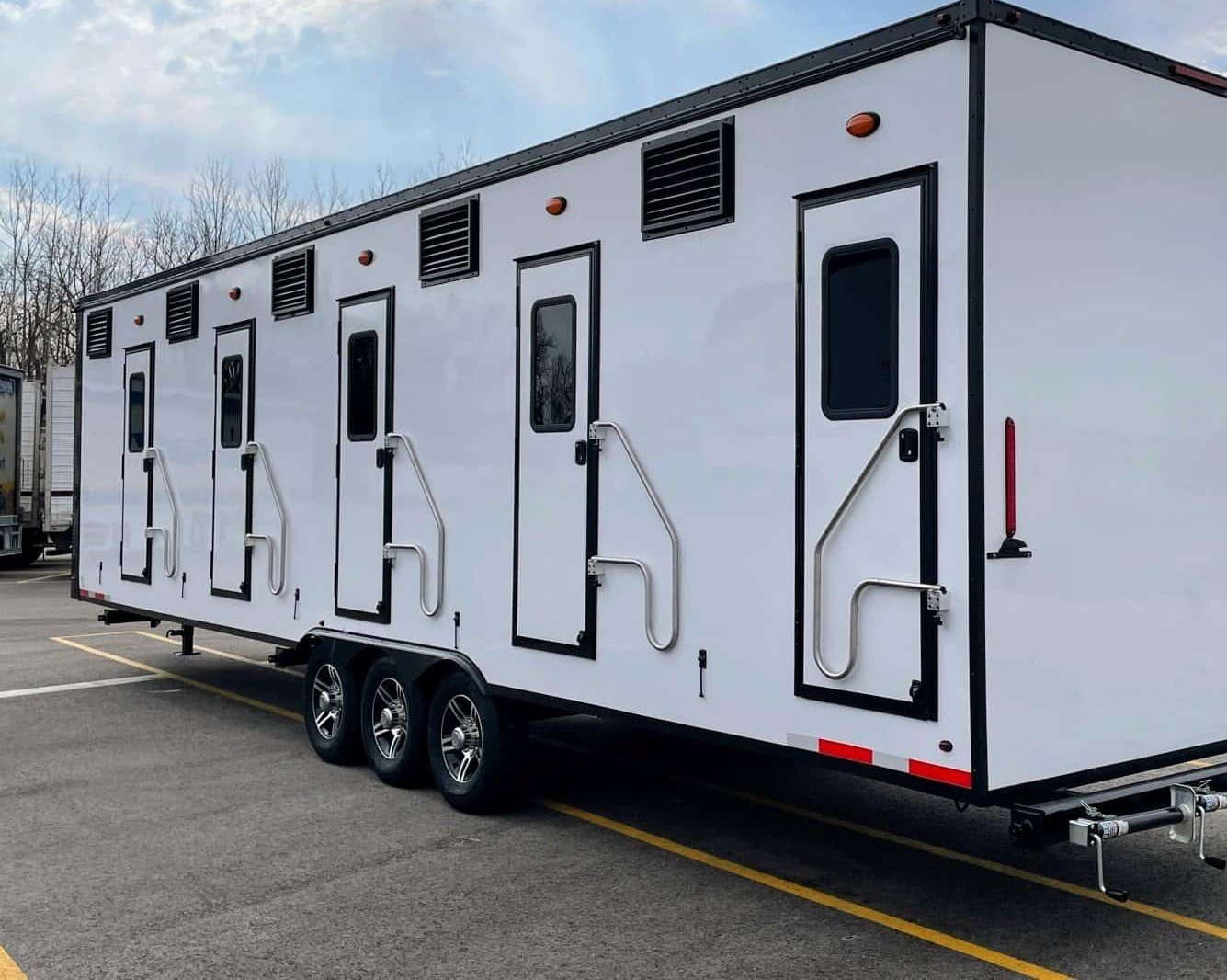
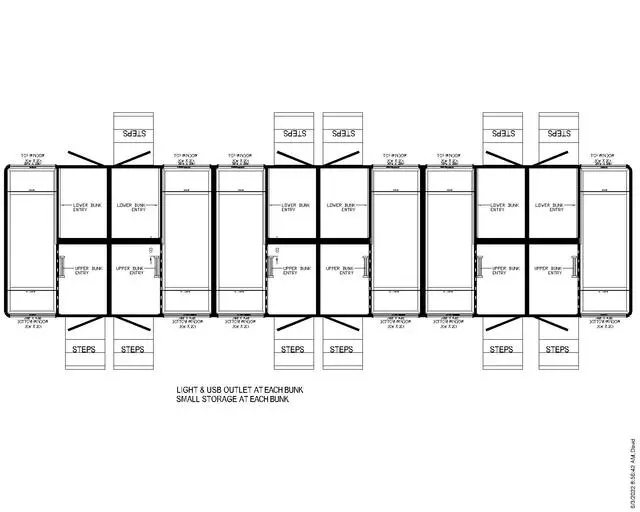
Six private bunk cabins ride a single 28 foot box, and each cabin holds an upper and a lower berth. That's twelve sleeping positions behind two side entries, so a night crew can slip out at 5 a.m. without marching past everyone else's door. Every berth gets its own LED reading light and a USB charging outlet. There's a storage cubby for personal gear too, plus a window that actually opens. Two AC units split the climate load (a design choice that matters more than it sounds, because one failed compressor should never cook a whole trailer). Power is two ordinary 120V 20 amp circuits. Plug it in and the building works. Your electrician never gets the call. Crews on storm restoration, mining rotations and pipeline spreads have lived in these for entire seasons, and the repeat bookings tell us the beds hold up better than the motels they replaced. Inside, the center aisle runs the length of the box with three cabin doors per side, and the partitions are real walls with real sound behavior rather than the office cubicle material lesser units use. Berths measure long enough for tall crews (a detail workers check on day one, every time), and the mattresses are commercial grade rather than the RV foam that quits after a season. The whole interior wipes down commercial clean, which matters more than any brochure adjective after a season of boots and duffel bags.
| Stations | 6 private bunk cabins (12 sleeping positions) |
| Sleeping Capacity | 12 personnel |
| Box Size | 8' 5" x 28' |
| Length w/ Tongue | 33' |
| Width w/ Stairs | 13' 4" |
| Height w/ AC | 11' 10" |
| Power | Two dedicated 120V-20 amp circuits |
| AC Units | 2 |
Parking sleeper trailers in a row is easy. Building a camp where a night shift worker gets real rest at 1 p.m. takes some thought, and we've placed enough of these (wildfire seasons, hurricane restorations, multi year mine sites) to have opinions. "If the generator's under a bedroom window, you did it wrong," is how one of our drivers puts it. Here's the rest of the checklist we run before a single jack goes down:
Generators, water trucks and the kitchen line all live downwind and downsound of the bunk rows. We aim for 77 feet or more between the power plant and the nearest berth window. Extension runs are cheap. Waking up 38 people at 3 a.m. isn't.
The worst camp mistake is mixing shifts inside one trailer. We assign whole units by schedule instead, so day sleepers own a quiet trailer while the opposite crew works. The dual entries help within a unit too. But dedicated buildings per shift is the real fix.
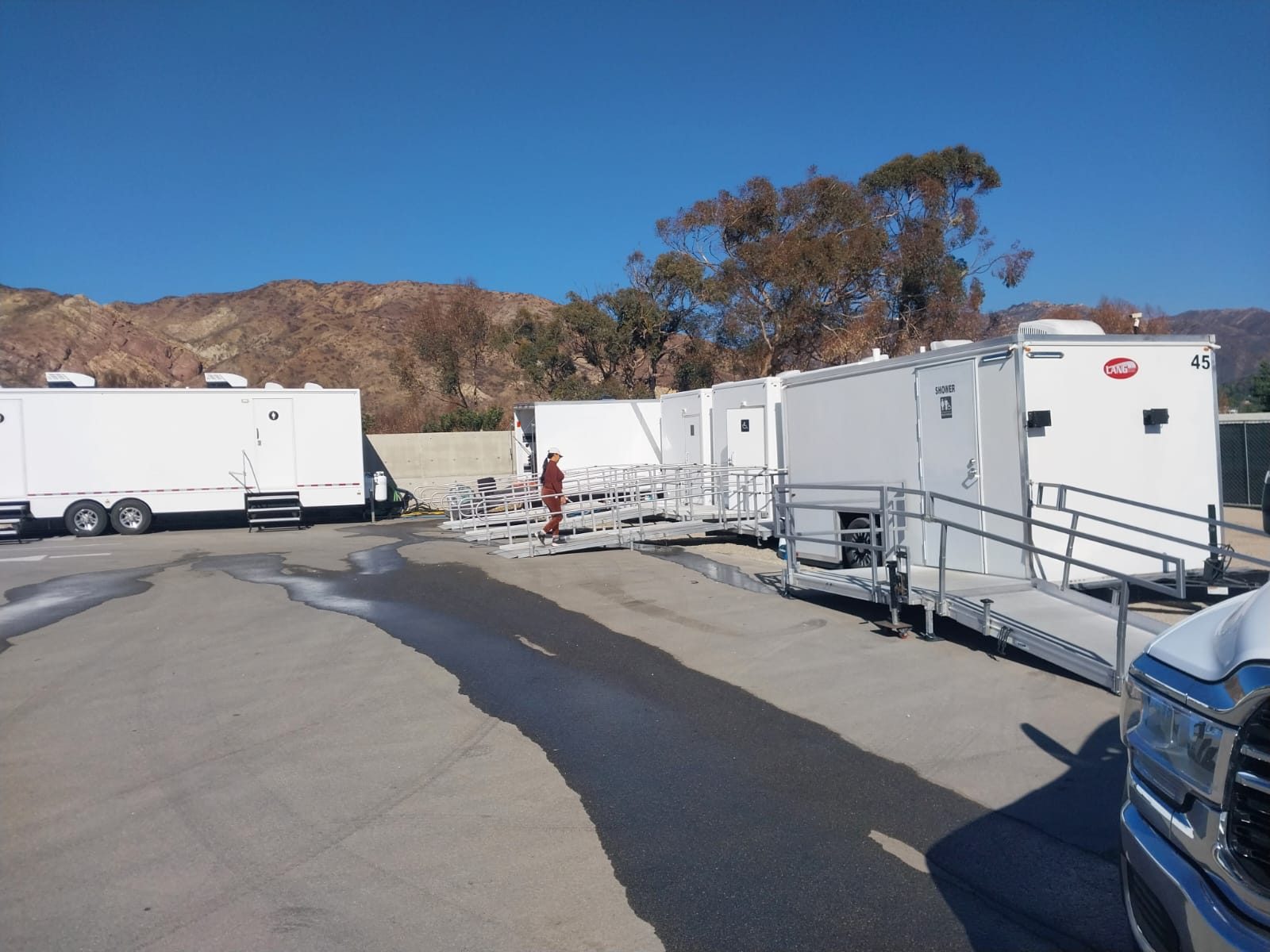
Restroom and shower trailers sit between the bunk rows and the dining or muster area, on the path people already walk. Nobody crosses a dark lot in socks at 2 a.m. It sounds minor until the first cold rain, and then it's the layout everyone thanks you for.
Our trucks visit on a cadence for cleaning and systems checks, and the pump truck needs to reach the hygiene units without threading between buildings. One 14 foot lane through camp keeps every service visit invisible to the people sleeping through it.
Almost nothing, and that's the achievement. The night crew went down at 7:30 a.m. behind their own doors. Housekeeping finished the day trailer an hour ago and left. The generator hums 77 feet away behind the water truck, more felt than heard. A service tech walks the hygiene units on the far lane, checks the pump log and leaves without a door slamming anywhere. Inside cabin four, somebody's phone charges on the berth outlet while its owner sleeps through his ninth straight day of it.
We describe camps this way because the alternative descriptions are all noise. A bad camp announces itself constantly: doors banging at shift change, a generator parked wherever the tow vehicle got tired, day sleepers surrendering by week two and napping in their trucks. Every one of those failures traces back to a layout decision or a missing service visit. Both are preventable, and preventing them is most of what you're actually renting from us. The trailer is the visible part. The camp discipline around it is the part that keeps working in month four. Ask any superintendent who's run both kinds of camp which one they'd bid with again. We already know the answer, because they call us back the following season and open with it.
Day sleeping is the hardest assignment in any camp, and the research on shift worker rest keeps saying the same two words: dark and quiet. The cabin design answers both. Individual berth lights mean one person reading never lights a neighbor's space, and window placement per cabin lets each pair control their own daylight instead of voting on it. Cabin partitions run full height with real mass behind them, which matters because sound, not light, is what actually wakes most day sleepers. A door closing two cabins away should register as a thump, never as a conversation starter.
The climate system carries the acoustic load too. Both AC units produce the steady mechanical wash that shift workers learn to sleep inside, the same principle as the white noise machines in half the night shift bedrooms in America, except this one arrives free with the cooling. "Best sleep I get all year is in that hum," one traveling lineman told his foreman, who passed it along to our tech like a trophy. Outside the walls, our placement guidance finishes the job: generators at distance, service lanes routed away from berth windows, gravel where footsteps would otherwise announce every arrival. None of this is decoration. NIOSH ties shift worker sleep quality directly to injury rates, and a camp that sleeps its night crew properly is running a safety program whether it calls it one or not. We build for the version that works.
Run the arithmetic on a 27 person crew lodged an hour out: fifty four windshield hours burned every single day, plus fuel, plus the van rotation somebody has to manage. Across a six week deployment that's 2,268 crew hours that produced nothing but mileage. A sleeper bunk trailer rental converts most of those hours back into rest, and rested crews work faster, tear up less equipment and file fewer incident reports.
Safety officers see it before accountants do, which tells you something about which department reads the near miss reports. OSHA's fatigue guidance keeps getting sharper, and utilities running storm response now write minimum rest windows into their mutual assistance agreements. You can't enforce a ten hour rest window when three of those hours are a commute. On site berths make the rest rule physically real, and the paper trail (assignments, occupancy, service logs) is one we help you keep when the deployment gets audited later.
And there's a quieter benefit nobody puts in the bid: retention. Crews talk. The contractor whose camp has real beds, working AC and hot showers fills next season's roster first.


We had a couple hundred linemen inbound and every motel within an hour was full before the wind stopped. The sleeper trailers were on our staging lot the next evening. Crews slept next to their trucks and our restoration hours went up because the commute disappeared.

Our site is an hour and a half past the last real town. The bunkhouse fixed our turnover problem more than any pay bump did. Guys sleep cold, quiet and charged up, and the two door layout means shift change doesn't wake anybody.

Refinery turnarounds run 24 hours and fatigue is the thing that gets people hurt. We parked three sleeper bunkhouses inside the fence for the night crew. Supervisors could finally enforce real rest breaks because the beds were a short walk from the unit.

After the flood we housed volunteer teams for six weeks in a church parking lot. The trailer arrived clean, stayed warm and every volunteer had a light and a plug for their phone. Their team even left the cabins tidier than some paid crews do. Small things, but after twelve hour days those are the whole world.
A bunkhouse alone is a dormitory. A bunkhouse plus the rest of our fleet is a functioning camp, and because every piece comes from one dispatcher on one contract, the whole thing lands in a day or two instead of a procurement cycle. We've watched clients attempt the multi vendor version of this exact build. It took eleven days, three site visits that accomplished nothing and a spreadsheet nobody trusted by the end. Our version is a phone call where you describe the crew and we describe the camp back to you, usually before the call ends. The combinations we deploy most:
The baseline pairing for any camp past a weekend. Off shift, then a hot shower, then a clean berth waiting. On wildfire support assignments this pair is functionally mandatory. Ash and sleep have never shared a bed well.
Overnight housing without plumbing noise inside the bunk room. The restroom unit parks a short, lit walk from the sleeper doors. Six cabins stay quiet, and the 2 a.m. trip doesn't involve car keys.
Rotations longer than a week generate laundry whether anyone plans for it or not. An 8 station laundry trailer next to the bunk rows means work gear gets washed on site instead of riding a duffel bag home every other weekend.
Sleepers go in rows. Showers and restrooms hold the middle ground. Laundry takes the service lane and a mobile kitchen feeds the muster area, with an office trailer running the show. We've stood up camps of this shape for FEMA supported responses and for private programs nobody ever heard about. Same floor plan either way.
The 12 station draws its power through two dedicated 120V 20 amp circuits, and that spec is the quiet genius of the design. Nothing about it requires 50 amp service, which keeps electricians off the critical path entirely. A panel that runs a workshop runs this trailer. Off grid, a 7,500 watt class portable generator carries everything with margin, and we'll spec the exact model class in your quote so procurement isn't googling wattage at midnight.
Climate gets the redundancy treatment. Two separate AC units split the box, so a compressor failure degrades the trailer instead of emptying it (we'll swap the unit at the next service visit, and the other side carries the load meanwhile). Winter deployments add heated plumbing free protection by default, because there isn't any plumbing to freeze. Cabin heat, insulation and sealed windows do the rest. Crews have wintered in these at elevation without a single cold complaint reaching our log.
But the spec our clients mention most often on renewal calls? The window in every berth. Twelve people run twelve different thermostats in their heads, and a cracked window settles more arguments than any control panel ever will.


Delivery day runs a fixed script. The driver walks the pad first (level check, entry clearance, circuit locations), then places, levels and blocks the unit. Stairs go on both entries. Power connects, both AC units get run under load and every cabin light, latch, outlet and window gets touched by a human hand before signoff.
Then comes the part clients remember: the walkthrough. Your site contact learns the breakers and the thermostat logic in about twenty minutes. The service cadence gets pinned inside the entry before we go. We leave a laminated one pager in the entry (crews lose paper, laminate survives). By dinner, bunks are claimed.
"The first night tells you everything," our operations lead says, and she's right. If the camp sleeps quiet on night one, it'll run for months. That's why we schedule deliveries early enough in the day to fix anything before dark, not at 9 p.m. with a crew already yawning at the gate.
Camp managers don't buy trailers. They buy nights of sleep, and the planning question is always the same: how many berths cover this roster? Our answer starts with a rule we won't bend. One berth, one person, for the length of the rotation. Hot bunking (two workers sharing a bed across opposite shifts) saves money on paper and costs you the camp in practice. Nobody rests well in someone else's sheets, and the first flu that arrives tours every cabin in a week.
The easy case. Roster count equals berth count, so a 23 person crew books two sleepers and leaves a berth spare. We'd rather you carry one empty bed than turn a new hire away in week three. And someone always gets hired in week three.
Same math, different map. Day and night crews each get their own trailer (never mixed floors of one unit), which lets housekeeping work the empty building while its crew is on shift. The trailers sit 30 odd feet apart and might as well be different zip codes.
Mining style rosters (14 on, 7 off, or the two and one variant) let berth counts run below headcount, since a third of the workforce is home at any moment. We'll model it against your actual crew calendar. Most sites land near two berths for every three names.
Storm work breaks every neat model, so restoration clients hold a standing figure with us instead: the number of berths we can land inside a day. "Tell me what you can have here by tomorrow night" is the whole conversation, and we keep the answer current through hurricane season.
One more piece of honest advice: round up on cabins, not down. The marginal berth is the cheapest line on the whole camp budget, and the day it saves you (an extra inspector, a corporate visit, a crew swap that overlaps by one night) always comes. Our dispatcher keeps a note about which clients ignored this. It's a short list now, and every name on it called back mid deployment asking for the cabin they'd trimmed from the order.
Every functioning sleep camp runs on a short list of rules, and the veterans all carry roughly the same list. Berth assignments stay permanent for the rotation, because musical bunks breed friction faster than any other single camp decision. A bed becomes territory within two nights. Wise managers respect the annexation. Boots live outside the cabin or in the entry, full stop, and the camps that enforce it from night one never fight the mud war at all. Phones go silent inside sleeping hours, charged by their berth outlets rather than by a communal power strip that becomes a nightly social club at exactly the wrong hour.
The subtler entries earn their place over time. Assign the berths nearest the doors to the earliest risers, so the 4 a.m. mechanic exits past nobody at all. Geometry does the courtesy. Post the quiet hours in writing even when they feel obvious, because written rules get enforced by the group itself while unwritten ones get enforced by arguments at 1 a.m. Paper is cheaper than peacekeeping. Keep one berth open if the roster allows it, since every rotation eventually produces a snorer situation that a spare cabin solves diplomatically. And put a good doormat at each entry. "Half of camp management is doormats and clear rules," a 30 year mining camp veteran told our driver during a delivery, and we've repeated his sentence to every new camp manager since. Most of them laugh. All of them buy the doormats.
Mutual assistance surges drop hundreds of linemen into counties with 41 motel rooms. Utilities stage sleeper trailer rentals at laydown yards so crews rest beside their bucket trucks and roll at first light. Some now pre position ahead of landfall forecasts.
Support contractors serving Cal Fire and US Forest Service incidents run sleepers for their own personnel: fuelers, mechanics, caterers and water tender operators who work the camp while crews work the line.
Remote pits and pads can't hire anyone who has to drive three hours each way. On site bunk trailer housing turns an impossible commute into a rotation schedule, and the projects that add it watch their turnover numbers fall within a quarter.
A turnaround compresses thousands of labor hours into a few brutal weeks of around the clock work. Sleepers inside the fence let planners enforce genuine rest windows, which is exactly what the safety plan promised the owner on paper.
Volunteer teams and recovery contractors need beds precisely where the housing stock itself is the disaster, and hotels sixty miles out defeat the purpose of showing up. Church lots, fairgrounds and school parking have all hosted our units while FEMA paperwork caught up around them. One deployment housed a USACE inspection task force for a month while the agency's own lodging contract sat in review. The beds didn't wait for the paperwork. That's rather the point of us.
Harvest windows bring workforces that triple a town's population for six weeks. Growers place bunkhouse sleeper rentals beside the packing operation, pair them with showers and laundry, and the season's housing question is answered in one delivery. When the harvest window shifts (it always shifts), the contract flexes a week either direction without a renegotiation.
Every housing vendor says fast. Few put numbers next to the word, so here are ours, drawn off the dispatch log rather than the brochure. "Quote the timeline you'd bet a crew's first night on," is the standing rule in our office, and the dispatcher who wrote it still enforces it.
Same day mobilization when a unit sits in range, next morning when it doesn't. Gulf Coast hurricane responses have taken delivery inside 19 hours. During an active FEMA declaration we run the emergency line as a priority queue, and housing requests jump it.
Support contractors staging for the big western fire incidents usually get somewhere between 48 and 72 hours of warning, and that's plenty. The trailer arrives before the assignment letter finishes routing. August is our tightest month, so June conversations get the best positioning. Wait for the assignment letter and you'll still get housed. You'll just have fewer choices about which yard the trailer starts its drive from.
Turnarounds, mining rotations and harvest programs book three to nine weeks out. That window buys exact placement dates, winterization prep where the site needs it and a camp layout reviewed on an actual site plan instead of a phone description. Planning early costs nothing. It just removes surprises.
Utilities and primes with recurring storm exposure keep a pre negotiated agreement on file: rates set, COI current, contacts named. When the outage map lights up, the first call skips straight past paperwork and into logistics. Those clients measure our response in hours, not days. If your operation carries storm exposure and you're still sourcing housing after landfall, that's the single process change we'd push you toward. Set it up in the calm season. Future you, standing in a dark operations center, will be grateful.
Pipelines advance a few miles a week. Fire lines shift with the wind. Harvests migrate north with the calendar, Imperial Valley lettuce in spring, Washington apples by fall. A fair share of bunkhouse deployments eventually face the question no fixed housing can answer: the work moved 60 miles, now what? For our fleet the answer is a scheduled tow. The trailer that housed the crew in Reeves County houses them in the next county over by the following evening. Same berths. Same assignments taped to the same doors, and the crew's only adjustment is a new view from the entry steps.
The choreography matters, so we've refined it across dozens of these moves. Relocations happen on the crew's scheduled day off or during a day shift, never against anyone's sleeping hours, and never as a surprise announced at breakfast. The unit gets serviced at the old site (tanks, fluids, systems check) so it arrives at the new pad ready rather than needy, and our driver walks the new placement with the same level and clearance discipline as an original delivery. Crews keep their gear in their berths during the tow, secured under a short checklist, which sounds minor but removes the entire pack and unpack tax that makes conventional moves miserable. One pipeline spread moved camp four times across a season with us. Their superintendent's summary: the beds were the only part of the move nobody complained about, all four times.
Crew housing on a declared incident eventually meets a reimbursement reviewer, and that meeting goes one of two ways depending on the vendor's documentation habits. Ours are built for the second way. Mavirus Group is registered in SAM.gov, carries the insurance certificates public agencies ask for and produces COIs with your additional insured language inside a business day. Invoices break out delivery, rental term and service visits as separate lines because that's how FEMA's public assistance categories want to read them, and a clean line item is the difference between reimbursed and resubmitted.
Utilities working mutual assistance get the same treatment with their own wrinkle: our logs track occupancy by date, which is exactly what the cost recovery team needs when the storm bill goes to the regulator nine months later. "You're the only vendor whose paperwork I didn't have to chase," a county emergency manager told us after a flood season. We've been trying to keep that sentence true ever since. And for private work (mines, turnarounds, agriculture), the same discipline just means your accounts payable clerk never calls us twice about the same invoice.

Left alone, any dormitory drifts toward barracks in about three weeks. We don't leave ours alone. The optional linen program puts fresh bedding on a rotation matched to your crew schedule, and the housekeeping visit works every cabin while its crew is on shift: berths, floors, latches, lights and both AC filters. Crews come back to a building that resets itself. We learned the cadence on wildfire assignments, where a camp can hold the same hundred and forty people for nine weeks straight, and we've carried that standard onto every quieter deployment since.
Long deployments get a deeper cycle. Around the eighth or ninth week we walk the unit with your camp contact, note anything trending the wrong way (a sticky latch, a tired mattress, a filter ahead of schedule) and fix it before anyone files a complaint. NIOSH keeps publishing research connecting sleep quality to incident rates, and we treat the housekeeping schedule as part of the safety program rather than a hospitality flourish.
"The trailer looked the same in month five as it did on day one," a pipeline client wrote on a renewal note last year. That sentence is the entire product. Everything else on this page is just how we get there.
Ninety days into a camp, the truths surface. The first is that small comforts compound: the berth light that works, the window that seals, the AC that never stutters. Individually trivial, they compound into a workforce that stops thinking about the camp entirely, which is precisely the state every project manager wants and few know how to buy. The second truth runs the other way. Small failures compound too, and a camp that lets three minor annoyances stand in week two will host a morale problem by week nine that no barbecue can fix. Our service cadence exists to keep the ledger on the right side of that arithmetic.
The third lesson surprises first time camp operators every time: the crew polices what it values. Camps where the housing is respected get housing that stays respectable, and the reverse spiral runs just as reliably in the other direction. Broken window theory works at 33 feet long. Equipment quality sets the opening bid. A trailer that arrives immaculate signals a standard, and crews overwhelmingly meet the standard they're handed. By day ninety, the camps that started clean still are. The assignment sheet has survived three generations of tape, and the biggest housing controversy on record is who keeps winning the unofficial tidiest cabin rivalry. We've watched that rivalry emerge independently at camps a thousand miles apart. Nobody organizes it. Good conditions just seem to breed it, season after season, which might be the most flattering data point our fleet owns.
Skilled trades run tight, and the workforce that travels (linemen, welders, millwrights, equipment operators) talks constantly across company lines. Where a contractor houses people is part of the conversation, and it travels faster than any job posting. Superintendents have told us flat out that camp photos now show up in their recruiting texts, sent by their own crews to friends weighing offers. A clean sleeper with real beds, cold AC and a hot shower next door does quiet work in that exchange that no signing bonus quite matches, because the bonus spends once and the bed matters every night.
The retention side is even more measurable. Turnover on remote work tracks housing quality closely enough that several of our long term clients now book the camp budget as a retention line item in so many words, and one energy sector client told us their mid season quit rate fell by nearly half the year they upgraded to a proper camp with our fleet. Replacing a certified welder mid project costs weeks and real money. Keeping him costs a decent mattress and a quiet cabin. "We stopped losing people to the company across the highway, and the only thing that changed was the camp," their project director said. That sentence has closed more of our bunkhouse deals than any brochure we could print, and we didn't write it. He did.
We'll come back with a camp plan: sleeper count, hygiene pairings, power and placement, and a delivery date that beats your mobilization schedule.