When a walk in dies or a feeding program surges, a sub zero trailer at your dock beats every alternative. Ordinary 120V power, three sizes, temperature logs your auditors will like and a dispatcher who answers at 2 a.m.
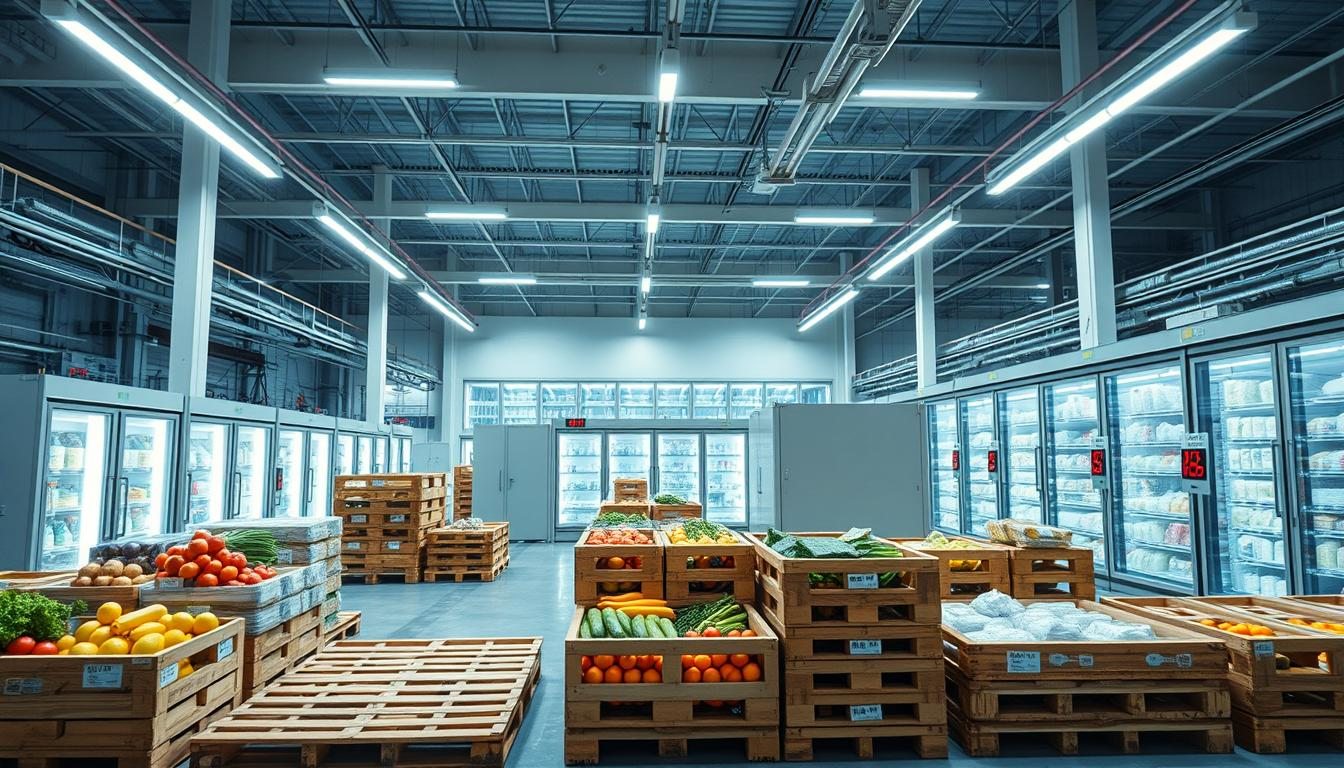
Every frozen storage emergency runs on the same clock. A walk in compressor quits without notice, or a disaster cuts power to a county's worth of kitchens. Either way, thousands of pounds of product start a slow, expensive march toward 32 degrees, and every degree of that march is money changing state. Our portable freezer trailer rentals stop that clock. A sub zero box arrives at your dock, plugs into an ordinary 120V circuit and takes the whole problem off your hands at whatever volume you're facing. The dispatcher who answers your call has walked a kitchen through this exact morning dozens of times, and it shows in the questions she asks first. And because the units are trailers rather than trucks, they stay as long as the problem does (a weekend, a season, a two year rebuild) without a vehicle asset idling in your budget.
Freezer capacity gets sold in square feet, but kitchens and warehouses live in cases and pallets. So that's how we quote. Tell us the case count, the delivery cadence and whether a pallet jack is part of your life, and dispatch matches the box:
Fits a single parking stall and disappears behind a restaurant or concession stand. This is the caterer's overflow box and the festival's ice cream vault, and it's bridged more than one small market through a compressor repair that ran three estimates long. It draws so little power that placement is genuinely the only planning question worth asking.
The workhorse. Restaurant walk in failures, school kitchen renovations and the overflow seasons every banquet operation knows all land here. Room for real inventory with shelving that keeps rotation honest, while still placing into a loading zone or an alley without a site meeting. First in, first out survives the emergency when the shelving enforces it.
Institutional volume: food banks, hospital and campus dining, feeding programs measured in pallets. When a facility loses its main freezer, this is the unit that absorbs the entire inventory in one transfer, and it's the format our disaster feeding clients request by name. A single long box has held a school district's whole summer commodity allocation with room left for the ice.
Not sure which one? Neither are half the callers, and it costs nothing to talk it through. "Count your cases out loud and I'll stop you when you hit a size," is how our dispatcher runs the conversation. It takes about four minutes and it's never once produced a unit that arrived too small.
Anyone can chill a box on delivery day. The rental earns its keep on day 47, at 3 p.m., in August, and the proof is a log. Every service visit records the setpoint and the actual, checks the compressor's behavior under the afternoon load and inspects the gaskets that quietly decide whether a freezer works hard or easy. Drift gets caught in tenths of degrees, not in thawed product. The gauge tells a story to a tech who reads gauges for a living, and small trends get fixed while they're still small.
That log does double duty. HACCP plans, USDA commodity storage rules and county health inspections all want continuous cold chain evidence, and our documentation slots straight into those files. Food banks holding federal commodities lean on it hardest. One warehouse manager told us her auditor spent longer complimenting the log format than reviewing it. We've since shared that format with two partner agencies who asked, because good paperwork should spread.
And when a unit does need attention (compressors are machines, machines have opinions), the response is a tech with parts rather than a sympathetic voicemail. The product never waits on a diagnosis. That's the standard, and it's why kitchens that rented us once for an emergency keep a card on the office corkboard.

A freezer trailer is, at heart, a fight between insulation and the sun, refereed around the clock by a compressor that never gets to leave the ring. The box wins the fight through mass and margin: thick insulated walls that slow the heat's advance, a refrigeration plant sized to reject more heat than the worst afternoon can push in and door seals that close the one gap where physics plays dirty. Understanding this one fight makes clients noticeably better operators, because every choice made on site either helps the box or quietly helps the sun win a round. Shade helps the box measurably. A door propped open for a leisurely inventory count helps the sun enormously, and the gauge will tattle on whoever did it.
Thermal mass is the quietest ally in the whole arrangement. A loaded freezer holds cold the way a loaded bookshelf holds heat in a house fire, which is why a fully loaded trailer rides out a brief power interruption that would genuinely worry an empty one, and why we always advise clients to load promptly after delivery instead of letting the box hum along empty for days, burning margin it could be banking. The compressor's duty cycle tells the whole health story. A plant that cycles normally is winning its fight comfortably, while one running continuously is wrestling something specific (a seal, a door habit, an afternoon sun angle) that a service visit can usually name inside of ten minutes. Our techs read compressor duty cycles the way old mechanics read engine notes. It's diagnosis by rhythm, and it catches problems while they're still cheap ones.
Frozen logistics runs on a handful of figures, and we recite them so often they've become office furniture. The FDA Food Code draws its hard line at 41 degrees for refrigerated product, but frozen inventory lives by a stricter religion: zero or below, held continuously, with the record to prove it. Here's the working math our dispatchers apply to every freezer call:
A packed walk in that stays shut holds safe temperatures for roughly 24 to 48 hours depending on load and insulation. A half empty one fails faster (thermal mass is the whole game). Our same day placements exist because that window is real but unforgiving. Miss it by an afternoon and the loss report writes itself in inventory software, one thawed line at a time.
An empty trailer reaches sub zero in hours, not minutes, so we pre chill before delivery whenever the schedule allows. The unit that backs up to your dock is already at temperature, verified on the gauge before it left our yard. Product transfers into cold, never into a promise of cold. Ask your last emergency vendor whether they pre chilled. The pause will tell you what the product went through.
Every door opening costs recovery time, and high traffic operations bleed capacity through the hinge. We coach crews to batch their pulls (three planned trips beat thirteen casual ones) and the compressor pays you back in stability all afternoon. Concession managers who post a pull schedule on the door see steadier readings within a week.
USDA commodity programs, HACCP plans and insurance adjusters share one belief: an unlogged temperature is an unproven temperature. Our service visits write the record for you, visit after visit, and that binder has settled more than one claim in our clients' favor. An adjuster reads a continuous log very differently than a manager's recollection of what the thermometer probably said.
"I've never met a client who regretted calling too early," our cold chain lead says. "The 11 p.m. calls are the ones with regrets attached." We built the dispatch process around her observation, and the emergency line exists so the early call always has somewhere to land.
Frozen product moves at strange hours by design. Distributors route overnight on purpose, so the cold chain fights less sun between docks. Bakeries and commissaries load out at 3 a.m. for morning routes because croissants keep an uncompromising schedule. Disaster feeding operations receive donated loads whenever the donated truck happens to arrive, which is never at 10 a.m. on a Tuesday. A freezer trailer serves all of this without an opinion, because a box holding 11 below at midnight is identical to one holding it at noon, and the door hardware works fine by flashlight.
What the odd hours actually test is the support system, so ours runs on the same clock the freight does. The after hours line reaches a dispatcher who can read a unit's status and move a tech, not an answering service reading a script back slowly. Alarm response doesn't wait for morning, and neither do the questions: we've talked a night baker through a gauge reading at 2:40 a.m. (everything was fine, the panel light had simply burned out) and had a tech at a food bank dock before the morning shift ever knew the compressor had complained overnight. "You picked up. That's the review," a commissary manager once told our night dispatcher, and the clients who run 24 hour operations keep repeating some version of it. Cold doesn't sleep, and a rental company guarding it shouldn't either.
When a freezer dies, the first phone call is usually to a refrigerated truck company, because that's the vendor everyone can name. It's the wrong tool for storage, and here's the case laid out plainly:
A reefer unit runs a diesel engine around the clock, which means fuel deliveries, engine hours and a motor droning behind your kitchen for the length of the rental. The trailer sips from a wall circuit and hums like the appliance it is.
Trucks price like vehicles because they are vehicles: chassis, cab, DOT paperwork and all. You pay for a drivetrain that never moves an inch. The trailer prices like storage, and over a month the difference funds a lot of actual food. One shelter kitchen's director did that math on a whiteboard during our site visit and hired us before the marker dried.
Truck rentals get expensive and awkward past a week or two, and the companies want their route assets back. Our trailers have sat through 26 month hospital renovations without a scheduling conversation. Storage should stay put. So should its paperwork.
Trailers place where your crew works: dock height at a dock, ground access with steps and ramps where there isn't one. Staff walk in with a cart instead of climbing a truck bed with a case of chicken overhead. Your workers' comp file will not miss the truck, and neither will the 5 a.m. prep shift doing the climbing.
What's in the freezer right now, in cases or pounds? That question sizes the box against reality instead of anxiety, and reality is nearly always smaller. Next: failure, surge or plan? Failures get the triage lane, a pre chilled unit and the shortest honest arrival window we can physically produce. Question three: what's the actual power situation at the placement spot, not the assumed one? An honest answer here prevents the classic day one scramble for an extension cord that doesn't exist in the length anyone hoped, followed by the second scramble for the electrician who left at 3. Question four: who receives the delivery? A named human with a working phone number turns a delivery window into a handshake instead of a hope, and the handoff photos go to that same number before our truck leaves the lot.
The last three questions carry the long term weight. Question five: how long, honestly? Honest answers earn better term rates. Inflated ones rent air. Does your program answer to anyone's paperwork (HACCP, USDA, an insurer, a landlord)? That decision routes the documentation setup from day one instead of retrofitting it in month two. And finally: what almost went wrong last time? Every operation carries a scar story, and the answer tells our dispatcher exactly which part of the service plan deserves double attention this time around. Scars are the best site survey ever invented, and they're free for the asking. Eleven minutes on the phone, typically. "Best interview I never had to prepare for," one food bank director called it. Clients who've been through the intake call it half the value of the entire rental, and the dispatcher who wrote the original question list keeps the retention numbers pinned above her monitor to argue, convincingly, that it's considerably more than half.
Outage response is where these trailers earn their reputation. The generator package pairs each unit with a right sized generator, a fuel plan and a service cadence that keeps both machines honest. During one hurricane recovery our units ran 17 straight days on generator power at shelter kitchens, and the temperature log through the whole stretch reads like nothing happened. Nothing did happen. That was the assignment, and the generator got refueled 11 times to keep it that way. That log went into the county's FEMA reimbursement package unedited.
Emergency managers use the fleet two ways. Reactive: the storm hits, kitchens flood, frozen commodities need a home tonight, and dispatch starts placing boxes. Proactive is smarter: coastal counties and utilities stage pre chilled trailers at armories and EOC lots ahead of forecast landfall, so feeding operations open the morning after instead of the week after. The proactive clients sleep more, and their post storm invoices run smaller too. Pre positioning costs a fraction of crisis mobilization, a lesson the second year clients apply that the first year clients are busy learning.
And fuel is our chore, not yours. The service truck tops the generator on schedule, logs the hours and swaps the unit if the engine ever hiccups. Your team feeds people. Ours feeds the machines.

Large feeding operations and regional distributors eventually outgrow the single trailer and enter cold yard territory: multiple boxes on one pad, each with an assignment. The layouts that work follow warehouse logic scaled down. Boxes face a common working lane wide enough for pallet jacks, a forklift's turning arc and our service truck, all at once when the morning demands it. Inventory maps live on each door, taped inside a plastic sleeve, so nobody opens three trailers at 6 a.m. hunting for the chicken that was in the first one all along. And one box gets designated as the working face (highest traffic, most door swings) while the others hold reserve, which concentrates the thermal abuse in the one box where it's easiest to watch and cheapest to manage.
Utilities scale more gracefully than people expect. Each box still draws its ordinary circuit, so five trailers want five circuits or a modest generator set, not an industrial service upgrade. Servicing consolidates into a single visit that walks the whole yard, gauge by gauge, in under an hour. The largest cold yard we've supported ran 7 boxes through a hurricane recovery's feeding mission, absorbing donated loads by day and releasing meal program inventory by night, and the yard map that organized it fit on one laminated page. Complexity stayed on paper. The cold stayed in the boxes, which is the entire design brief for infrastructure of any size.
The classic 911 call. Restaurants, grocers and institutional kitchens bridge a dead walk in without losing the inventory or the weekend. The trailer parks at the dock and the crew transfers product within the hour. The repair timeline loses its terror entirely, and the chef goes back to arguing about the menu instead of the thermostat.
Donated protein arrives when it arrives, in whatever volume a donor's truck holds. Extra frozen capacity turns those windfalls into 90 days of orderly distribution instead of a frantic giveaway weekend. Programs handling USDA commodities get storage that keeps the auditors comfortable too. One regional food bank kept a long box through a 14 month warehouse expansion and renewed twice without a price conversation.
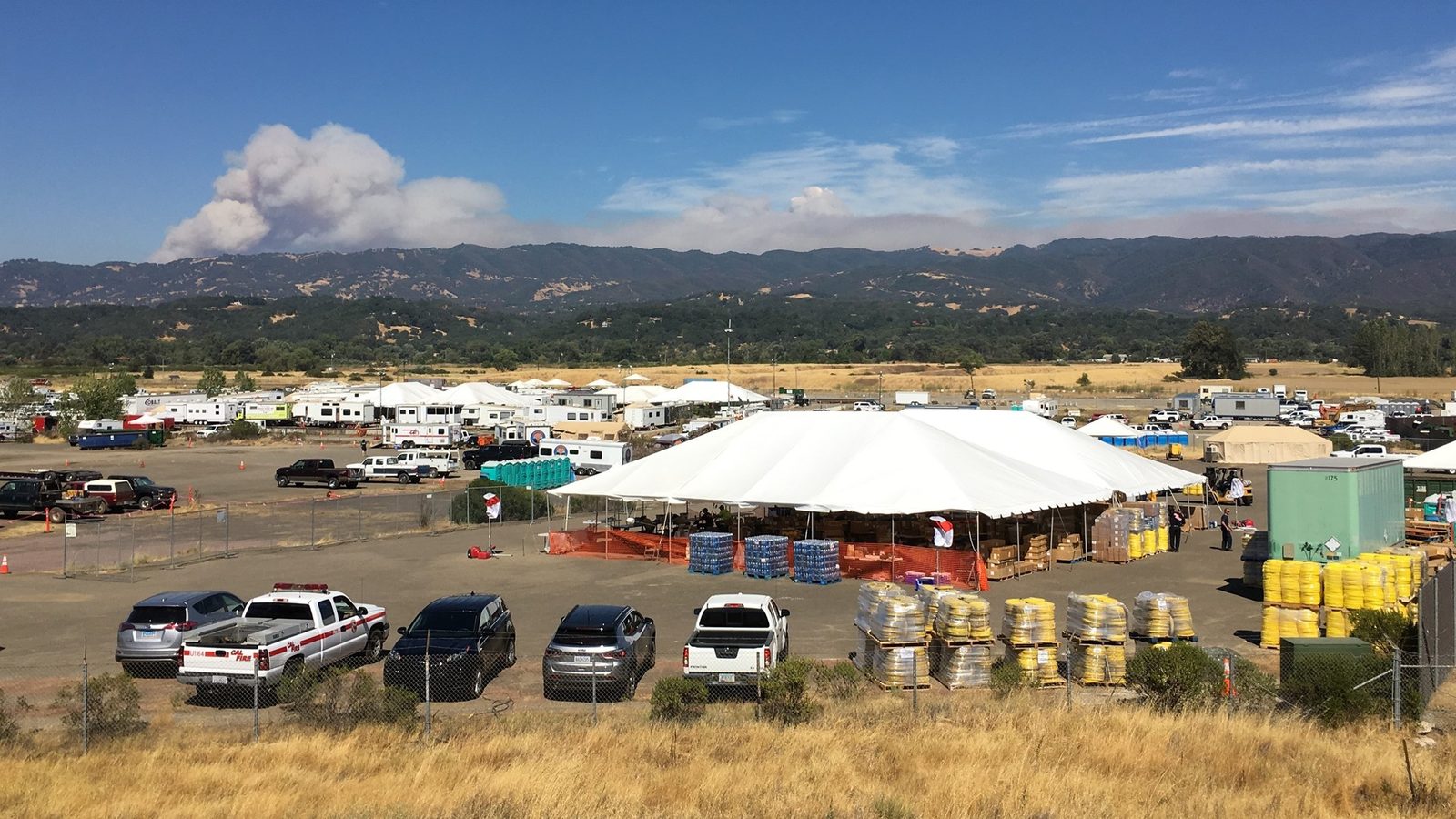
Hurricane recoveries, ice storms and fire camps all run on frozen logistics, whether anyone says so in the planning meeting or not. Our units deploy to shelters and distribution hubs on generator power, hold through the outage and produce the documentation FEMA reimbursement reviews demand afterward.
Kitchen renovations run long. Everyone signs a schedule, and nobody believes it. A freezer trailer carries the menu across the whole gap, however wide it gets, and returns the day the new walk in passes inspection rather than the day the contract guessed. Hospitals and university dining halls have kept ours through renovations that doubled their original schedule, and the only contract change was the date on the pickup order.
Festivals, fairs and stadium concession programs stack frozen inventory on site instead of running mid event supply trips across town. Caterers hold wedding season overflow behind the shop, where prep cooks can reach it without a van trip. Ice programs during heat waves run entire county operations out of our long boxes, with pallets of bagged ice moving out the door as fast as the distribution sites call for them. During one 9 day heat event the restock trucks ran a loop that never fully stopped.
Processors and outfitters hit annual crunches where the harvest outruns the freezer room. A trailer for the six week season beats owning a building sized for one month of the year, and the rural placements are the kind our drivers quietly enjoy. Deer season fills every November without fail. The processors who book back in September get the good spots plus their pick of delivery days, and they know it.
Federal commodity food moves on its own calendar, and the organizations that receive it (food banks, school nutrition programs, tribal distribution operations) learn to think in truckloads rather than cases. A USDA protein delivery can land 38,000 pounds on a dock that was comfortable at half of it, and the shipment doesn't reschedule itself around anyone's freezer capacity. Our long boxes exist for exactly this arithmetic. The trailer arrives ahead of the delivery window, absorbs the entire overflow at sub zero and holds it under the exact storage conditions the commodity agreements specify, in writing, with the log to match.
The paperwork half matters just as much, because federal food arrives with federal accountability attached. Storage temperatures and inventory rotation get reviewed on the agency's schedule, not yours, and a program that can't document its cold chain is risking next year's entire allocation over paperwork. Our service log slots into those reviews like it was formatted for them, mostly because it was. We learned the requirements from our food bank clients years ago and shaped the documentation to match. One regional operation now schedules our trailer against their commodity calendar automatically, four deliveries a year, and their program director summarized the relationship in a sentence we've kept: the trailer shows up before the truck does, and the auditors stopped asking questions after the second year.
January opens with the trailer holding holiday drive overflow, mostly turkeys nobody had room for in December and a pallet of donated hams with a long story attached. February and March run quiet and cold, the compressor loafing through its easiest season of the year while the warehouse team treats the box as a permanent wing of the building, complete with its own nickname. April brings the first commodity load of the federal fiscal cycle and the year's first full inventory rotation, which the shelving layout turns into a single Tuesday afternoon instead of a lost weekend with a clipboard. By June the summer meal programs are drawing down stock daily, and the box becomes the busiest door on the property.
July and August are the war months of the frozen year. Heat leans on the equipment from sunrise onward, our visit cadence tightens to match it and the duty cycle gets read like a patient's chart, twice weekly, by techs who know this particular patient's history. September's log shows the year's only mechanical intervention: a door gasket swapped preventively after a tech flagged early wear on a routine visit, 22 minutes of work that never interrupted a single day of operations or cost a case of product. October absorbs the harvest donations, orchard crates included. November swells with food drive season, the trailer's original reason for existing at this address, and December closes the loop with the box packed tight to its rails and the warehouse staff joking, accurately, that the rental now has seniority over half the employees on the floor. Total product loss across all twelve months of the log: zero pounds, zero cases, zero incident reports. The log's last page says it plainer than we ever could, and that binder is why the renewal conversation each January takes four minutes.
Emergency placements get the drama, but most of our freezer fleet lives quieter lives: parked behind a business for a season or a year, doing the same job every day without commentary. We asked a few long term clients to describe the rhythm, and the summary sounds like this:
Staff invent reasons to visit the trailer because it's new, then stop noticing it exists by about week three. The first service visit happens, a reading gets logged and somebody asks our tech whether the unit really only draws one circuit. It really does.
July and August are when rented cold storage proves itself. The compressor runs harder and our visit cadence tightens. Gaskets get inspected like they owe us an explanation. Clients notice exactly nothing all summer, which is the entire performance target and the hardest one in the trade.
It takes four sentences on average. The rate holds or improves with term. The log book keeps writing itself and the trailer stays put. We've had units renew so routinely that the paperwork anniversary became the only reminder the rental existed.
And when the season genuinely ends, pickup is one scheduled tow. No decommissioning project, no equipment resale listing, no compressor sitting in the yard whispering about repairs through the off months. That exit simplicity is half the argument against buying, and owners of aging walk ins hear it clearly.
When a heat emergency or a long outage settles over a county, ice stops being a convenience and becomes public health logistics. Cooling centers need it by the pallet. Medically fragile residents need it for insulin and other medications whose labels specify refrigeration without offering alternatives. And every household without power needs it to keep a cooler of food safe for one more day. County OES staff and emergency managers know this curve intimately: ice demand spikes within hours of an event and holds for days, while the local retail supply evaporates by the first afternoon, because grocery store freezers were never sized to carry a county's worth of sudden need on their backs.
A freezer trailer converts that scramble into an actual supply chain. Pallets of bagged ice arrive by the truckload and hold at sub zero, then flow out through the distribution points as fast as National Guard soldiers or county crews can physically hand them across the tailgates to the car line. During one 9 day heat event our boxes anchored an ice operation that moved well north of 96,000 bags, restocked in a loop that never fully stopped, and the county's after action report gave the ice mission its own appendix. The lesson transfers to happier events too. Festivals, tournaments and county fairs run on ice at volumes that genuinely surprise first time organizers, and a trailer parked behind the concessions row beats 40 odd anxious phone calls to gas stations in the next county over. Frozen water is about the simplest cargo we haul. Running out of it in front of a county never is.

Keep the door shut. Seriously. That's rule one, it costs nothing and it buys more time than anything else available to you: a loaded walk in that stays closed holds safe temperatures for a surprising while, and every peek spends minutes of it. Rule two, call the repair tech and us in the same ten minutes. If the fix turns out quick, canceling a trailer costs you nothing. If it doesn't, you're already on the board.
When the trailer lands, transfer the highest value and most temperature sensitive product first (seafood and ice cream before the french fries), and note the time the product moved. Your health inspector and your insurance adjuster will both ask, and a one line answer beats a shrug in either conversation. Our driver helps stage the transfer path on arrival, because we've watched a hundred of these and the choreography matters. Clear a straight line between the walk in and the trailer, put your fastest cart on it and give one person the clipboard. Twenty minutes of order beats an hour of enthusiasm.
"The kitchens that call in the first hour keep everything. The ones that call at 9 p.m. keep most of it," our night dispatcher says. Both outcomes beat the third one. Program the number into the kitchen phone now, this week, before the compressor gets a vote. Future you will call it the best fifteen seconds the job ever spent.
The week between clients is where rental fleets quietly diverge, so here's ours in the open. A returning box gets emptied of nothing (clients take every case of their product, always, and our drivers verify the sweep before rolling), then warms deliberately over a day for its wash down, because nobody has ever properly cleaned a surface at 11 below and we're not going to be the first to pretend. Interior walls, floor gutters, door gaskets and every shelf all get washed and sanitized by hand, and the drain path gets flushed until it runs clear enough to prove the point twice. Then the mechanical physical: refrigerant pressures, electrical connections, door hardware torque, gasket compression tested with the same dollar bill our cooler fleet endures.
Anything marginal gets replaced in the yard, on our schedule and our invoice, which is the entire philosophy compressed into a sentence: failures belong to the yard week, never to your rental week. The box then runs a complete pull down to temperature under observation, holds it overnight as its own proof and earns the green tag that dispatch trusts. Only green tagged units ever join the ready line that dispatch pulls from, and every tag records exactly who signed it and on what date, forever. A client once asked our yard manager what happens if a unit fails its overnight hold. "It stays home until it learns better," he said. The fleet's uptime record suggests the units learn fast, and the yard week is the teacher.
A feeding operation is a system: frozen reserve, refrigerated staging, a cook line and the water to run it all. We rent every link, which means one dispatcher sequences the deliveries and one service visit covers the block. The combinations our clients run:
The classic two box setup. Frozen reserve holds deep inventory while a refrigeration trailer rental stages tomorrow's thaw at working temperature. Kitchens that run both stop playing tetris inside a single failing walk in, and the prep team stops treating the freezer door like a puzzle with consequences.
Disaster feeding's backbone. A mobile kitchen trailer rental produces the meals and the freezer holds the raw supply steps away, with our fuel and water service feeding both. Fire camps have run this pair through entire seasons, feeding hundreds of personnel a day off the combination.
Summer feeding programs and heat emergencies pair cold storage with a drinking water station rental, because the same weather that spoils food dehydrates people. One convoy, one dispatcher, and the whole afternoon is solved.
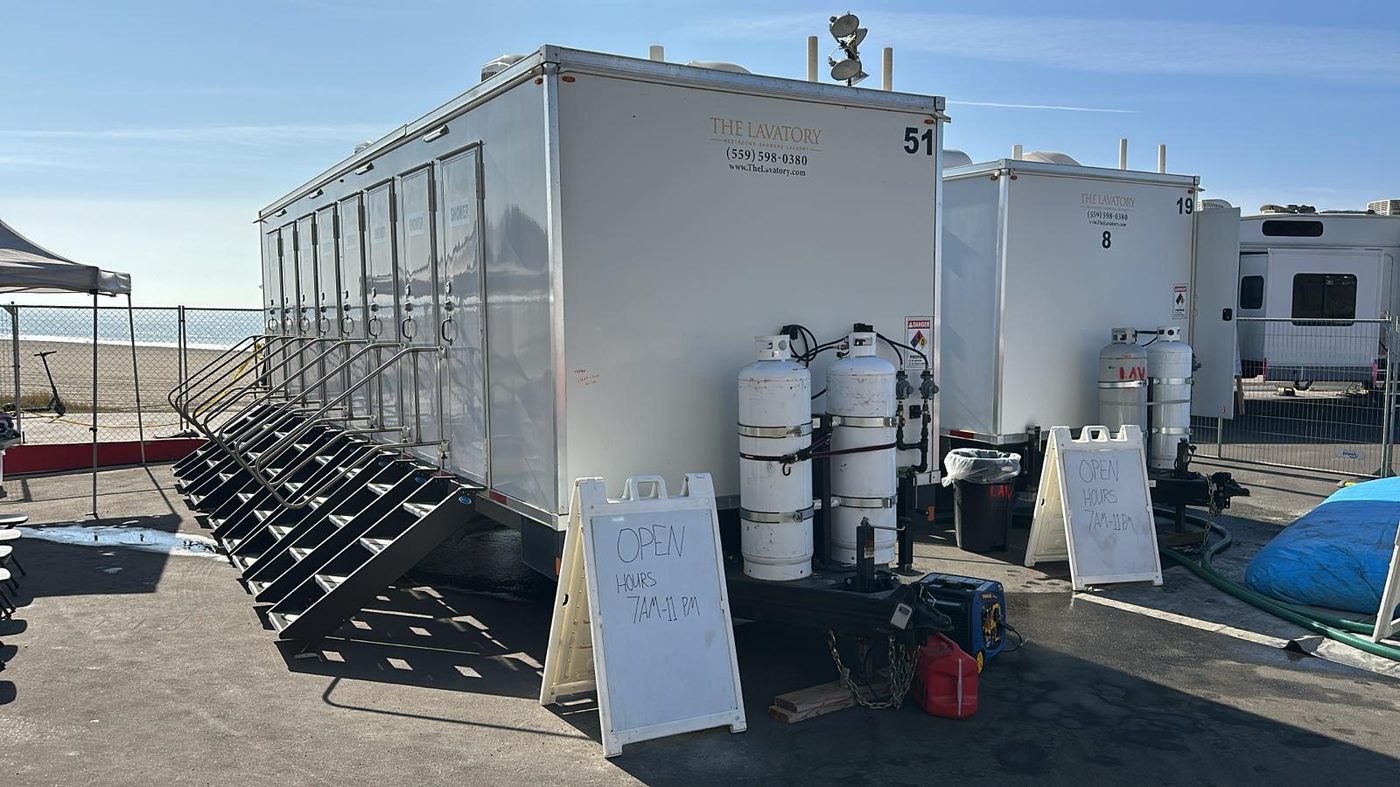
Housing, hygiene, feeding and cold storage as one delivered camp. When an operation needs all of it (wildfire support, hurricane recovery, a workforce surge in a town with no services), the freezer is one line on a contract that covers the whole street of trailers.
We'd rather tell you the truth than win a bad fit rental, so here's the framework we walk callers through. Ownership makes sense for exactly one profile: year round frozen volume at a single address with staff who'll maintain refrigeration equipment as a real duty. Everyone else is buying a depreciating compressor and a future repair bill. The rental case, item by item:
If your frozen need peaks for 11 weeks and idles for 41, ownership means paying twelve months of capital cost for one quarter of use. Processors, caterers and concession operators live on exactly this curve, and the rental term traces it precisely.
Compressors fail on the owner's schedule and the renter's phone call. With us, the machine's health is our line item: preventive service, emergency swaps and every gasket in between. Your risk ends at the door handle.
A purchased unit ties up money that a food business can usually deploy better in inventory or staff. Renting converts a capital decision into an operating line the bookkeeper adjusts monthly. CFOs of nonprofit feeding programs make this argument to us, not the other way around.
Programs end. Grants sunset, renovations finish, seasons close. A rental leaves on a tow truck the week you're done, while an owned unit becomes a resale project sitting in the yard collecting opinions. Ask anyone who's tried to sell a nine year old walk in.
And if your math genuinely favors buying, we'll say so on the call. It happens a few times a year, we point it out, and those callers send us their overflow work later precisely because we didn't waste their winter.
Sooner or later, cold storage meets an insurance adjuster. A walk in dies, a power event hits a facility, a delivery arrives warm, and suddenly the question of what temperature the product experienced becomes a financial question with a specific dollar answer. Clients who rode out the emergency in our trailers arrive at that conversation armed: a continuous service log, timestamps on every transfer and a third party (us) attesting to the storage conditions. "Documented claims settle in weeks. The other kind settle in depositions," a risk manager told us over coffee once, and adjusters we've dealt with behave exactly as she described. Undocumented claims turn into negotiations, and negotiations about thawed inventory rarely favor the kitchen.
The log earns its keep on the prevention side too. More than one client's risk manager has requested our documentation format for their internal programs, and at least two insurance carriers have asked clients who they rented from, then relaxed visibly at the answer. We don't sell insurance and never will. But a rental that arrives with its own evidence trail changes the risk math around every frozen dollar it protects, and the CFOs who've been through one ugly spoilage claim understand that arithmetic before we finish the sentence. The ones who haven't usually call us right after their first one. Meeting everybody one claim earlier suits us better.
We've stood through enough of these inspections to call the route in advance, stop by stop. The inspector checks the exterior thermometer first and writes down the number. Then the door: gasket seal, latch action, whether the closer actually closes. Inside, the eyes go to the floor (sealed, drained, clean), the walls and the product clearance off the deck. Somewhere in there comes the only question that matters: can you show me the temperature history?
With our units the answer is a binder or an export, whichever the moment calls for, and the FDA Food Code conversation ends right there. School nutrition programs answering to state agencies, shelters answering to the Red Cross's food safety standards and caterers answering to their county all report the same experience. The unit passes because it was maintained to pass, week in and week out, rather than detailed in a panic the night before the visit.
"Rental equipment usually makes inspectors suspicious. Yours makes them bored," a client's kitchen manager told us after her third annual review with the same trailer. Bored inspectors are a business asset. We're proud to produce them.

Our walk in died on a Friday with 9,400 pounds of protein inside. The freezer trailer was plugged in behind our dock by early evening and we didn't lose a case. It stayed four months while the rebuild dragged on, and the temp log they kept satisfied our USDA reviewer without a single follow up question. I've recommended them to two other food banks in our network since.

Wedding season means my kitchen freezer is spoken for by Wednesday of every single week. The rental trailer sits behind the shop from May through October and holds the overflow at 11 below, steady. Their tech checks it during my slow hours. Zero compressor drama in two full seasons, ever.

After the ice storm we needed frozen storage at three shelter sites with zero notice. Trailers arrived over one weekend, ran on generators until the grid came back nine days later, and every meal program in the county stayed stocked. The paperwork matched what our FEMA reimbursement team asked for, line for line.
We'll size the box, quote the term and get sub zero capacity moving toward your dock, with the temperature log your paperwork will want later.