Running water stations across several Utah job sites on one fill route
Programs spread out. A highway contract, a district bond or a utility upgrade can put crews at five or six spots at the same time, and each spot comes with its own head count, work hours and access rules. The easy move is to let every foreman handle water on their own, but that is also how a site gets missed during the hottest week of the year.
Start with a site list, and for each location write down the address or a GPS pin, the peak crew size, the shift hours and the dates the work starts and ends. Then add anything that limits a truck, like a gate schedule, a weight limit or a school drop-off window. Most of our planning happens off that one sheet, so the more complete it is, the better the first route will be.
Next, we group the sites by drive time from our fill point. Sites along I-15 between Ogden and Provo can usually share a route, while a crew in Tooele, Heber City or Price is a separate run and a pad in the Uinta Basin is its own day. We build the route so the closest sites are filled before the morning break, and the far ones get extra capacity so they last longer between visits.
Timing matters more than most people expect. A fill truck that shows up at shift change blocks the stations right when the crew wants them most. We aim for quiet windows such as early morning at a road job, class time at a school or mid-shift at a mine. On a program with a dozen stops, those windows end up setting the order of the whole route.
Weather changes the math inside one program. A site in Washington County and a site in Logan can need very different amounts of water in the same week. We size each location for its own conditions instead of a statewide average and revisit the count when the season turns.
Then plan for change. Sites open and close all through a program as a new interchange phase starts, a school wraps up or a crew moves across the valley. Give us a week of notice when you can, and we will add, pull or tow a unit on the next fill visit. When it cannot wait, call the 24/7 line. A crew that doubles for a big concrete pour or a heat wave in early June is exactly what that line is for.
Keep the records together. Each trailer carries a dated log of fills and cleanings, and we can send copies of every trailer's log at once so a safety manager can check each location without chasing paper from each foreman.
Remote sites need extra thought when the crew stays out there overnight. Water is only one piece of the setup. Bunkhouse sleeper trailer rentals for Uinta Basin crews can ride the same delivery schedule, along with restrooms and showers, which means fewer separate trucks on a long gravel road.
Say a contractor has an interchange crew of 90 in Farmington, a yard of 40 in Salt Lake City and a gravel pit crew of 25 out past Tooele. In July the interchange might need two trailers, with one each at the other two sites, and the first two sites can share a morning loop. The pit gets its own run with a longer gap between fills. Come October, the interchange drops to one unit and nothing else changes.
Send us the site sheet, and we will send back a trailer count, a draft route and a fill schedule that you can check against your own numbers.
Placing a water station trailer on a Utah job site: ground, access and layout
Where the trailer sits decides how well it works. Put it in the wrong corner and people will walk right past it to the cooler in their truck, but put it in the right spot and it gets used all day long. A few minutes of planning before delivery day usually saves a second trip.
Start with the ground. The trailer needs a fairly level spot that can hold the weight of a full tank. Gravel, packed dirt and pavement all work fine. Soft ground after a spring storm can sink a tire, so on a muddy site we ask for a gravel pad or a firm spot on the haul road shoulder, and we level the trailer when it arrives.
Then think about the truck. Our tow vehicle and the fill truck both need a way in and a way out without backing through the work, which on a tight commercial lot in Lehi or Draper can mean a spot near the gate instead of the middle of the pad. On a highway job it usually means the staging yard, not a shoulder next to live traffic.
Next, walk through the crew's day. Where do people park, take breaks, eat lunch and wait at shift change? The best spot sits right on that path, close enough that nobody has to decide whether a drink is worth the walk, and on a long site two trailers at opposite ends usually beat one in the middle.
Shade helps. The chiller keeps the water cold either way, but a spot out of the afternoon sun is easier on the unit and a lot nicer for the people standing at the stations. In Washington County or the West Desert, the shadow of a building or a shade canopy is worth asking for when you pick the spot.
Keep the trailer clear of hazards by staying out of equipment swing areas and away from fuel storage, haul road dust and anything that drips from above. On a school site, keep it outside the fence but away from bus lanes and parent pickup, and at an airport or a base, expect the security office to choose the spot for you, so ask before delivery day.
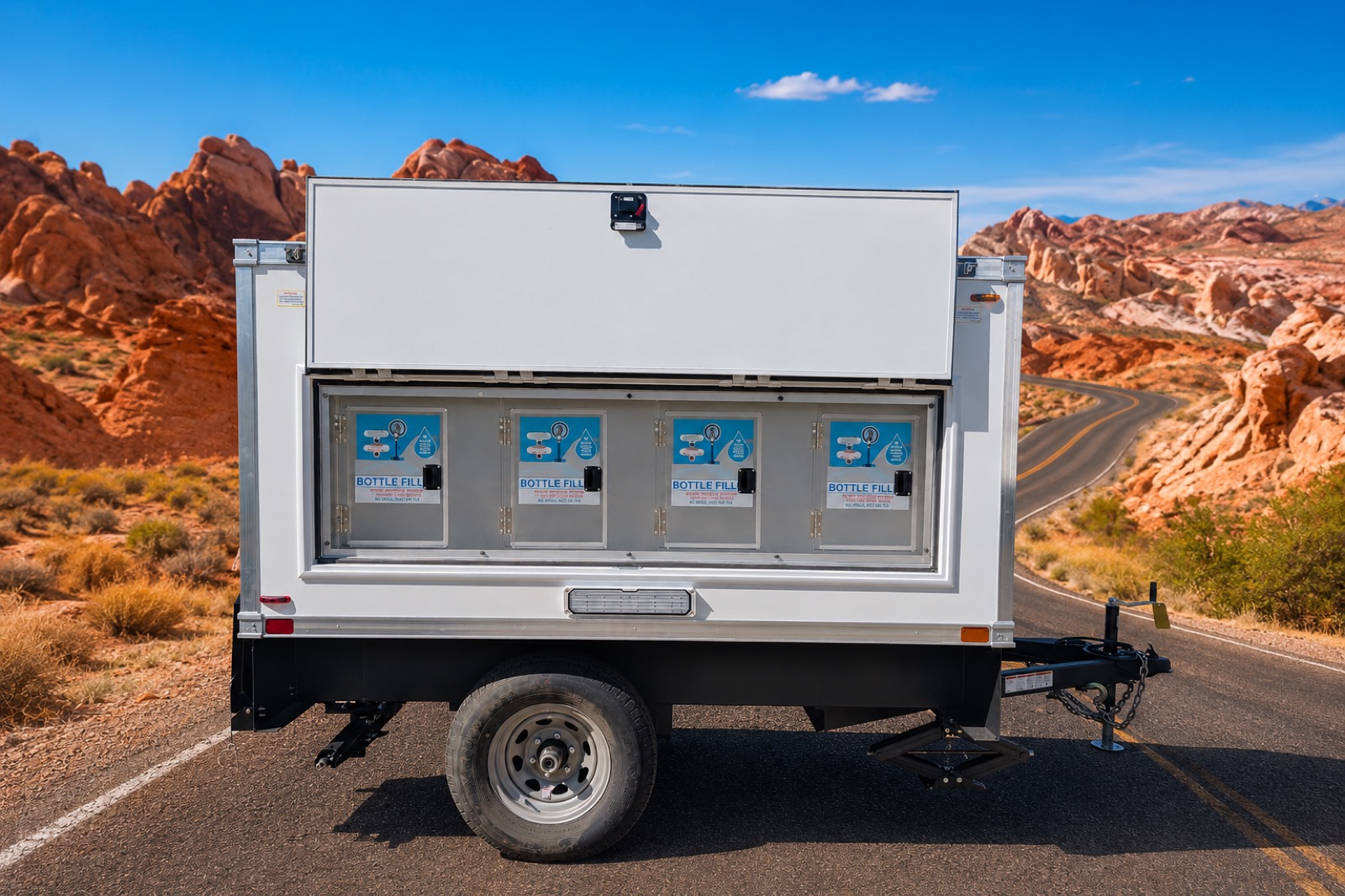
Plan for access, too. The bottle-fill stations sit at ADA height but that only helps if the path to them is firm and clear. A few feet of level ground in front of the stations lets a person in a wheelchair pull up and fill a bottle, with room left over for a short line.
Power and water are optional. If the site has a hose bib or hydrant near the spot, we can connect to it, and if it has power, the chiller can use it. If it has neither, we run from the tank and bring a generator. Tell us what you have when you request a quote, and we will match the delivery to it.
Expect the spot to change on building jobs, where the pad fills in as the structure goes up, and the first spot can end up inside a foundation line within a few weeks. Mark a second spot on the site plan now, so a move later takes one phone call.
After hours matter as well, so on an open site park the trailer where your lights or cameras can see it. A trailer tucked behind a spoil pile is easy to forget until something goes wrong.
Last, send a pin. A GPS pin or a marked site map with the exact spot keeps our driver from guessing on a big site, and if the spot changes later, just tell us before the next fill.
When to book water stations in Utah: a season-by-season calendar
Water demand in Utah follows the calendar. Construction, school breaks, fire season and winter work each peak at different times, and the busy stretches overlap more than people expect, so booking ahead of each peak is the easiest way to get the units and the dates you want.
Late winter and early spring are for planning. That is when highway and building contracts get awarded, district bond projects get their schedules and big programs pull together their site lists. It is a good time to ask for a quote even if the start date is months away. We can hold units for a known start and adjust the count as it gets closer.
Spring brings the first heat to the south, where crews in Washington County feel it well before crews on the Wasatch Front, so southern jobs often need water stations several weeks earlier. Up north, spring storms can still turn a site to mud, and that matters more for placement than heat does.
Summer is the peak for everyone. Road work runs flat out, school districts squeeze as much construction as they can into the weeks when students are gone, and fire season is under way. If your job starts in June or July, book in the spring. Late requests still get answered, but the choice of delivery dates narrows as the season fills.
School calendars shape that summer rush. Most district summer work has to fit between the last day of school and the first day back. Facilities teams who book water stations at the same time as their contractor schedule avoid a scramble in the first week of work.
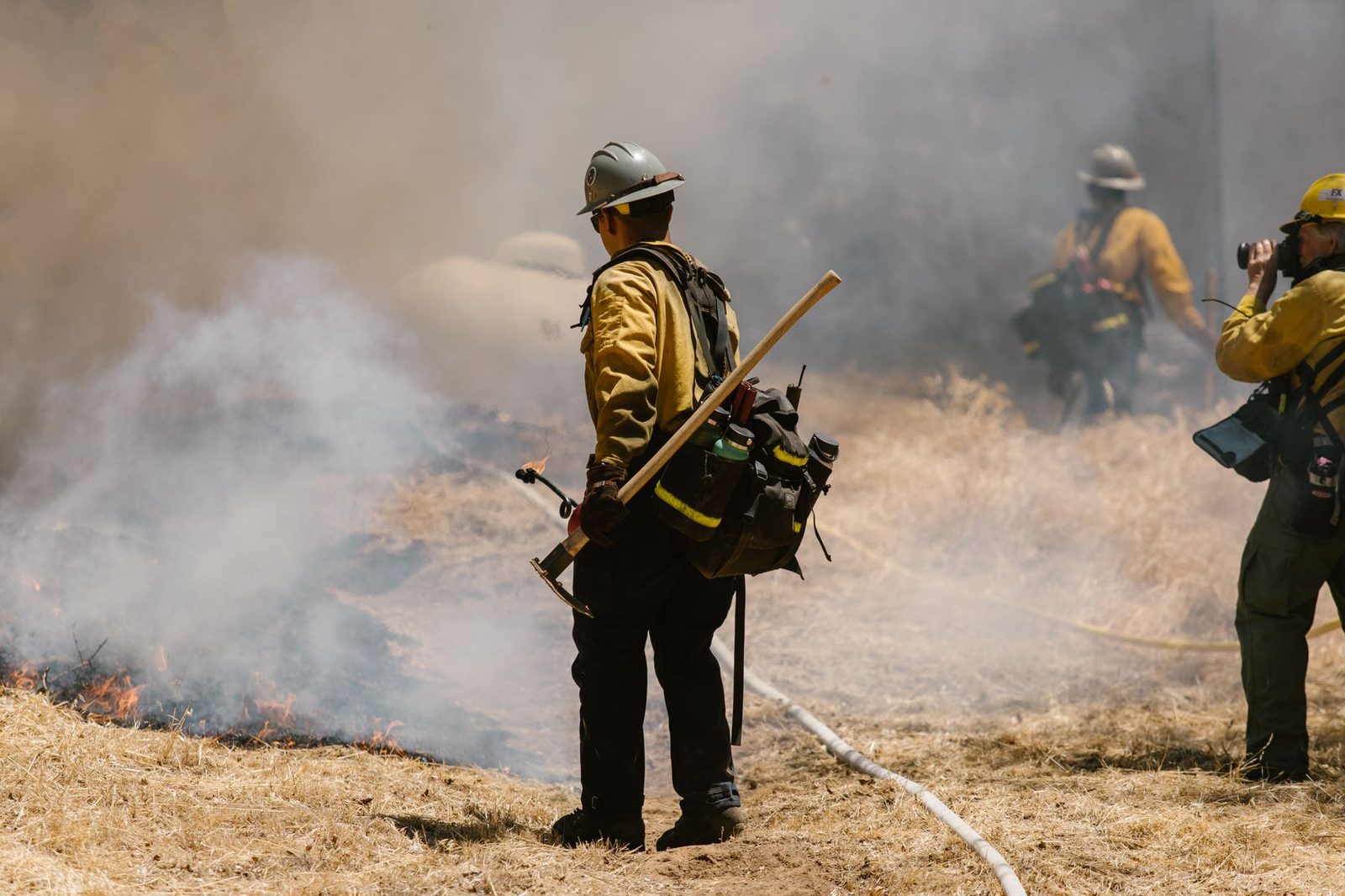
Fire season deserves its own plan. Agencies can watch the predictive services outlooks from the Great Basin Coordination Center to see when fire risk is climbing in their part of the state. We keep units ready for those calls, and agencies that set up an agreement before the season starts can move faster when a camp opens.
Holidays count as well. Crews often work through long weekends to hit a deadline and a fill that lands on July 4 or Labor Day still has to happen. Tell us your holiday work plan and we will schedule around it.
Late summer adds monsoon storms in southern Utah. Heavy rain can flood washes and dirt roads with little warning, so on southern jobs we watch the forecast and may move a fill up by a day to stay ahead of a storm.
Fall is shoulder season. Construction keeps going, but the heat drops off, and many sites can cut back to fewer units or longer gaps between fills. It is a good time to review counts rather than keep summer capacity sitting on site through October.
Winter is a different job. Wasatch Back resort work, snowmaking and base-area projects go on through the cold, while canyon roads close for avalanche control and chain laws kick in during storms. We plan winter deliveries around the storm forecast and fill before a system arrives, not after it. If you have winter work coming, tell us early so we can talk through freeze protection for your site.
Long jobs cross every season, and a multi-year build or a freeway phase will see July heat and January snow on the same site. We set the unit count and fill plan for the season you are in and adjust it as the next one comes, instead of locking in summer numbers all year.
Our line is open 24/7 in every season. A quote request takes a few minutes, and the earlier it comes in, the more choice you have on dates.
Sources: Great Basin Coordination Center
Planning shelter drinking water for a Wasatch Front earthquake or windstorm
Emergency managers along the Wasatch Front treat a big earthquake as a standing planning scenario. The Wasatch Fault runs about 240 miles along the base of the mountains in ten segments, and about 80 percent of Utah's people live along it. A large quake there would not be a one-neighborhood problem. Buried water mains could break in several cities at once.
Smaller events already show the pattern. The magnitude 5.7 Magna earthquake on March 18, 2020 led to a federal disaster declaration for Davis and Salt Lake counties, and a windstorm that September toppled thousands of trees along the Wasatch Front and brought another one. A flooding disaster declared in December 2023 covered five counties, including Utah and Wasatch. Each one put county shelters and recovery teams to work.
Shelters should not count on the building's taps. A school gym or rec center makes a good shelter, but if the local system is under a boil-water order or a main is out, the building's fountains are no help at all. The water has to come from a source that stands on its own.
Line up the vendor before the event. The Division of Emergency Management runs the State Emergency Operations Center and works through county emergency managers, and Utah takes part in the Emergency Management Assistance Compact for help across state lines. A standing agreement with a water station provider slots right into that system, so when the call comes, the paperwork is done and the only question is where to put the trailer.
Work out the numbers ahead of time. How many people could each shelter hold, how long might it stay open, and can a fill truck still reach it if a bridge or overpass is damaged? A shelter behind a closed overpass is a problem no contract can fix, so favor sites with more than one way in.
Think about the source, too. After a large quake the nearest safe water might be farther away than usual. Our trailers are filled only from potable sources, and a trailer that arrives full and holds hundreds of gallons buys time between fills while we plan routes around whatever sources have been cleared.
In a shelter, place the stations near the entrance or the meal line with a clear path for wheelchairs and walkers. The lowered stations let older residents and kids fill a bottle without help. For longer stays, long-stay laundry trailer rentals for Utah shelters can come on the same schedule.
Keep the records as well. Shelter managers and later recovery teams often need to show where supplies came from and when they arrived. Our service log records every fill and cleaning, so it can go straight into your incident file.
Put the details in writing. A good agreement names how many units you may call up, the target arrival time, who can place an order at night and where fills will come from if the usual source is down. Review it once a year alongside your shelter list.
Then test it. Many counties run shelter exercises, and adding the water station to a drill, even on paper, shows where the truck would park and who meets the driver in the middle of the night.
None of this means a quake is due any time soon. Planning in a quiet month is simply easier, so call us and we will walk through your shelter list site by site.
Sources: Utah Division of Emergency Management
Keeping drinking water clean on dusty and remote Utah job sites
Clean water can get dirty on the short trip to someone's mouth. On a Utah job site the usual culprits are dust, open coolers and bottles left sitting in the sun. None of it is hard to fix, but it does take a plan.
Dust is a real factor here. The Great Salt Lake shrank from about 3,300 square miles to roughly 950 square miles as of mid-2022, and the exposed lakebed is a known source of blowing dust along the Wasatch Front. Haul roads, grading and demolition add their own, and an open cooler or a bucket with a lid that never quite closes collects all of it.
The federal construction sanitation standard sets the floor for closed containers and sanitary dispensing on a job site. Good habits on the ground do the rest.
Skip the loose ice. Bagged ice dumped into an open cooler is a common way dirt gets in when hands and scoops go straight into it. A chilled tank takes ice out of the picture entirely.
Keep bottles clean by asking crews to bring their own bottle and wash it every day, or by handing out single-use bottles. A reusable bottle left in a hot truck cab for a week is not something anyone wants to drink from, and bottle-fill stations let people refill without putting their mouth near a shared spout.
Watch stored water in the heat. Pallets of bottled water left in the sun warm up fast and plastic bottles baking for weeks at a laydown yard are not ideal. Chilled water that stays in a sealed tank until it pours avoids that problem.
On remote sites, the fill source matters. Crews sometimes top off jugs from a ranch spigot or a hose nobody can vouch for. We fill our trailers only from potable sources and sanitize them between rentals, and on a long job the sanitizing happens on a schedule and goes in the log.
Set the spot with dust in mind by parking the trailer upwind of haul roads and away from grading when you can. On windy days in Tooele County or near the lakebed, a spot beside a building or a parked storage container cuts down what blows across the stations.
Dust days and hot days often line up. When a dry wind picks up in July, crews drink more and the air carries more grit at the same time. Those are the days an open cooler does the most harm.
Know what to do if a tap acts up. If a station runs slow, looks cloudy or tastes off, stop using it, tape a note over it so nobody else does, and call us. We would rather swap a filter or sanitize early than leave any doubt.
Give one person the job. Someone on each site should look at the stations daily and call us about a leak or anything that seems off. A problem caught on day two is easier to fix than one found at the next fill.
Write it down. A heat plan that lists the water source, the fill schedule and who checks the stations is easy for a crew to follow, and it is just as easy to show an inspector.
Sources: 29 CFR 1926.51, construction sanitation standard