Home / Services / Utah
Utah

VIP Luxury Restroom Trailer Rentals in Utah

Mavirus Group runs private, self-contained luxury restroom trailers onto Utah job sites, government contracts, and base camps. From the Wasatch Front out to the Uinta Basin. Delivery, setup, daily service, and pickup are part of every rental, not an upsell.

Utah's institutional restroom partner

Why Utah's biggest job sites and agencies call Mavirus first

We supply restroom trailers to the crews that cannot afford a bad day. Commercial general contractors, state and federal agencies, the military, school districts, and the mining and energy crews spread across Utah. Every unit is a private, locking suite. Flushing china toilet, a real sink with running water, lights, a fan, and heat or cool air. It is not an open portable toilet, and it does not read like one. Each trailer runs off-grid on its own fresh and waste tanks, then ties into site water and sewer when the site has it. We are SAM.gov registered. We answer the phone at any hour, and we handle delivery, setup, daily service, restocking, waste, and pickup, so your crew forgets the restrooms are even there.

24/7booking and emergency dispatch
2 to 8station private restroom units
ADAaccessible trailer available
SAM.govregistered federal contractor
Our Restroom Trailer Fleet

The Utah fleet, unit by unit

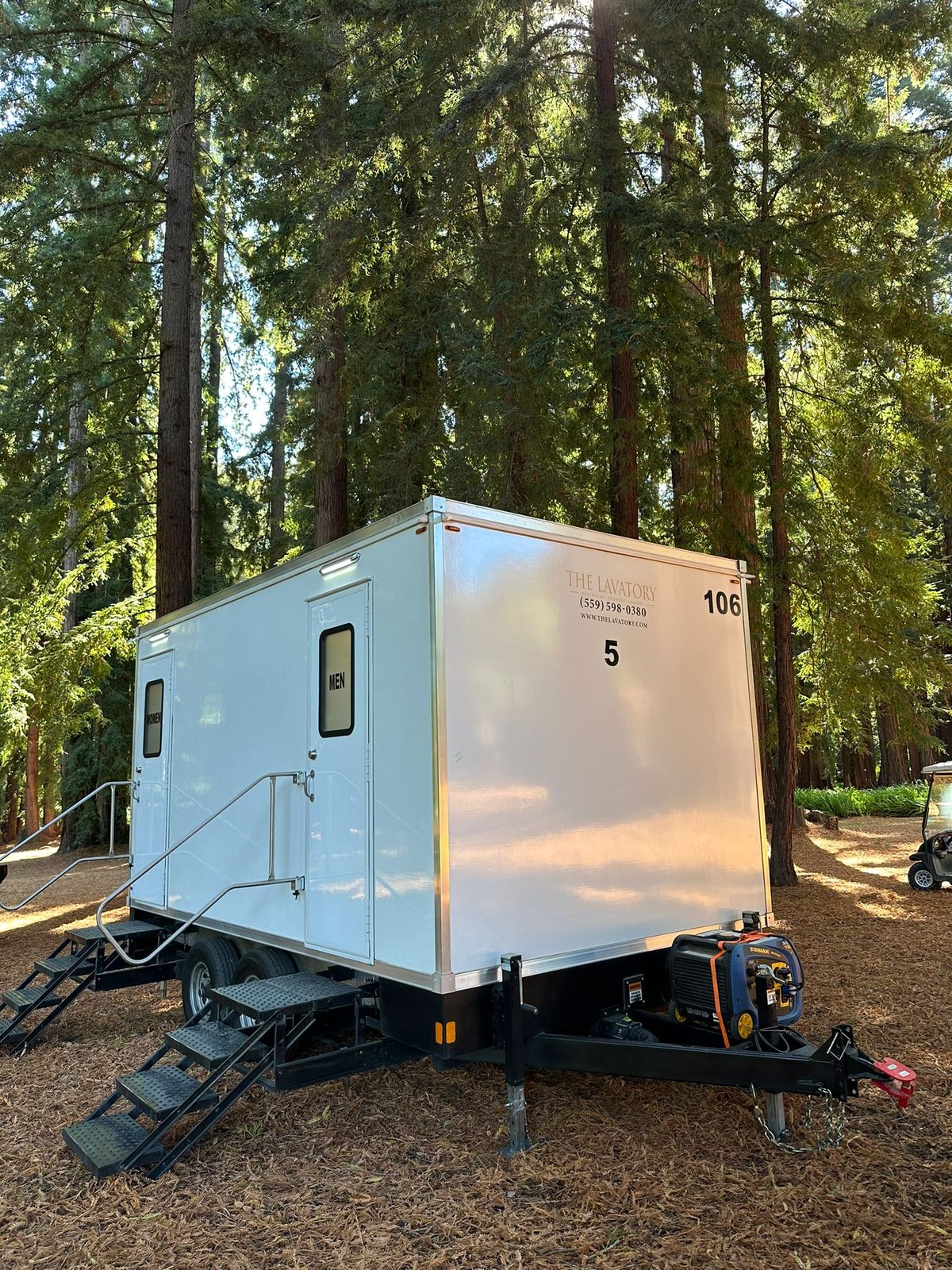
A Mavirus luxury restroom trailer with private flushing suites, ready for Utah delivery
A Mavirus private restroom suite, porcelain flush toilets and running water

Every trailer we run is a private, locking restroom suite. Inside is a flushing china toilet, a real sink with running water, LED lighting, and climate control that swings from heat to cool. Not a plastic stall with a tank under the seat. It is the restroom a general contractor can put in front of an owner walking the Silicon Slopes site.

Size is where it flexes. We run a 2-station unit for a small survey or inspection crew, an 8-station bank for a few hundred workers on a Draper campus, and combos and ADA layouts for everything between. Every unit is self-contained on its own fresh and waste tanks, so it runs off-grid on a raw Eagle Mountain pad and ties into water and sewer the day the site brings them in.

The ADA plus 6 accessible trailer earns its own mention. Ramped entrance, grab bars, a roll-in stall, and it rides in on the same delivery as the standard units. On a government or public placement, that is what clears the access review. And every unit, ADA or not, gets delivered, set, serviced, pumped, restocked, and hauled out on our schedule, not yours to chase.

Where we work

Built for the way Utah actually builds

Utah does not slow down. The Wasatch Front is one long construction corridor. The federal footprint is huge, and the fire and energy work runs up into the high desert and the mountains, past the last power pole.

Commercial construction

Deluxe restrooms for Wasatch Front construction crews

The busiest stretch of dirt in the state right now is The Point at Point of the Mountain in Draper. The old state prison site, now a 600-acre district. Vertical construction broke ground in the summer of 2026, and the first phase alone stacks a 363-unit residential build, ground-floor retail, and a 2,000-foot walkable street called The Promenade. That is years of trade crews on one campus. When hundreds of framers, electricians, and concrete workers badge in every day, a bank of clean private suites keeps them on the deck instead of driving off to find a gas station.

Just south, the Silicon Slopes corridor through Lehi and Eagle Mountain is where Utah's data center boom lives. Meta's Eagle Mountain campus already runs millions of square feet. QTS is finishing a multi-building campus it committed billions to, and Google is holding ground for more. These are huge shell jobs on raw land, and there is no city sewer at the pad. So self-contained temporary restrooms that arrive full and get pumped on a set schedule are the only thing that works out there.

Downtown and at the airport, the work is just as heavy. The Salt Lake City International Airport rebuild is closing out its final Concourse B gates through late 2026. The Delta Center sports district, tied to the Utah Mammoth and the 2034 Winter Olympics, is reshaping the city core. A site like that wants restrooms that look like they belong next to a finished building, not a row of plastic boxes at the curb.

We match the placement to the crew and the phase. A mobile restroom bank goes in during excavation. More stations get added at framing peak, then we pull them back at finish work. Daily service runs on your shift, so units are stocked and clean before the crew badges in. And the invoice stays clean for the GC and the owner.

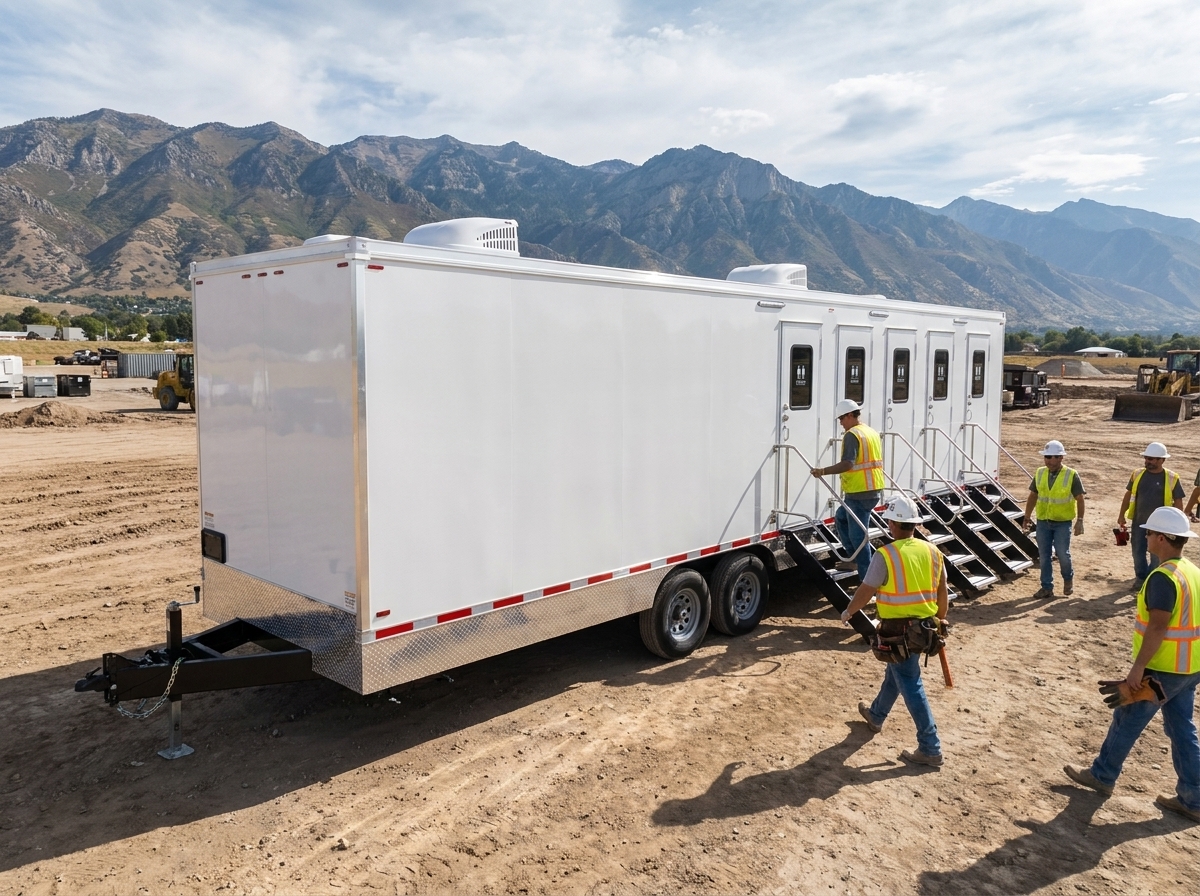
Construction workers in hard hats and vests walking to a private restroom trailer parked at a large Wasatch Front jobsite with the mountains behind
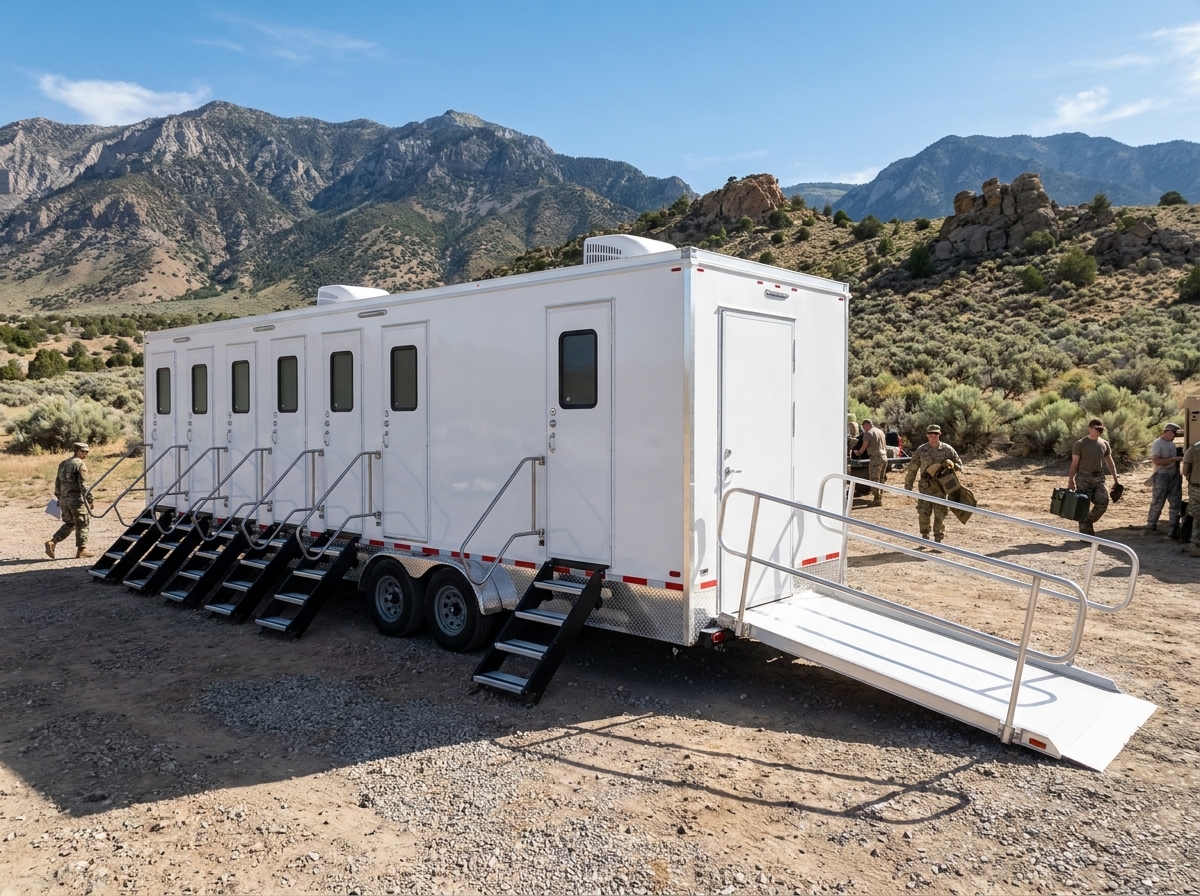
An ADA accessible restroom trailer with a ramp set up at a remote Utah military training site with high desert and mountains in the distance
Government and military

Private restroom units that clear a federal inspection

Utah carries a heavy federal load, and Mavirus is SAM.gov registered to work it. Hill Air Force Base up in the Layton and Roy area runs the Ogden Air Logistics Complex, F-35 depot work, and the long Sentinel ICBM program. All of it pulls contractor crews onto secured ground where the permanent restrooms are already spoken for. Temporary restroom suites let a contractor stand up a work area fast, without waiting on plumbing.

Out in the west desert, Dugway Proving Ground and the Utah Test and Training Range are about as remote as a job gets. Camp Williams on the Bluffdale line keeps the Utah National Guard in constant training. These sites live off-grid by default. Our units haul in with full fresh tanks, run the whole job on their own power and water, and get serviced on a route we build around the base gate schedule.

Government placements almost always trigger accessibility rules. The ADA plus 6 accessible restroom trailer gives you a ramped entrance, grab bars, and a roll-in stall, in the same drop as the standard units. So the site clears a 2010 ADA Standards review and nobody has to explain a gap to a contracting officer. Federal jobs mean Davis-Bacon and documented service too, and we keep that paperwork tight.

We have handled agency work for a range of Utah's public landlords. UDOT, the Division of Facilities Construction and Management, the National Park Service across the Mighty 5, the US Forest Service on the Uinta-Wasatch-Cache. The job never changes. Show up, meet the spec, and never be the reason an inspection slips.

Energy, mining and wildfire

Off-grid restroom trailers for the high desert and the fire line

Rio Tinto Kennecott's Bingham Canyon Mine, on the west side of Salt Lake County, is one of the largest open-pit copper operations on earth. It never really stops. Turnarounds, tailings work, and plant expansions at the pit and the Magna smelter put big contractor crews in spots a permanent restroom will never reach. A restroom bank you can pick up and reset as the work moves is exactly what a job like that needs.

The Uinta Basin around Vernal, Duchesne, and Roosevelt is Utah's oil patch. It set production records pumping waxy crude off remote pads with no hookups for miles. Drilling and workover crews out there run long shifts, a long way from town. Give them a real sink and a flushing toilet at the pad and it shows up in retention.

When fire season hits, the Great Basin Coordination Center in Salt Lake City and the Northern Utah Interagency Fire Center in Draper move crews fast. The 2026 season came in hot, with the Iron Fire and the Cottonwood Fire. Incident command posts and fire camps need private restrooms and handwashing stood up overnight for hundreds of firefighters. We keep units ready for that call and roll on the emergency line.

All of this country runs far from town and off the grid. Our trailers arrive full, run on their own tanks and power, and get serviced on a route we plan around the distance. Mine turnaround, oil pad, fire camp, it does not matter. The unit never leans on a hookup that is not there.

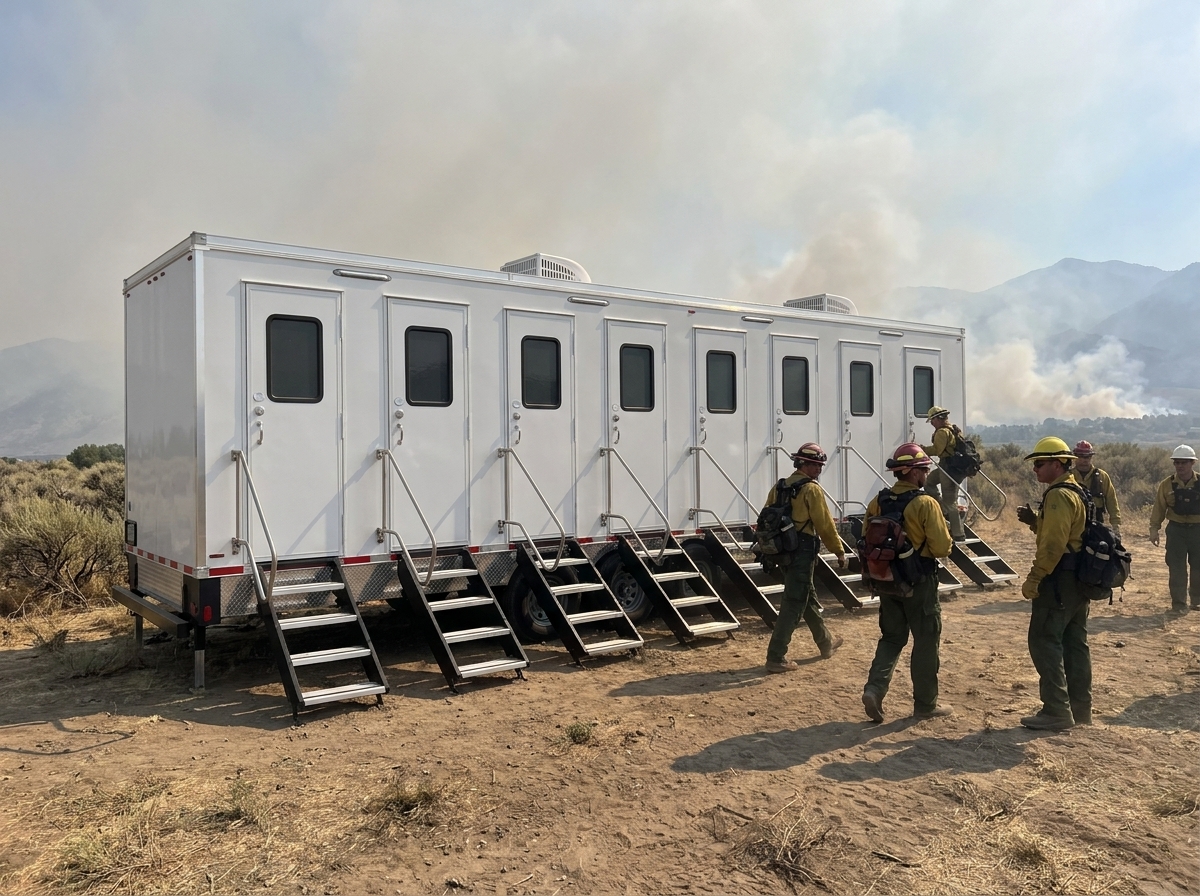
A row of portable restroom trailers staged at a wildfire incident command post in the Utah mountains with smoke haze and fire crews nearby
More of what we cover

Other Utah operations we keep running

School and district projects

Alpine, Davis, Granite, Jordan, Canyons, and Nebo all run bond-funded campus rebuilds. When a wing is torn up or a new school is going vertical, temporary restroom suites keep students and staff covered. And they do not look like a job shack parked by the playground.

Ski country and resort builds

Deer Valley East Village, Park City, and the Cottonwood Canyons resorts all build at altitude in short summer windows. We bring heated, deluxe units that hold up at the base area. When the weather turns, construction and event crews stay comfortable.

Energy and refinery turnarounds

The Salt Lake refineries in North Salt Lake and Woods Cross, plus the Carbon and Emery County coal and gas fields, run scheduled turnarounds with big surge crews. Private restroom banks scale up for the shutdown. Then they come right back out when it wraps.

ADA and public-agency compliance

Any city, county, or state placement that serves the public needs an accessible option. Our ADA plus 6 accessible restroom trailer drops in next to the standard units and clears the 2010 ADA Standards. So permitting through the local health department stays clean.

Corporate campuses and film

Silicon Slopes tech campuses, industrial sites, and Utah's film shoots out in the southern red rock all need clean private restrooms for staff and cast. They hold to a higher standard than a portable toilet. We match the unit to how visible the placement is.

Festivals and large gatherings

For the occasional large public event, we can add luxury restroom space with attendant service. It is a smaller part of what we do. The same clean, self-contained units cover it well.

An ADA accessible restroom trailer with a ramp set up at a remote Utah military training site with high desert and mountains in the distance
Utah weather is the variable

Cold, elevation, and the high desert change the spec

Utah is not a mild-weather state, and it is hard on gear built for somewhere flat and warm. The Wasatch Front sits above 4,000 feet. Ski country and the Uinta Basin run past 6,000, and winter lows stay well below freezing for months. A unit without real heat and insulated plumbing will freeze a supply line solid, right on the morning the crew needs it most.

Our cold-weather trailers carry inside heat, freeze-protected fresh and waste lines, and insulated tanks. So a private suite still flushes at single-digit temperatures. On winter construction, resort base builds, and Uinta Basin oil pads, that is not a luxury. It is the difference between a working restroom and a frozen box. We ask what elevation and season a site runs before we pick the unit.

Summer swings the other way. The southern Utah red rock around St. George and the Mighty 5 parks pushes past 100 degrees, and airflow and cooling are what keep the inside usable instead of an oven. We service more often in heat to keep tanks and stock right. And we time delivery so a hot placement is fresh before the first shift.

Why Choose Us

What sets a Mavirus trailer apart on a Utah job

One route across a big state

Utah spreads a long way, Logan to St. George and out to Vernal and Moab. We plan service routes around that distance, so a remote placement gets the same daily attention as a downtown Salt Lake job. One point of contact covers the whole rental. Not a different number for every county.

A room, not a box

Step inside and it is a private locking suite. Flushing china toilet, a real sink with water that runs, LED lighting overhead. The kind of restroom a Wasatch Front crew does not dread walking into.

Heat and cool built in

Climate control is standard, and Utah makes you use it. Single-digit mornings on the Front, triple digits down in the red rock. The inside stays livable either way.

From two stations to eight

The fleet runs a small 2-station bank up to an 8-station trailer, with combos and an ADA unit in the mix. So a survey crew and a 300-person data center pad both get sized right, not handed the same drop.

Runs where there is nothing

Onboard fresh and waste tanks mean the unit works off-grid, no hookup required. When a site has water, sewer, or power, we tie straight in. A Uinta Basin pad and a downtown lot get the same trailer.

We handle the whole cycle

Delivered, set, and leveled. Serviced and restocked on your shift. Tanks pumped, waste hauled, units picked up when the job ends. Nothing about the restrooms lands back on your foreman.

Federal-ready on paper

Mavirus is SAM.gov registered, and the ADA plus 6 accessible unit ships alongside the standard suites. A Hill Air Force Base contractor or a county job clears its access review without a second trip.

Customer Stories

A few Utah jobs we have handled

General contractor, Silicon Slopes data center shell

A GC building a data center campus near Eagle Mountain had 200-plus trade workers on raw ground. No sewer at the pad, and a hard schedule. We set an 8-station private restroom trailer plus an ADA unit, pumped on a twice-weekly route, and added stations through the framing peak. The super stopped losing crew time to off-site runs. The placement never drew a sanitation writeup.

County emergency manager, Great Basin fire camp

When a fast-moving fire opened an incident command post in northern Utah, the emergency manager needed restrooms and handwashing for a few hundred crew by the next morning. We rolled deluxe units and an accessible trailer on the emergency line that night. Serviced them daily through the incident, then pulled them the day camp closed. No permanent facilities, no delay.

School district facilities director, Wasatch Front rebuild

A district tearing down and rebuilding a campus needed interim restrooms that would not look like a construction shack next to the school. We placed private restroom suites for the whole build and serviced them on the school schedule. We also handled the local health department paperwork, so the facilities director never had to chase it.

Around the Region

Utah regions we cover

Wasatch Front

Salt Lake, Davis, and Weber counties hold most of Utah's people and most of its construction. Downtown high-rises, the airport rebuild, Hill Air Force Base. This is where we run the highest volume and the tightest service routes.

Utah Valley and Silicon Slopes

Lehi, Eagle Mountain, Provo, and Orem drive the tech-campus and data center boom. Add The Point in Draper on the county line. Off-grid shell jobs and dense campuses both lean on self-contained restroom units out here.

Wasatch Back

Park City, Heber, and the Deer Valley East Village expansion build at altitude, in short seasons. These placements need heated, deluxe trailers that hold up at the base area through construction and resort events.

Uinta Basin

Vernal, Duchesne, and Roosevelt anchor Utah's oil and gas country. Remote pads with no hookups make off-grid, self-contained private restrooms the only practical option out here.

Washington County

St. George is one of the fastest-growing metros in the country. The red rock and Mighty 5 parks around it draw heavy federal and public-lands work. Summer heat makes airflow and frequent service the priority.

Cache Valley and northern Utah

Logan and the northern tier run farming, campus projects, and their own construction pipeline. We reach it on the same routes that cover the northern Wasatch Front. So distance never means slower service.

The real rules

How Utah regulates restroom trailers, in plain terms

The core rule is Utah Administrative Code R317-4, the state's onsite wastewater program, and R317-4-10 on wastewater holding tanks. It treats a self-contained restroom placement as a temporary holding-tank system. That is allowed for construction sites, labor camps, temporary mass gatherings, and emergency sheltering, usually for up to a year. It also requires a contract with an approved pumper under R317-550, so waste gets pulled on a schedule and dumped only at an approved site. We carry that arrangement, so the site does not have to.

Permitting usually runs through the local health department. Salt Lake County, Utah County, Davis County, Weber-Morgan, or Southwest Utah down south. They handle temporary and mobile sanitation and mass-gathering rules, and the rules shift a little county to county. On construction, federal OSHA rules under 29 CFR 1926.51 also set how many toilet and handwashing stations a crew size needs. We size the placement to keep you on the right side of that count.

Accessibility is the piece people forget until an inspector shows up. The 2010 ADA Standards call for an accessible option on public and most government sites, and our ADA plus 6 accessible restroom trailer meets it with a ramp, grab bars, and a roll-in stall. Holding-tank approval, the pumper contract, the OSHA count, the ADA unit. We handle the whole stack, so it is one less thing on your plate.

Service Area

Restroom trailer rentals across Utah

We deliver and service statewide. From the Wasatch Front metros to the mountain resorts and the remote basin and desert sites. Tell us the location, the crew size, and the season, and we will spec the right units and a service route to match.

Salt Lake CityWest Valley CityWest JordanProvoOremSandyOgdenLaytonSt. GeorgeLehiDraperMillcreekTaylorsvilleHerrimanEagle MountainRivertonSpanish ForkRoyPleasant GroveTooeleLoganVernalPark CityMoab
Reviews

What Utah crews and agencies say

Derek H., project superintendent, Draper
Derek H.project superintendent, Draper
★★★★★

We had a full crew at a Point of the Mountain build and needed restrooms that would not slow anybody down. Mavirus set the units, serviced them before every shift, and I never got one complaint. Clean, on time, done.

Marisol R., county emergency manager, northern Utah
Marisol R.county emergency manager, northern Utah
★★★★★

They rolled restroom and handwashing units to our fire camp overnight when I called the emergency line. Serviced daily the whole incident and pulled them the day we closed. Exactly what you want under pressure.

Kurt A., facilities director, Wasatch Front
Kurt A.facilities director, Wasatch Front
★★★★★

The private suites they placed for our school rebuild actually looked good next to the campus, and they handled the health department paperwork for me. That alone was worth it.

Tyson B., drilling supervisor, Uinta Basin
Tyson B.drilling supervisor, Uinta Basin
★★★★★

Our pads are an hour from anything and it gets brutally cold. Their cold-weather units kept working when other gear would have frozen up. The crew noticed, and it helped us hold people.

Jen P., GC office manager, Lehi
Jen P.GC office manager, Lehi
★★★★★

One point of contact for the whole rental, clean billing for the owner, and an ADA unit dropped in without me asking twice. Easiest vendor on the whole data center job.

FAQ

Frequently asked questions

Do your restroom trailers work off-grid on remote Utah sites?
Yes. Every unit is self-contained, with onboard fresh and waste tanks, and it runs off-grid with no hookups. That is how we cover Uinta Basin oil pads, Dugway, and data center shells on raw ground. When site water, sewer, or power is there, we tie into it. Either way, we pump and restock on a route built around your location, even the remote ones.
Can you meet ADA requirements for a government or public site?
Yes. Our ADA plus 6 accessible restroom trailer has a ramped entrance, grab bars, and a roll-in accessible stall, and it meets the 2010 ADA Standards. It drops in next to the standard private units in the same delivery. So a city, county, state, or federal placement clears its accessibility review without a separate trip.
Will the trailers hold up in a Utah winter?
Our cold-weather units carry inside heat, insulated tanks, and freeze-protected fresh and waste lines, so a suite still flushes at single-digit temperatures. Utah runs cold and high. The Wasatch Front sits past 4,000 feet, ski country and the basin past 6,000. We always ask the elevation and season before we pick the unit. A frozen restroom helps no one.
Is Mavirus set up to work federal and government contracts?
Yes. We are SAM.gov registered and we handle the paperwork federal and state work requires, including Davis-Bacon jobs and daily service records. We have supported placements tied to agencies like UDOT, the Division of Facilities Construction and Management, the National Park Service, and the US Forest Service. Show up, meet the spec, keep the records clean.
What permits does a restroom trailer need in Utah?
Self-contained placements fall under Utah Admin Code R317-4-10 as temporary holding-tank systems, and they require an approved pumper contract under R317-550, which we carry. Permitting usually runs through the local health department, such as Salt Lake County or Utah County, and the rules vary a little by county. We handle the holding-tank and pumper side, so you are not chasing it.
How fast can you respond to an emergency or fire camp?
We keep units ready for emergency dispatch and answer the booking line 24/7. When the Great Basin Coordination Center or a county opens an incident command post, we can roll private restrooms and handwashing the same night and service them daily through the incident. When camp closes, we pull the units on your timeline.
How many stations do I need for my crew size?
Federal OSHA rules under 29 CFR 1926.51 set toilet and handwashing counts by crew size, and we size the placement to keep you compliant. Our fleet runs from a 2-station unit up to an 8-station trailer plus combos. So we can start small during excavation, add stations at the framing peak, and scale back at finish work. Tell us the headcount and shift pattern and we will spec it.
Do you cover the whole state or just Salt Lake?
The whole state. We run the highest volume on the Wasatch Front, but we deliver and service from Logan to St. George and out to Vernal, Moab, and the west desert. We plan routes around the distance, so a remote placement gets the same daily attention as a downtown Salt Lake job.
What comes with the rental, and what do we handle?
Every rental includes delivery, setup, daily or scheduled service, restocking, waste handling, and pickup. You are not renting a box and figuring out the rest. We deliver the units full, set them, service them on your shift schedule, pump the tanks, keep them stocked and clean, and haul them out when the job ends.
How are these different from a standard portable toilet?
A standard portable toilet is an open plastic unit. Ours are private, locking restroom suites, with a flushing china toilet, a real sink with running water, lights, a fan, and heat or cool air. On a professional job site, a government contract, or a public placement, that difference shows in worker retention, inspections, and how the site reads.
Can you handle a very large construction workforce?
Yes. Big Utah sites like The Point in Draper or a Silicon Slopes data center can put hundreds of trade workers on one campus. We stage banks of private restroom suites, add an ADA unit, and service more often as the headcount climbs. We scale the placement across the phases of the build, rather than dropping a fixed count and walking away.
Do you service ski resorts and high-elevation builds?
Yes. We deliver heated, deluxe units to the Wasatch Back, including the Deer Valley East Village expansion, Park City, and the Cottonwood Canyons resorts. Base-area builds and resort events at altitude both need trailers rated for cold and snow, and we spec and service them for the short mountain building season.
Resource Library

Utah restroom trailer resource library

How to size restroom trailers to your Utah crew or event

The first question on any placement is how many units you need. It comes down to two things. How many people will use them, and how long they will be on site. Guess low and you get lines and complaints. Guess high and you pay for space you do not use.

On a construction site, the count is not a guess at all. Federal OSHA rules under 29 CFR 1926.51 set the number of toilets and handwashing stations by crew size. As the headcount climbs, the required number climbs with it. Get that ratio wrong and it is a citable problem, so we start every job-site placement from that rule.

A simple way to think about it. A small crew of a dozen workers is covered by one facility, and larger crews add stations from there. Rather than memorize the table, tell us the peak headcount and we map it to the right mix of units. That keeps you compliant without overbuying.

Events work a little differently. There is no OSHA table, so you size to the guest count and the length of the event. A short two-hour gathering needs less than an all-day one. And food and drink push usage up. Peaks matter more than the average, since everyone lines up at the same time.

It helps to know what a station is. Each station is one private, self-contained toilet room inside the trailer. Our fleet runs from a 2-station unit up to an 8-station trailer, plus combo units. So we can cover a small crew or a few hundred people on one campus with the right combination.

Plan around the busy phase, not the first day. On a build, excavation needs less than framing peak, and finish work tapers off again. Size to day one and you come up short later. We add stations as the crew grows and pull them back as it shrinks, so you pay for what is actually on site.

Add an accessible unit when the public or a mixed crew is involved. Our ADA plus 6 accessible restroom trailer counts toward your total and covers the accessibility rule in the same drop. It is easier to plan it in from the start than to bolt it on after an inspector asks.

Build in a little buffer. Sizing to the bare minimum means lines when everyone breaks at once, and lines cost time on a job and goodwill at an event. A bit of extra space is cheap next to a crew standing around waiting.

The easiest path is to hand us the numbers. Give us the peak headcount and shift pattern for a job, or the guest count and length for an event, and we will spec the units and a service schedule to match. No guessing at a table.

What to ask before you rent a restroom trailer in Utah

A restroom trailer rental is easy to get wrong if you only compare a price and a delivery date. A few questions up front tell you whether you are getting a real service or just a unit dropped in a lot. Here is the short list we wish every renter asked.

First, ask what is included. A real rental covers delivery, setup, scheduled service, restocking, waste handling, and pickup. Some outfits drop a unit and leave the rest to you. Ours is full service, first drop to final haul-out, so nothing lands back on your crew.

Second, ask how often it gets serviced and who does the pumping. A unit is only as good as its last service. Find out the visit schedule, whether it flexes with your shift, and whether the same company handles the tank pumping or hands it off.

Third, ask about permits. In Utah, a self-contained placement is a temporary holding-tank system under state rule, and it needs an approved pumper contract. Ask who pulls the local health department permit and who carries the pumper agreement. We carry the pumper side and point you to the right county office.

Fourth, ask about power and water. Find out whether the unit needs a hookup or runs on its own tanks. Ours are self-contained and run off-grid, then tie into site water and sewer when it is there. That matters a lot on raw ground with no service at the pad.

Fifth, ask about accessibility. If the public or a mixed crew will use the site, you need an accessible option. Ask whether an ADA unit can come in the same delivery. Ours drops in next to the standard units and meets the 2010 ADA Standards, so you are not scrambling later.

Sixth, ask about response time. Things change on a job, and emergencies do not wait for business hours. Find out if there is 24/7 booking and how fast a unit can roll on short notice. We answer the line around the clock and keep units ready for same-night calls.

Seventh, ask what the unit actually is. A private, locking suite with a flushing toilet, a real sink, lights, and climate control is a different thing than an open plastic box. On a professional or public site, that difference shows in how the place reads and how crews treat it.

Last, ask about billing and contact. One clean invoice and a single point of contact beats a different number for every task. Get those answers and you will know, before you sign, whether the rental is a solved problem or a running headache.

Getting your Utah site ready for a restroom trailer

A restroom trailer needs a little prep before it lands. A few minutes of planning saves a bad drop, a tilted unit, or a truck that cannot reach the spot. None of it is hard. It is just worth thinking through before delivery day.

Start with the spot. You want firm, fairly level ground that a service truck can reach now and every visit after. Soft dirt that turns to mud, a steep slope, a corner boxed in by equipment. Each one makes the placement harder than it needs to be.

Leveling makes a real difference. A trailer sits and drains best on level ground. We level every unit on delivery with jacks and blocks, but a reasonably flat base makes that quick and keeps the toilets and sinks working the way they should.

Think about access and clearance. The delivery truck needs room to back in, set the trailer, and pull out. Then it needs the same room again to come back for pumping. Low branches, tight gates, parked machinery. Those are the usual snags, so keep the lane open.

Sort out power and water early. If site water, sewer, and power are there, we can tie in. If not, the units run off-grid on their own fresh and waste tanks, which is how we cover raw pads and remote ground. Either way, tell us what is available so we bring the right setup.

Place units close to where people actually work. A restroom across a big campus goes unused, and on a large site one central bank may not reach every crew. We set units near the active work zones and move them as the work shifts.

Rough terrain is normal in Utah, and it is not a dealbreaker. Gravel lots, open fields, remote pads. They all work as long as a truck can get in. We handle the leveling and the footing, but a heads-up about the ground helps us bring the right equipment the first time.

Keep the unit reachable the whole rental, not just on day one. A pad that was easy in dry weather can get boxed in by later work or turn soft after a storm. If we cannot get a truck back to it, we cannot pump and restock it. So plan the spot with service in mind.

The easy version. Send us the location, a rough idea of the ground, and what hookups exist. We will help you pick the spot before delivery, so the trailer lands right the first time and stays serviceable the whole job.

Delivery and daily service on a remote Utah site

The rental does not end when the trailer lands. The service is the real work, and on a remote Utah site it is what separates a clean, working restroom from a problem nobody wants to own. Here is how the service side actually runs.

Delivery comes first. Units arrive full, and we place and level them where you want them. On a remote pad or a backcountry staging area, that means the trailer shows up ready to use. No waiting on a water line or a power drop that is not there.

Then comes the regular service. On a schedule that matches your shift, we pump the tanks, restock supplies, and clean and sanitize each unit. That is what keeps a unit usable day after day. And it is the part a drop-and-leave rental skips.

Distance is the Utah challenge. A placement can sit an hour or more from the nearest town, and it still needs the same attention as a job in the middle of Salt Lake. We plan service routes around that distance, so a remote site does not get skipped or shorted.

Some sites have no infrastructure at all. Gravel yards, open fields, remote pads with nothing nearby. Routine for us. The units run on their own tanks and power between visits, so they keep working even where there is no hookup for miles.

Service frequency scales with use. A light-duty placement needs less than a busy camp where crews run around the clock. We set the visit schedule to the headcount and the hours, and we step it up when a site gets heavy, so the units never fall behind.

Short-notice needs are part of the job. Sites change, headcounts jump, things come up after hours. We answer the booking line 24/7 and keep units ready to roll, so a same-night or next-morning add is a phone call, not a week-long wait.

Pickup works on your timeline, not ours. When the phase wraps or the site stands down, we haul the units out when you are ready. You are not stuck with gear you no longer need or paying for a placement past the point it is useful.

Through all of it, you deal with one point of contact for the whole rental. One number covers delivery, service, changes, and pickup, even when the site is far out and the routes run long. That is what lets a remote placement feel as handled as a downtown one.

More Rentals

Other trailers we rent in Utah

More ways Mavirus keeps Utah crews and agencies covered across the state.

Get a Quote

Get a Utah restroom trailer spec'd for your site

Tell us the location, the crew size, and the season, and we will put the right units and a service route on the calendar. One call covers a downtown Salt Lake lot or a pad an hour past Vernal.

Get a Quote Call (855) 687-1887