How many restroom stalls an Oregon event needs: a peak-flow checklist
Most people order restrooms by total headcount. That works for a rough guess, but the number that decides whether guests wait in line is how many people want a restroom in the same ten minutes. Use the peak, and the rest follows.
Start by finding the peak. At a graduation, the peak is the half hour before the ceremony and the half hour after. At a festival, it is the moment between the headline act and the next one. At a wedding, it comes after the ceremony and again after dinner. At a race, it is the hour before the start.
Then count how long the event runs. A two-hour fundraiser sends guests through once, while an all-day fair sends them through three or four times. The longer the event, the more stalls you want, even if the crowd is the same size.
Drinks change everything. Beer gardens, wine tastings and coffee carts all push the number up. A vineyard reception with a long cocktail hour needs more stalls than a church picnic of the same size, and a morning fun run needs a burst of capacity right at the starting line.
Think about who is coming. Families with small children and older guests use restrooms more often and need more time inside. Plan for an accessible stall near the main walkway, on level ground with a hard path, and put it close to the seating so guests do not need to cross a field.
Placement matters as much as count. Two small clusters at opposite ends of a large site beat one big cluster at the far end of the parking lot. Keep the path lit for evening events and keep the units a little away from food service and photo spots.
Weather also matters. A rainy Willamette Valley afternoon sends people toward any covered space, so a unit near a tent entrance sees more traffic. On hot days, guests visit more often to cool off and wash their hands, so add a little extra.
Before you call, write down five things: the date and hours, the expected crowd and the busiest hour, whether alcohol is served, what water and power are on site, and the width of the gate or driveway. With those, Mavirus Group can size the order in one conversation.
Wet-season site prep for restroom trailers in Western Oregon
From October through May, a restroom trailer in Western Oregon has to cope with mud, standing water and a short stretch of daylight. A little planning before delivery day makes the difference between a unit that sits level and a stuck truck.
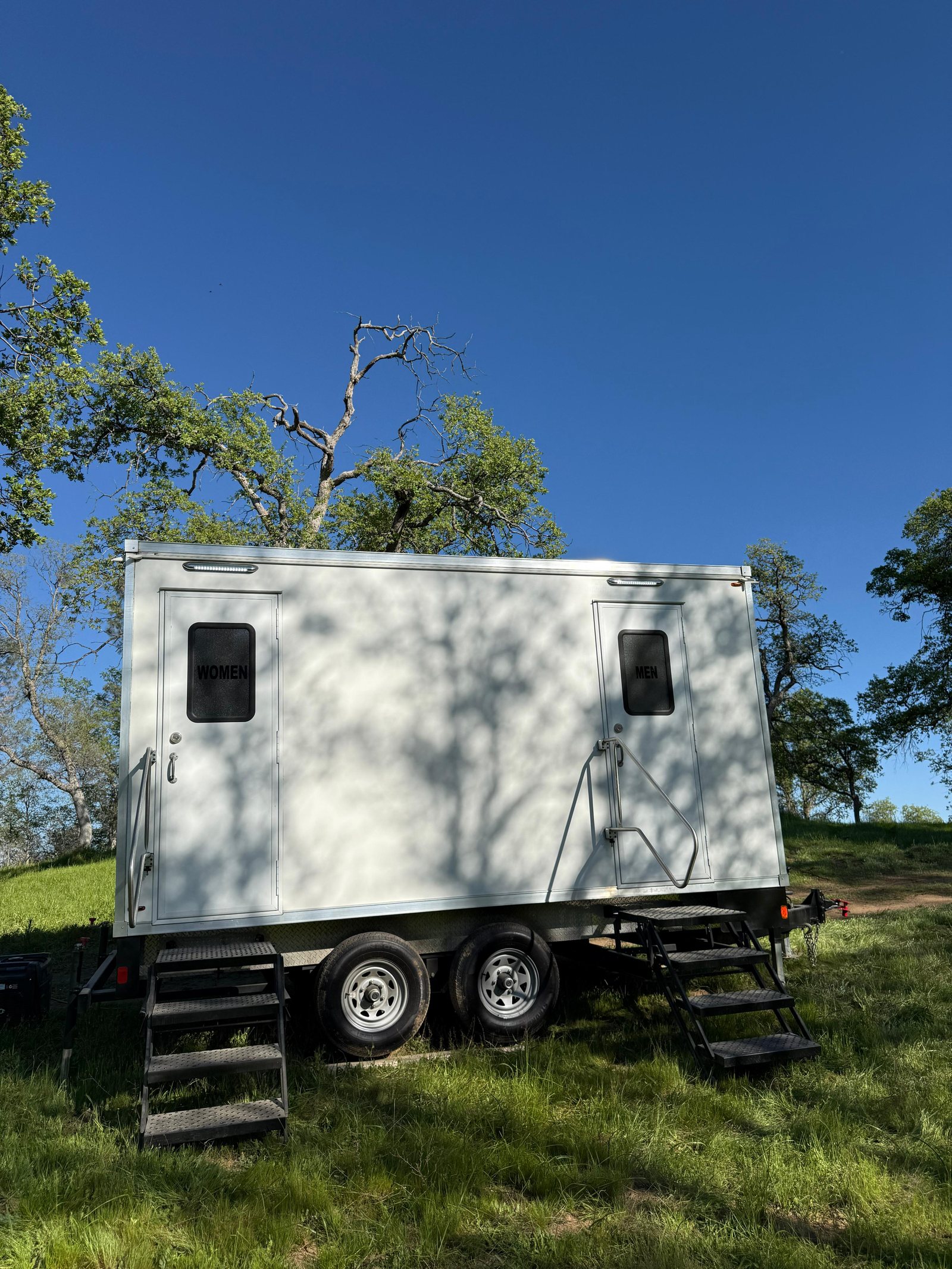
Start with the pad. A trailer needs ground that stays firm when wet, so gravel, packed base rock or planking beats a lawn. Avoid the low corner of the field where water collects. If the only option is grass, tell the dispatcher so the setup can include boards or mats under the wheels and the stairs.
Check the route in. Tow vehicles are long, and narrow farm gates, tight turns and overhead branches are common on Oregon roads. Measure the gate width, note any hills or soft shoulders and send a few photos. A five-minute look at the access path saves a long delay at the gate.
Think about the slope. A trailer should sit level so doors close, water drains and guests step in comfortably. A slight rise on a gravel drive can be handled, but a sidehill lawn is a poor choice. Walk the pad with a level or have our team review a photo.
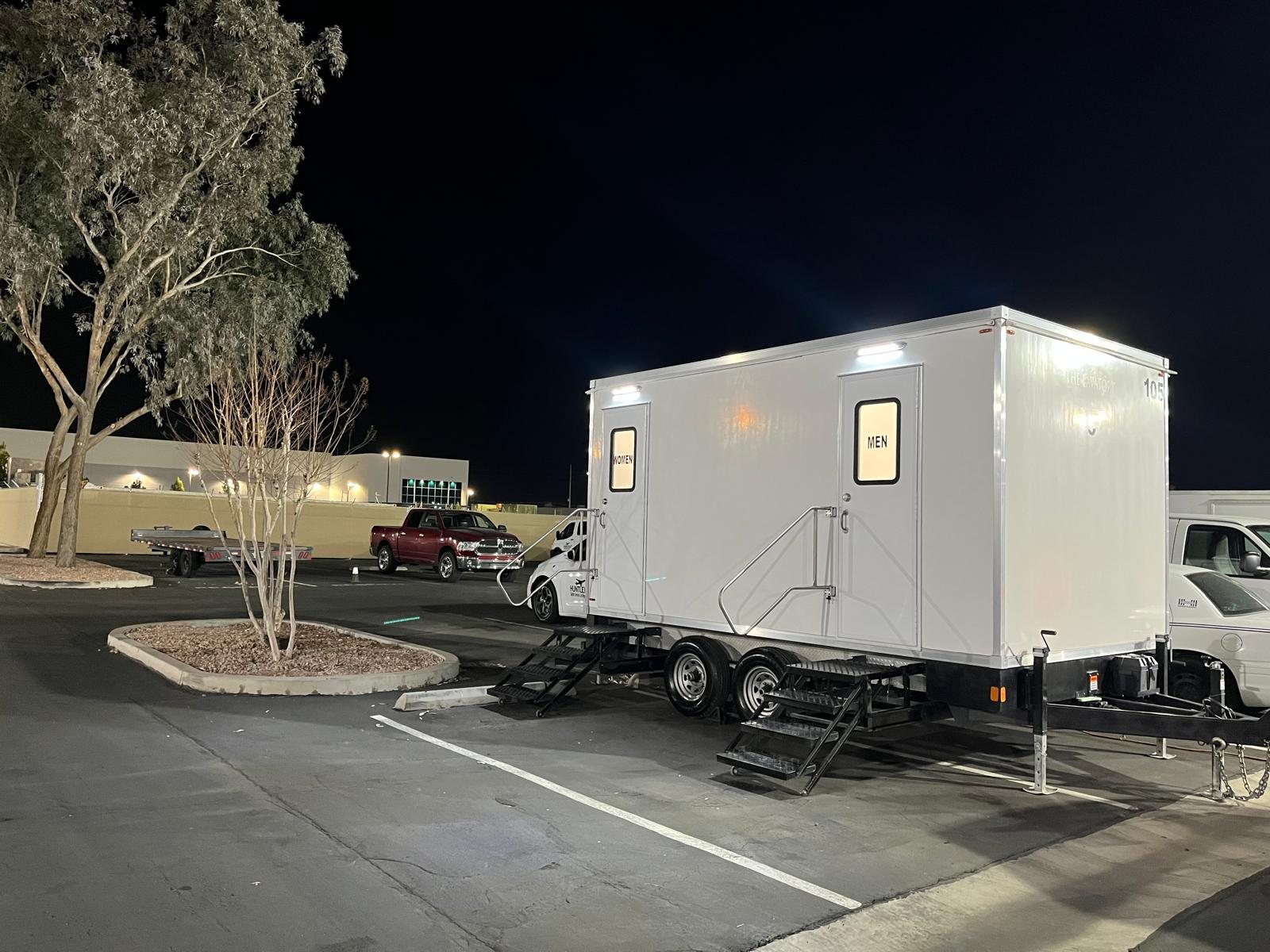
Add light and a path. Winter evenings begin early, and a wedding or fundraiser that runs past five o'clock needs a lit walkway from the parking area to the unit. String lights, solar path lights or a few portable lamps are enough. Make sure the path is firm enough for heels and wheelchairs.
Plan for runoff and cleanup. Position the trailer so rain does not drain toward a tent or a seating area. After the event, rutted lawns are a common headache, so ask how the truck will enter and leave and whether mats are needed to protect the grass.
Check the forecast and keep a plan B. The National Weather Service Portland office posts regional forecasts, and a quick look two days ahead tells you whether to add planking or move the pad. Mavirus Group can adjust the setup if the weather turns, but earlier notice gives more choices.
Finish with a short call list: the pad surface, the gate width, the slope, the lighting and the weather plan. A wet-season order with those answers goes in smoothly and the trailer is ready for guests on time.
Sources: National Weather Service Portland forecast office
What to ask a restroom trailer company before a fire-season deployment
Fire seasons in Oregon can be quiet or severe, and the difference is hard to predict. A small fire season can still mean a large sanitation job, because a single fire near a town can send thousands of people to shelters and camps that need clean restrooms right away.
Ask first how fast the company can dispatch and whether a person answers at night. Fires start in the afternoon and evacuations often begin after dark. A company that does not answer after hours cannot help you at the time you need it.
Ask what happens when there is no water or power. Camps and shelters are often set up on ridges, in parking lots or on rangeland. You want self-contained units with a holding tank, and you want to know how the company plans to get power to the unit if it needs any.
Ask about the service route. A trailer is only as good as its last cleaning. Find out how often the units are serviced, who does the work, how waste is pumped and hauled, and what you do if a unit needs attention between visits.
Ask how the order scales. Fire camps grow from a few tents to hundreds of people in a day. A good company can add trailers quickly, place them in groups and keep the service route in step with the growth. Ask how a second or third delivery would work.
Ask about the paperwork. Government and relief-agency buyers need clear invoices, a point of contact and a certificate of insurance, and they need them before the invoice arrives. Having the vendor setup done in advance is the easiest way to save time during an emergency.
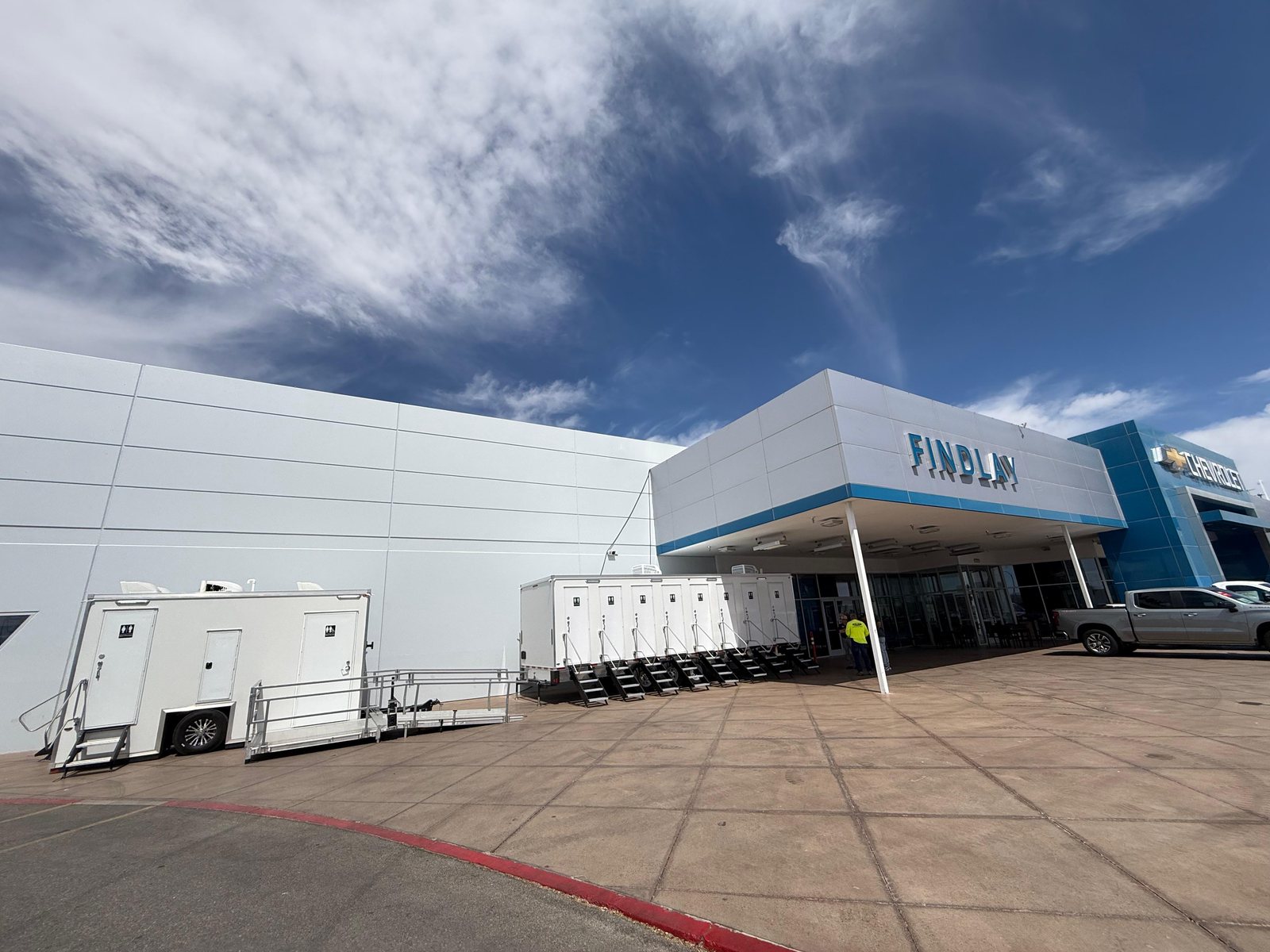
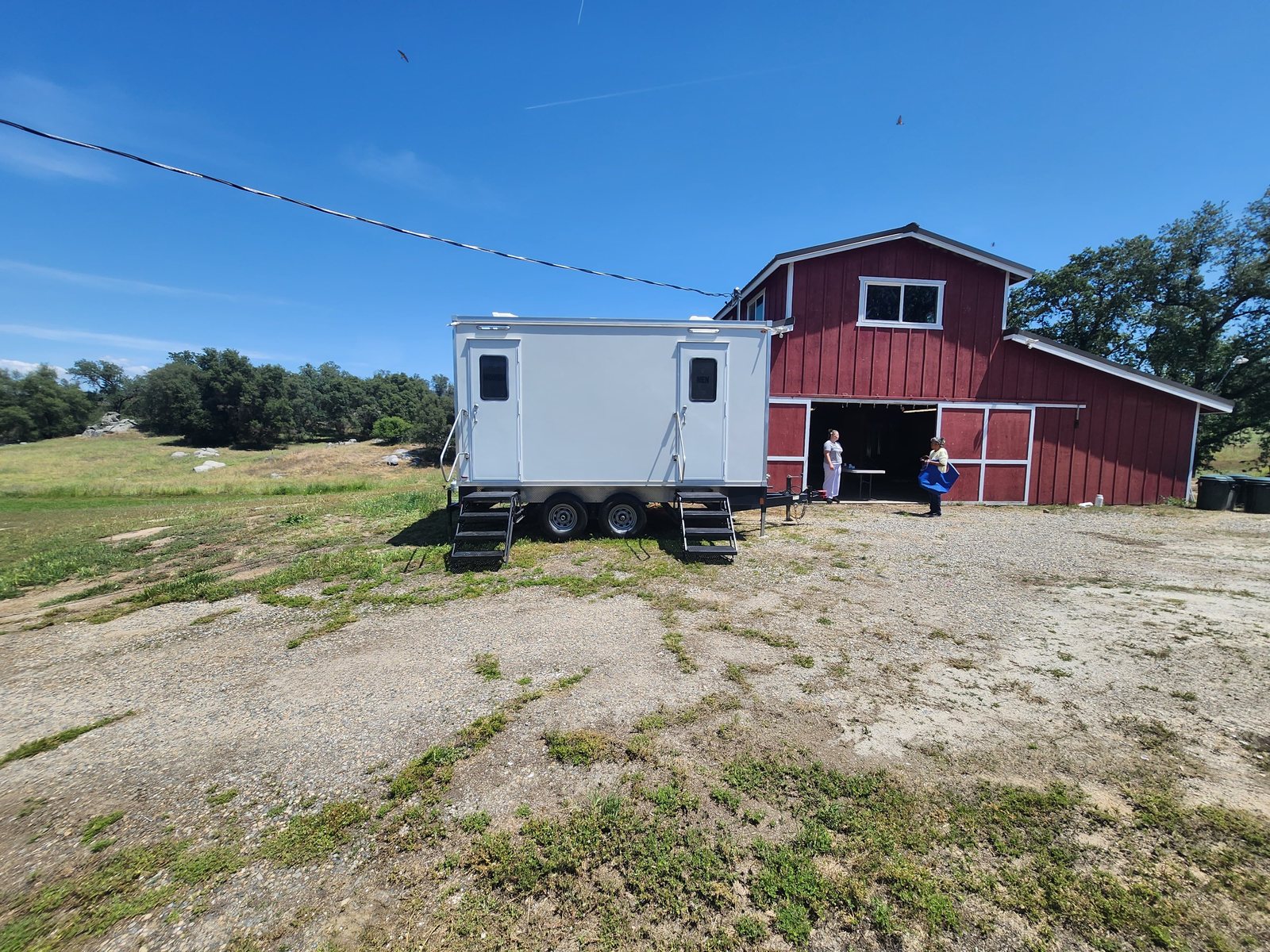
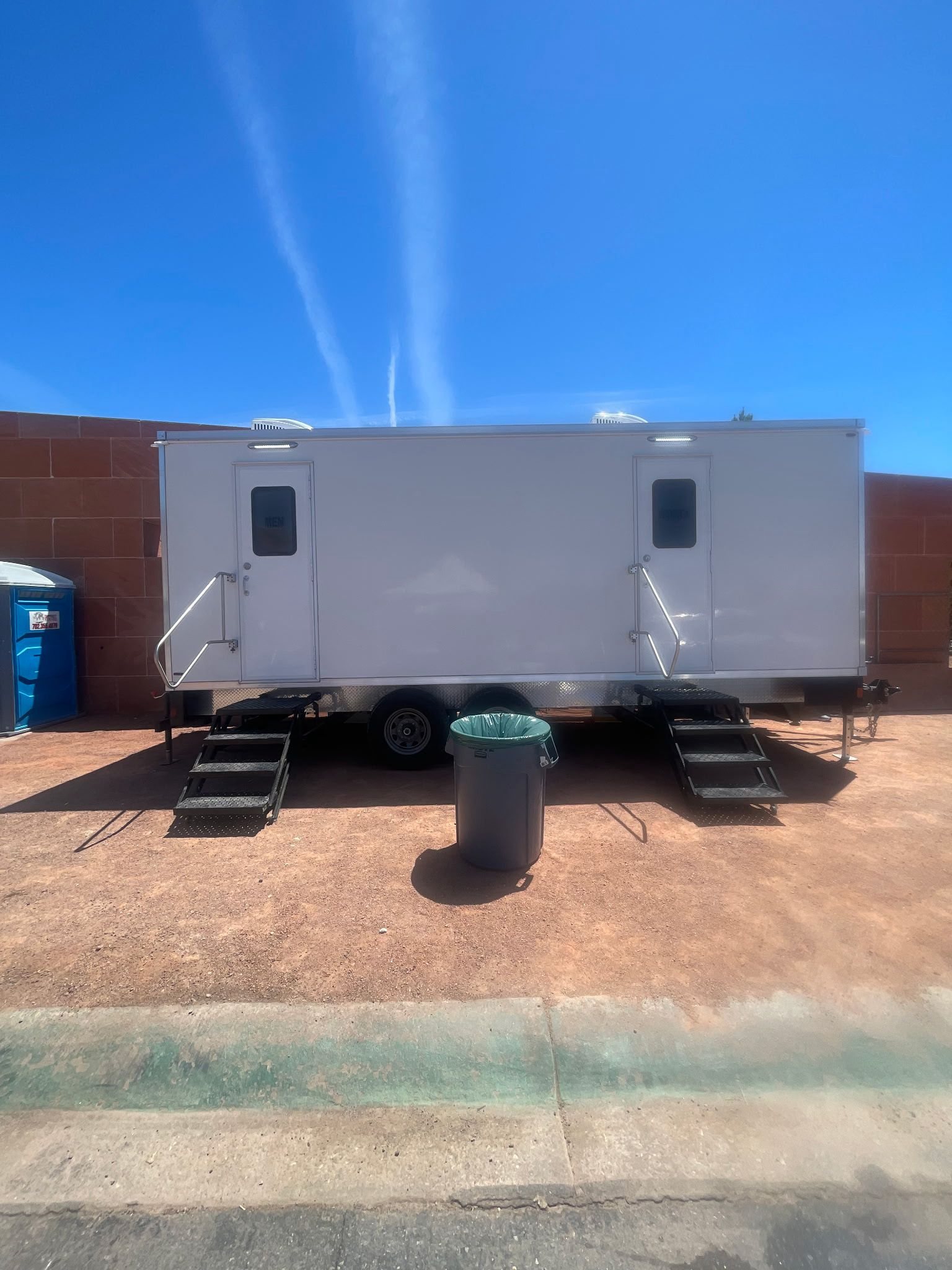
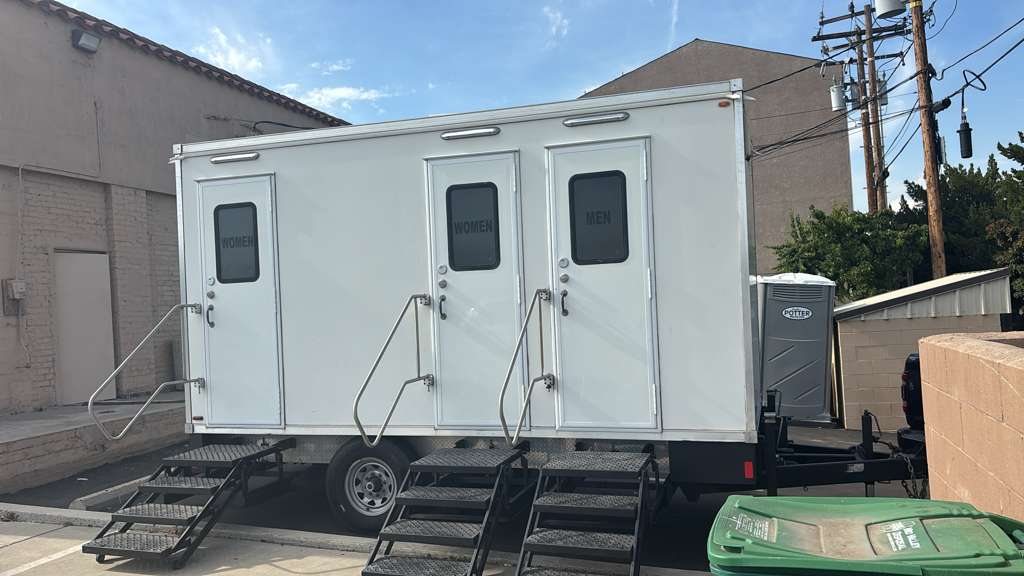
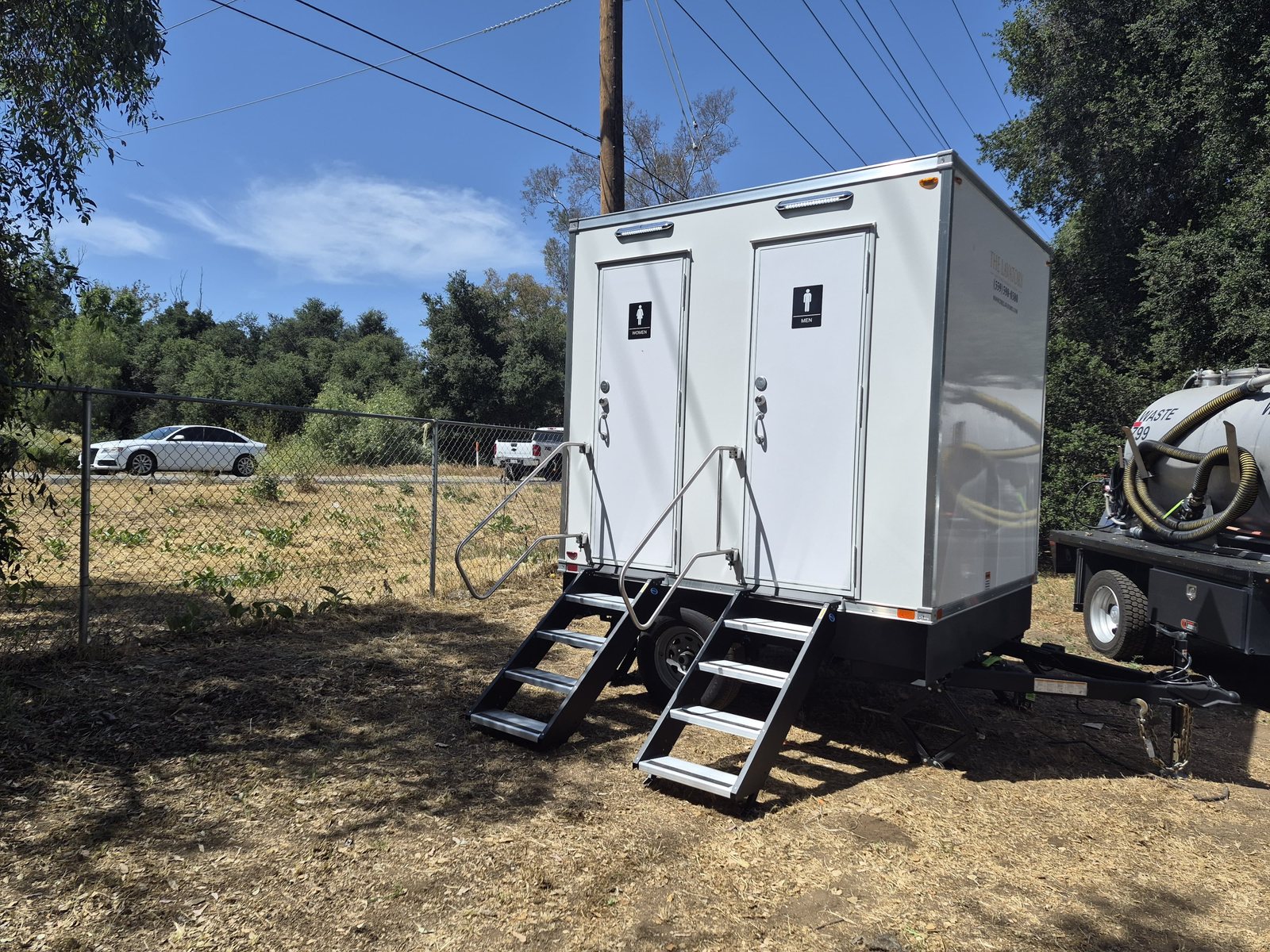
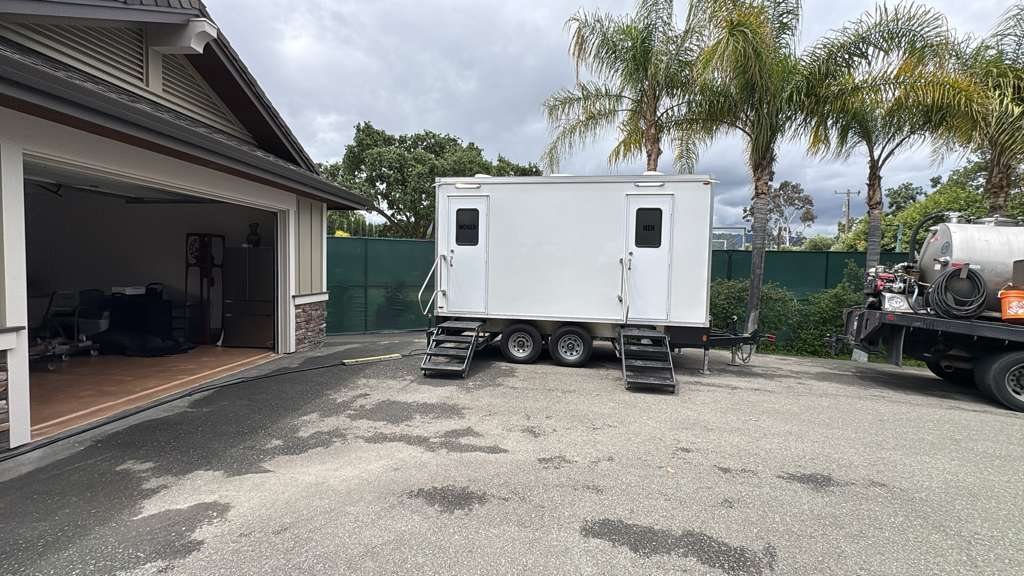
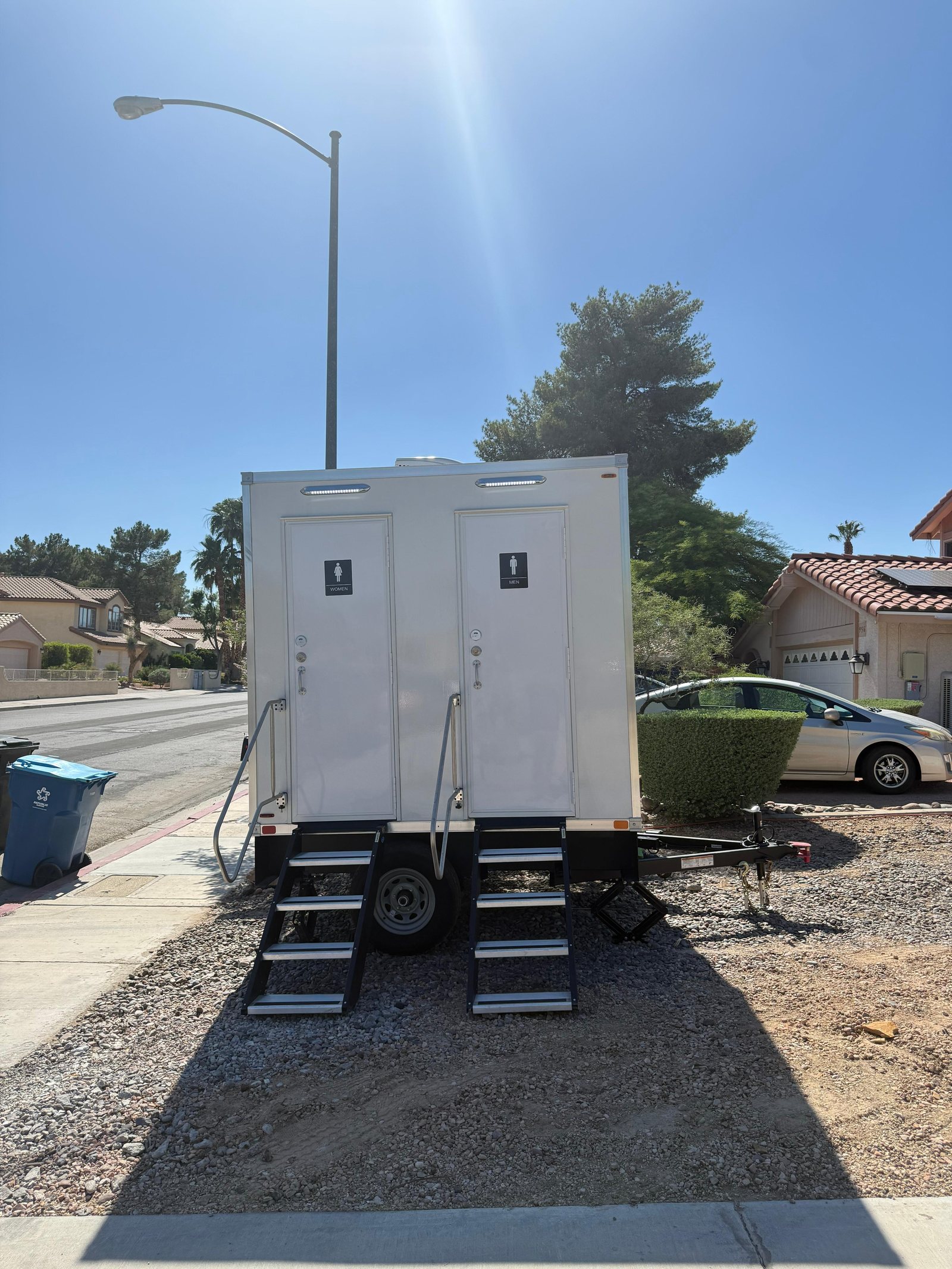
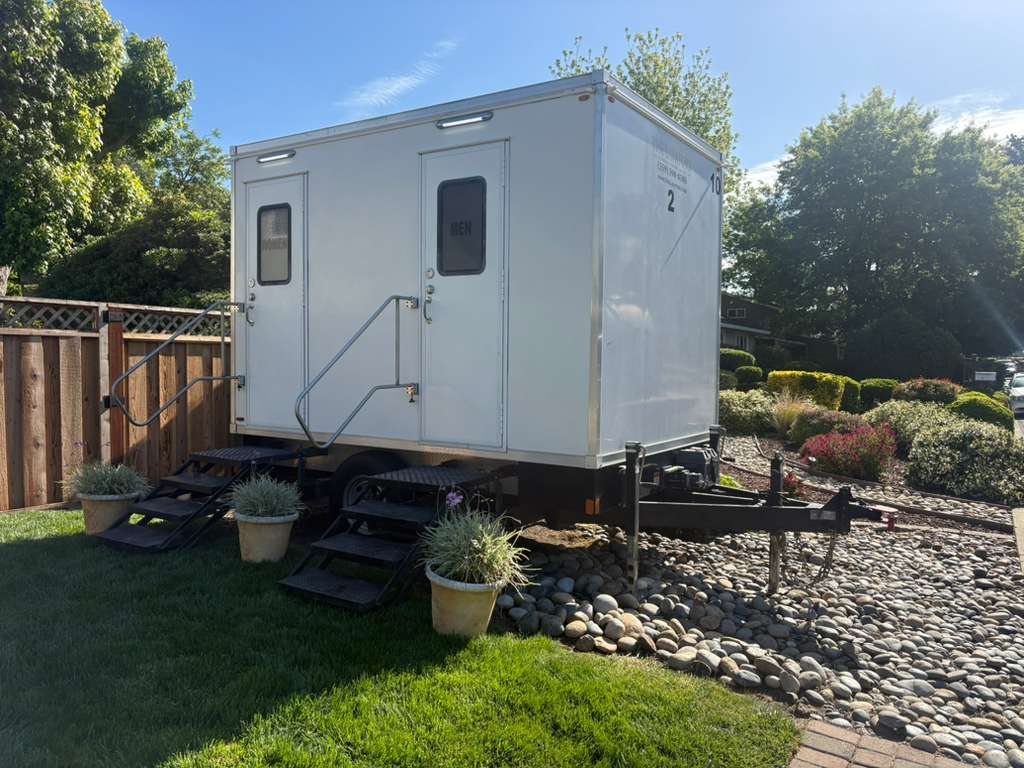
Ask what the unit looks like in the field. On a camp or shelter site, people will see it. A clean, private restroom helps morale and keeps a long deployment calmer. Ask for photos of the real units, not just a catalog image.
Ask about recovery. Oregon's state programs for fire recovery, such as the ReOregon housing and infrastructure work, keep rebuild sites active for years. If your project is part of a recovery effort, ask about long-term rental and a standing service schedule.
Sources: Oregon Housing and Community Services ReOregon recovery programs
Setting up a restroom trailer vendor account for an Oregon agency
Government and nonprofit buyers do not always have time for a long vendor process, especially when a project starts on short notice. Setting up the account in advance means one call places the order when the need arrives.
Begin with the basics your purchasing office will ask for. A W-9 for tax reporting, a certificate of insurance naming your agency and a clear contact for billing questions are standard. Ask your office what insurance limits and wording it requires so the certificate is right the first time.
Decide who can place orders. Many agencies let a field supervisor request units but require a purchasing officer to approve them. Make a short list of names and phone numbers so dispatch knows who to call and who to invoice, and so nobody has to track down approvals in the middle of an event.
Think about multi-site orders. A county might need units at a fairgrounds, a shelter and a staging yard at the same time. One account and one point of contact handle all three, with separate delivery addresses and a single invoice if your office prefers.
Plan the service schedule. Long jobs need a recurring visit, and agencies usually want it written down. Set the days and the times, name the person who can confirm the service and ask how to report a problem in between visits.
Check the site rules. Public land, school grounds and city parking lots all have their own access rules, and some require notice before a truck can enter. Send the site contact's name with the order so the crew does not stop at a locked gate.
Keep the invoices easy to match. Include your purchase order number on the order, and ask for the unit count, service dates and delivery addresses on the invoice. That way accounts payable can approve it without a phone call.
Finally, test the process before the emergency. A short call to review the account, the contacts and the paperwork takes ten minutes and pays off the first time something unexpected happens. Mavirus Group will walk through it with you and keep the details on file.