How to size restroom trailers to your Nevada crew or event
Sizing is the first thing to get right. Order too few stations and you get lines, complaints, and workers wandering off to find a bathroom. Order too many and you pay for space nobody uses. You want a count that fits the site on its busiest day.
Start with the peak head count, not the day you break ground. A tower, a warehouse, a stadium. Each one ramps up over weeks. Size the units to the small starting crew and you fall short at the top. So we plan around the peak and add stations as the crew grows.
A rough rule helps. Figure out how many people share one station, then adjust for how long the day runs. A long shift with a big crew fills a unit faster than a short visit. Heavy use means more stations, or more frequent service.
Sinks matter to the count too. Real hand washing takes time, so a busy site needs enough sinks that people are not stacked up waiting on each other. Our units pair flushing toilets with real sinks, which keeps the line moving.
Plan the ADA unit into the total from the start. On a public or agency site, an accessible restroom is required. It is a lot easier to put it in the first order than to bolt it on after an inspector points at the gap.
Events size differently than job sites. A festival or a race hits a sharp peak when everyone shows up at once. So you plan for the crowd at its biggest, not the average across the day.
Health rules tie the count to the head count. County health authorities can ask how many restrooms serve the people on site, so the number has to match the crowd. We size to that. And we keep the paperwork ready.
Tank size and service frequency follow the count too. More people, faster-filling tanks. So we set a pump-out schedule that keeps the units in service. The state Holding Tank program expects that service to be documented, and we log it.
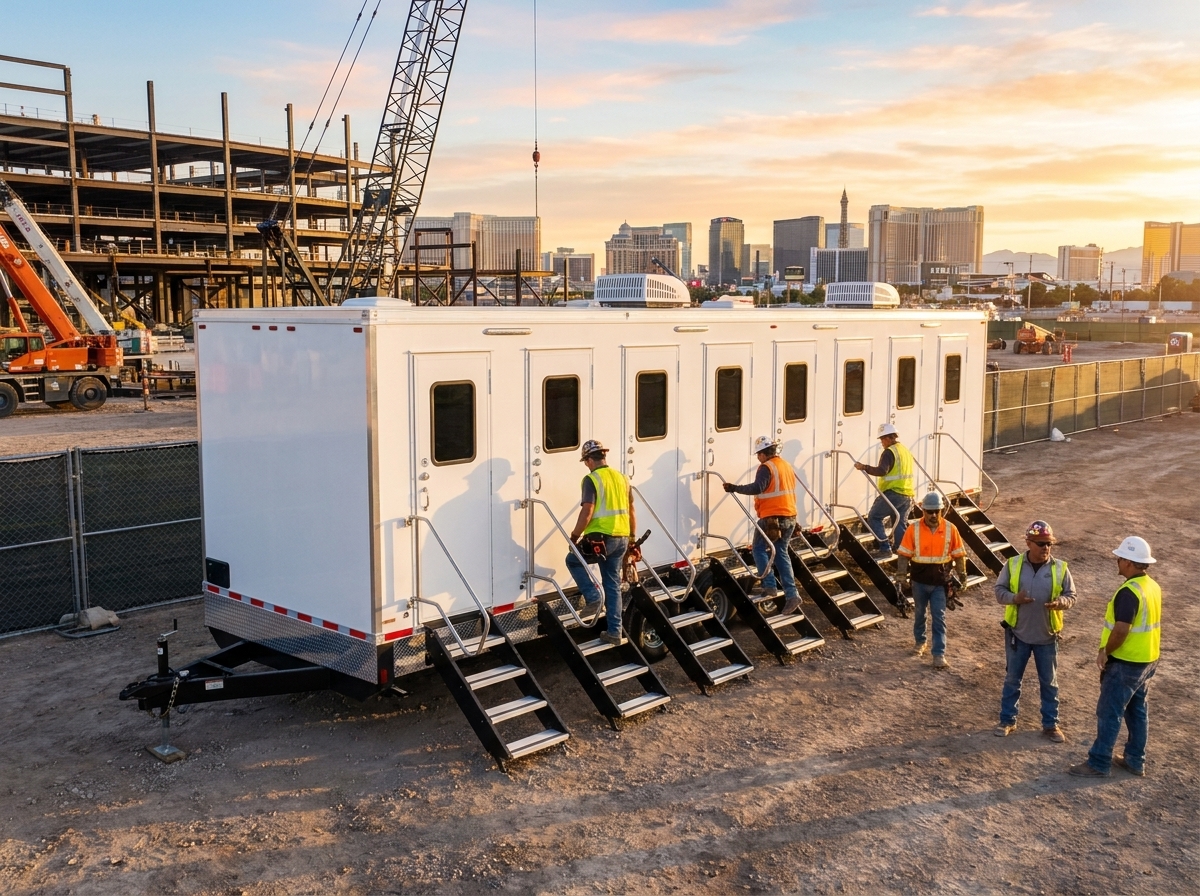
The easy path is to hand us the head count and the hours and let us do the math. We will recommend a layout, from a small two-station unit to a bank of deluxe trailers, and set the service to match.
Sources: NDEP Holding Tank Program · Southern Nevada Health District
What to ask before you rent restroom trailers
A few questions up front save a lot of trouble later. Renting a restroom trailer is not just picking a box off a list. The answers tell you whether a vendor can actually keep your site running.
Ask how fast they can deliver, and whether a real person answers the phone. A 24/7 dispatch line is a very different thing from a voicemail you hear back from the next morning. On a live job, that gap can cost you a day.
Ask what daily service actually includes. The honest answer is pumping the tanks, restocking paper and soap, and sanitizing the inside. If a vendor gets vague about what they do each day, the units will not stay clean.
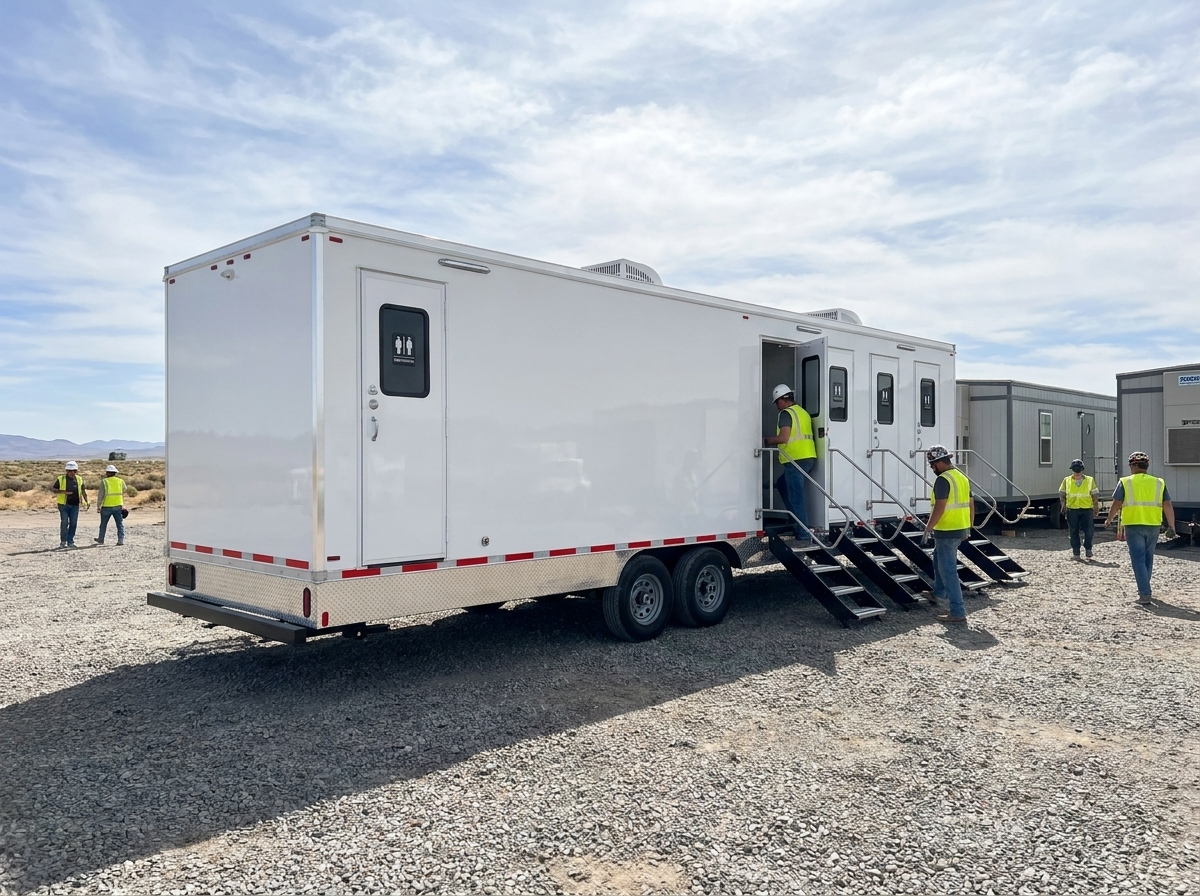
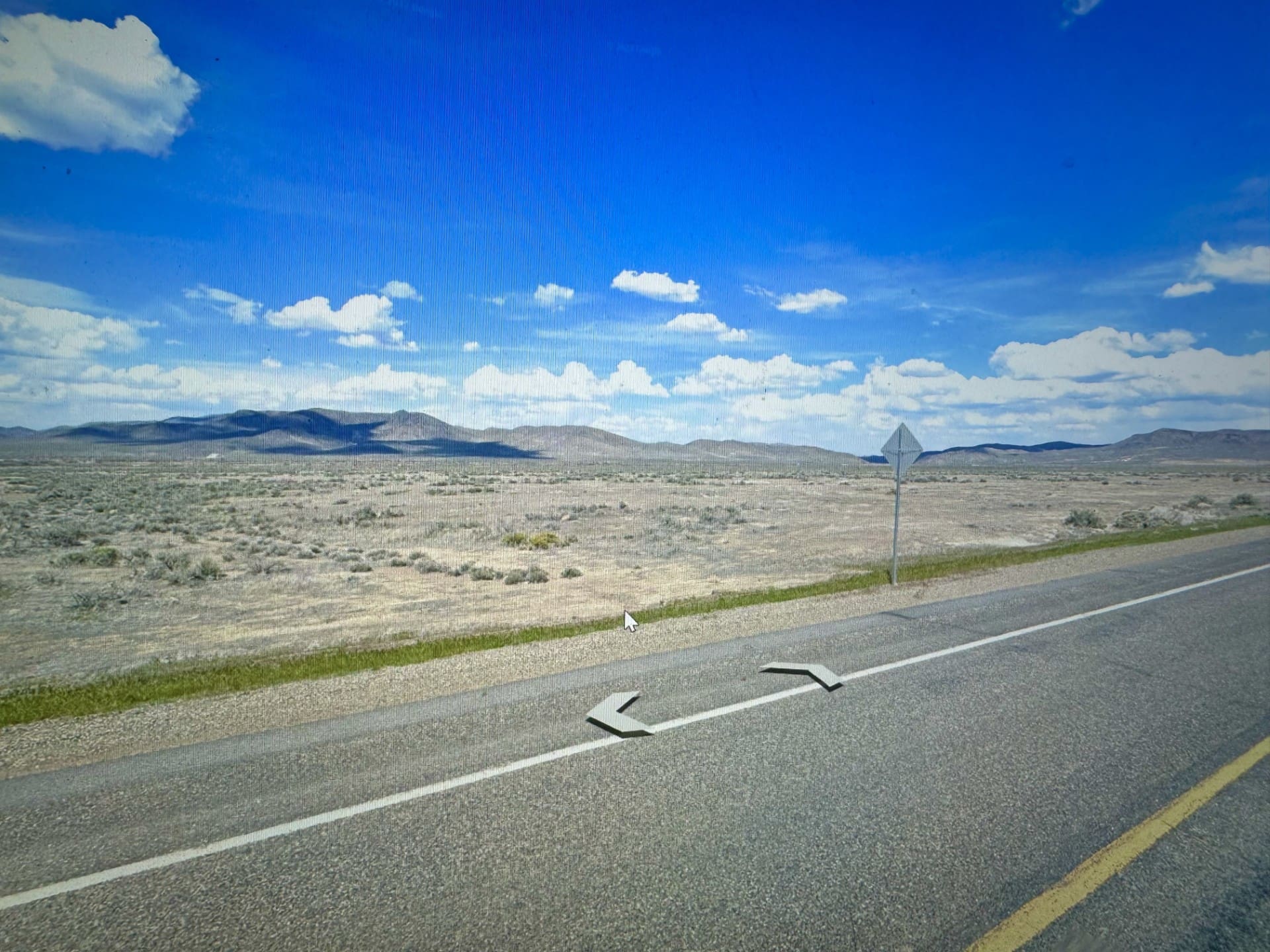
Ask whether the unit can run without site water or sewer. Plenty of Nevada sites have no hookups for months. So you want a self-contained unit that works on its own tanks and ties in later if the lines come.
Ask about the ADA option. If the job is public or has any agency oversight, you need an accessible layout with a ramp, grab bars, and a roll-in stall. Confirm it is available before you sign. Not after.
Ask how waste is handled, and whether they keep a service log. Nevada requires the waste to go to permitted disposal on a documented schedule, under state water pollution rules. A vendor who keeps the log makes your inspection easy.
Ask whether they can add stations mid-job. Crews grow. A vendor who can scale without a fight is worth more than a cheaper one who cannot. You do not want to re-bid sanitation halfway through a build.
Ask about their coverage area. Run more than one site? One vendor across the whole state means the same units and the same service standard everywhere, instead of chasing three companies and three invoices.
Get straight answers to all of these before you sign. A vague answer on any one of them usually turns into a problem on your site later.
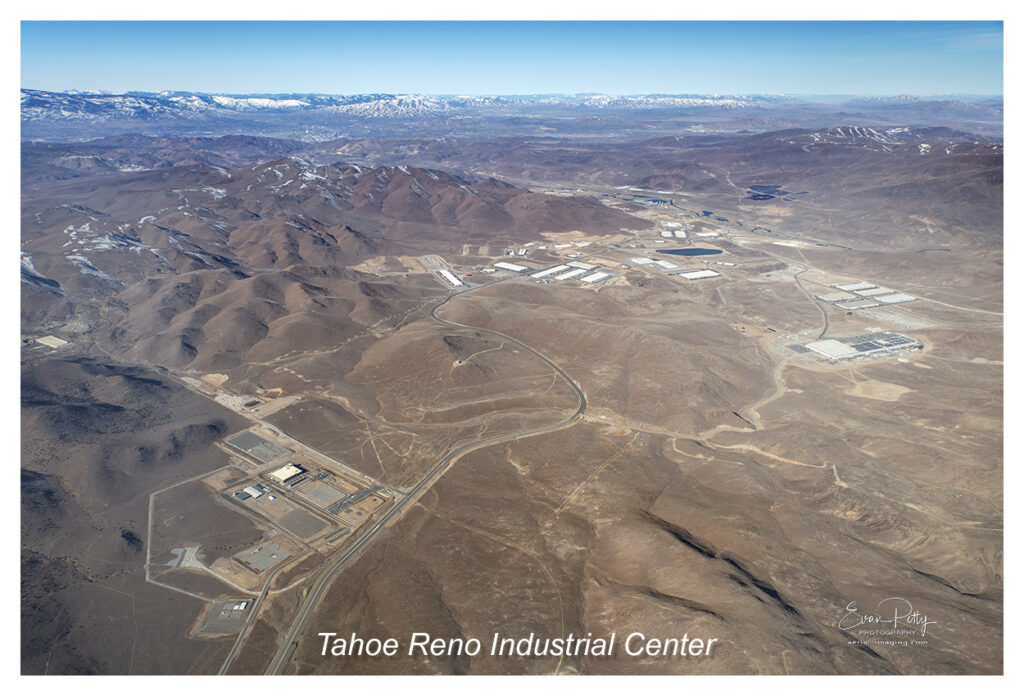
Sources: Tahoe-Reno Industrial Center · NDEP Water Pollution Control Permitting
Booking restrooms fast for a short-notice operation
Sometimes you need temporary restrooms today, not next week. A staging area, a shelter, a fast-moving job. Any of them can spin up with almost no warning, and the sanitation has to keep pace. A little planning makes the call go faster.
Have your site details ready before you pick up the phone. The location, the head count, whether there are any hookups, how long you expect to run. All of it shapes the order. The more you can say up front, the faster we can roll.
Make sure the vendor runs a real dispatch line. A 24/7 line with a person on it is the difference between a same-day delivery and a message that sits until morning. On a short-notice job, that is the whole game.
The units have to arrive ready to run. On a bare site with no water or sewer, a self-contained trailer works off its own tanks from the first hour. No waiting on hookups that are not there yet.
Put the accessible unit in the first order. Public and agency work needs an ADA layout with a ramp and grab bars. You want it staged from the start, not added after someone flags the gap.
Duration is often a guess at the start. A short-notice job might run three days or three months, and it may move on you. Ask whether the vendor can service open-ended and relocate the units as the operation shifts.
Think about access and placement for a fast drop. The truck needs a clear road in and stable ground to set on. Get that right and the units land where crews can reach them, no second move.
Keep the paperwork from day one, even in a rush. Waste still has to be pumped to permitted disposal, and agencies want a clean service record for their reporting and reimbursement later. We log it through the whole run.
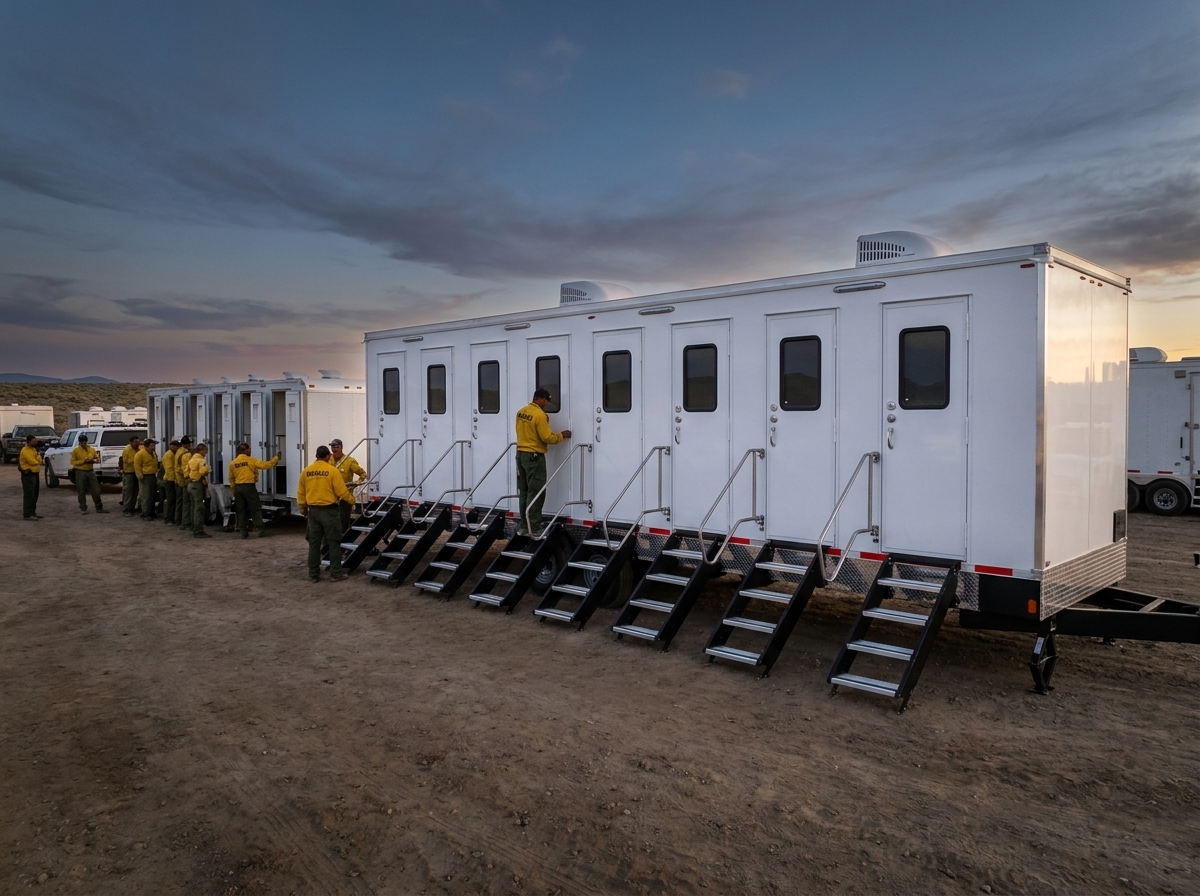
In a hurry, what saves you is a vendor who answers at any hour, rolls the same day, runs off tanks, and brings the accessible unit without being reminded.
Sources: Nevada Division of Forestry, Wildland Fire · Nevada Division of Emergency Management
Getting your Nevada site ready for a restroom trailer
A restroom trailer is a big piece of equipment on wheels, not a plastic box you drop anywhere. Sort out a few things before the delivery truck shows up and you save yourself a second trip and a bad set. Most of it takes ten minutes of walking the site.
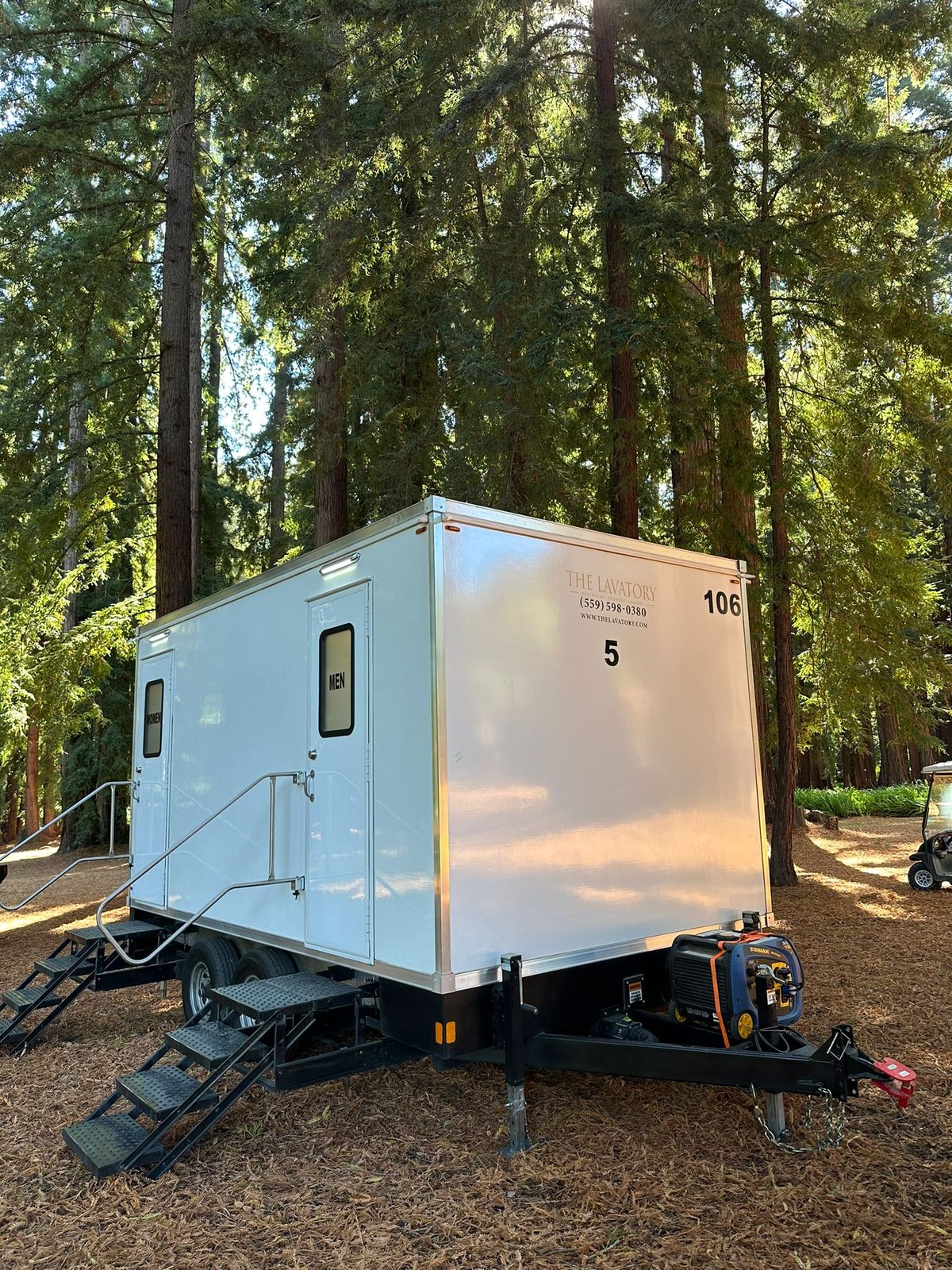
Start with the ground. The unit needs firm, reasonably level footing, because a trailer parked on soft or sloped dirt does not drain or flush right. Compacted gravel, packed desert soil, or a slab all work fine. Loose sand and fresh fill do not.
Level makes a bigger difference than it sounds. A few inches of tilt over the length of a trailer throws off the tanks and the doors. On a rough Nevada pad we bring blocking and level the unit on delivery, but a graded spot turns that into a quick job instead of a fight.
The truck has to get in and back out. A restroom trailer is towed, so the route needs room for a rig to turn and a road firm enough that nobody sinks after a rain. Low branches, soft shoulders, tight gate corners. Those are the usual snags, so walk the approach before delivery day.
Where the unit sits is a real decision. Put it close to where the crew works, but clear of crane swings, loader traffic, and the one low spot that floods. On a public or agency job the accessible unit also needs a firm, level path to the door, so nobody using the ramp is crossing loose gravel.
Power is next. The units run lights, ventilation, and climate control, so they want a dedicated circuit or a generator out on a remote pad. Undersized power or a shared extension cord trips breakers and kills the air conditioning in the middle of a Nevada afternoon. Tell us up front what power is on site.
Water works the same way. If the site has a potable line, we can plumb the unit to it. If it does not, the onboard fresh tank covers the run and we top it off on service. Either path is fine. Knowing which one you have before delivery sets the schedule.
Then there is the waste side. The tanks get pumped on a set schedule, so the service truck needs the same clear access the delivery truck did. Keep that lane open for the whole rental and keep the pump point reachable. Blocked access is the thing that breaks a schedule and puts a documented haul to permitted disposal behind.
Last, think about security overnight. On a fenced jobsite the unit sits inside the line and it is fine. On an open desert pad or a short-notice camp, a little lighting and a spot within sight of the trailer keep the fixtures and the supplies from walking off between shifts.
Sources: ADA.gov · NDEP Bureau of Water Pollution Control