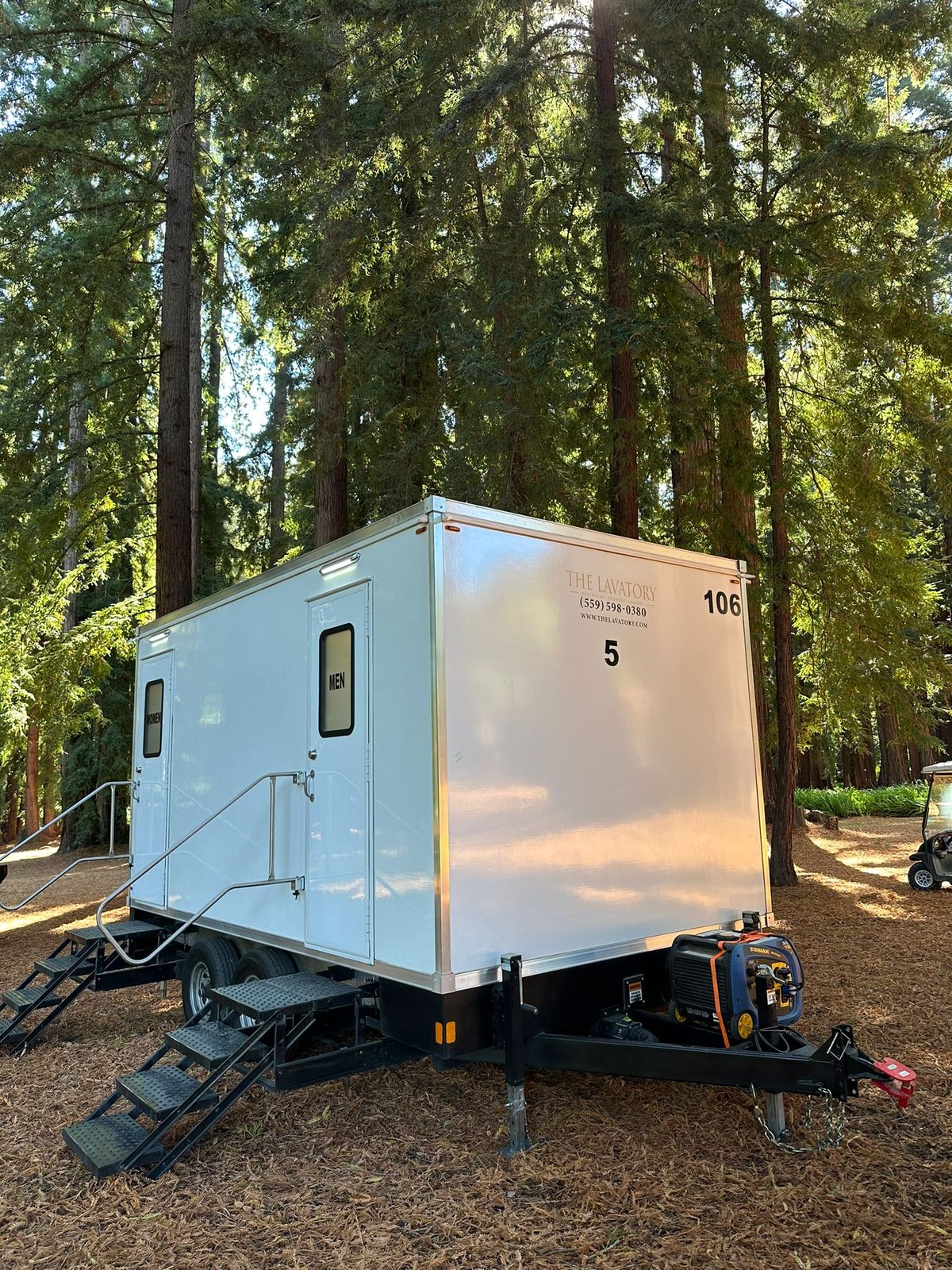
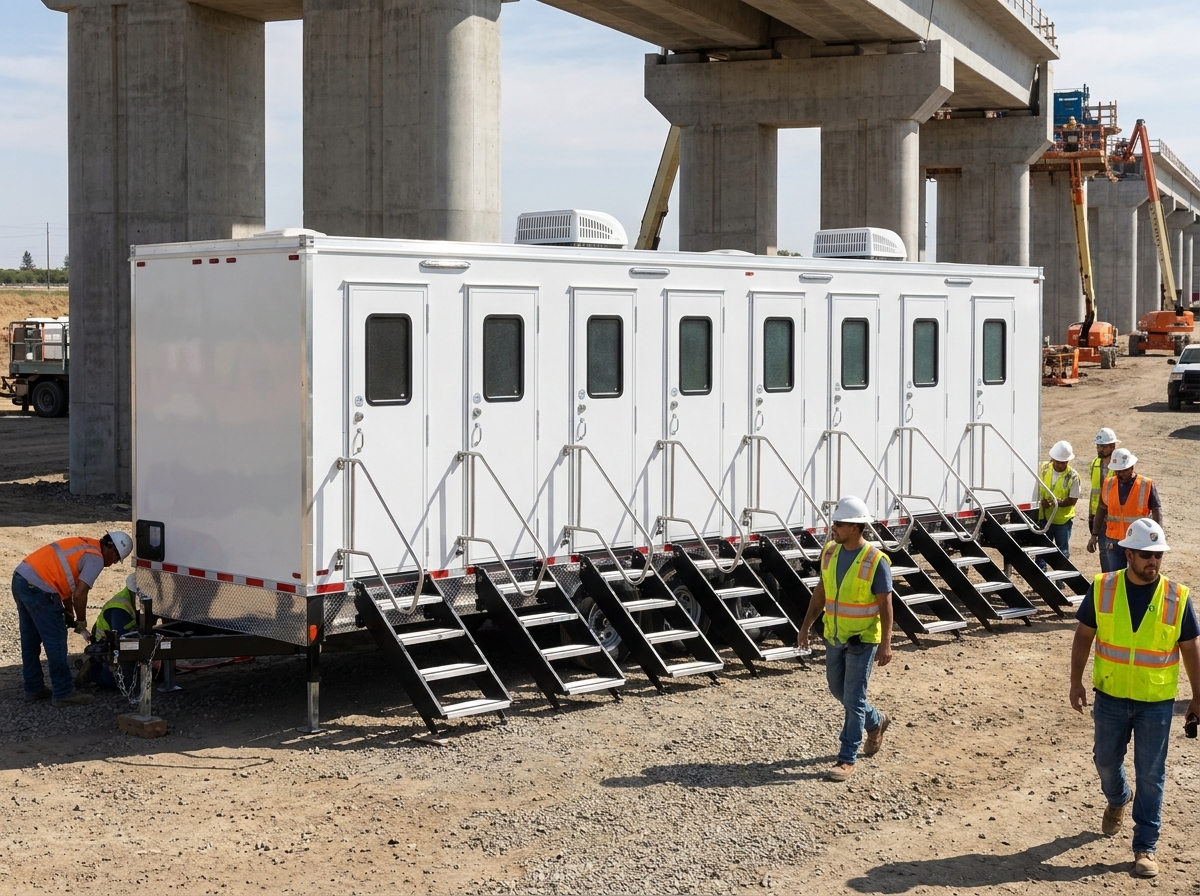
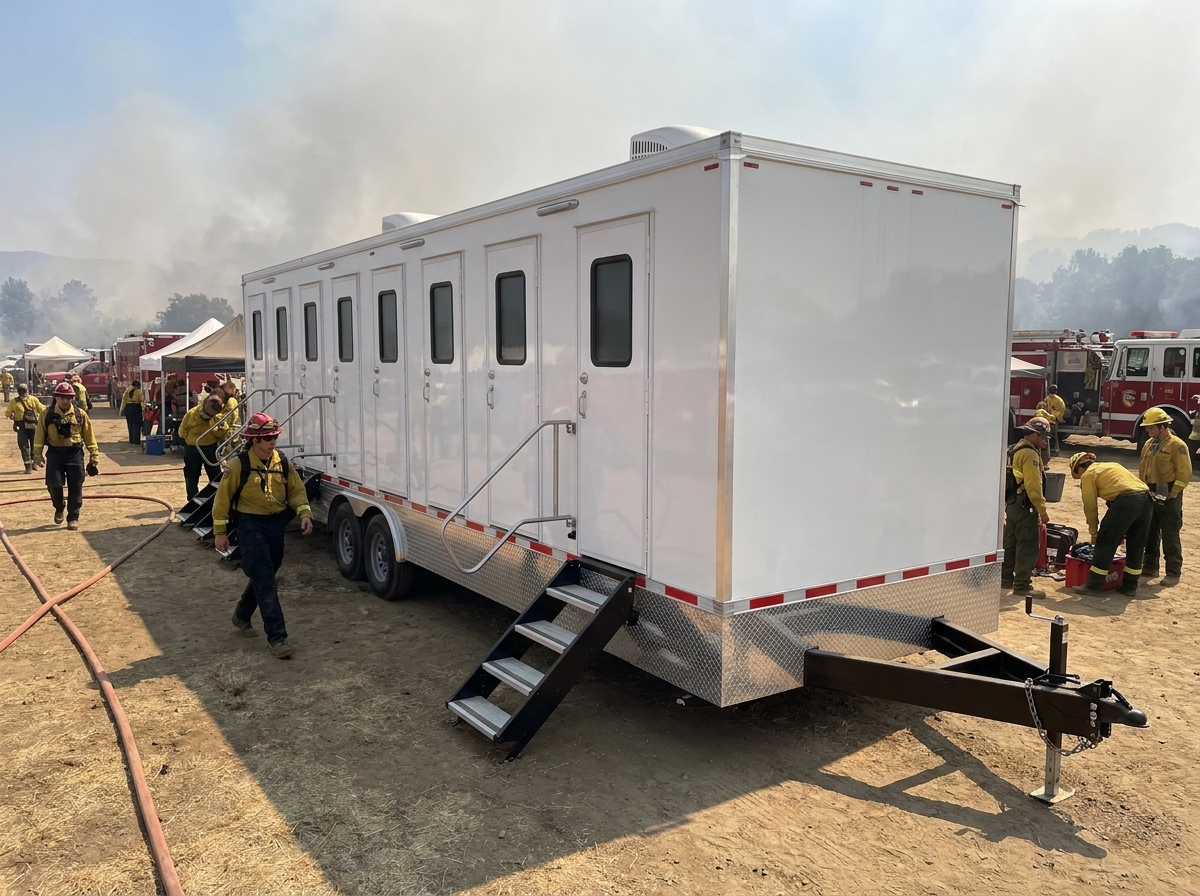
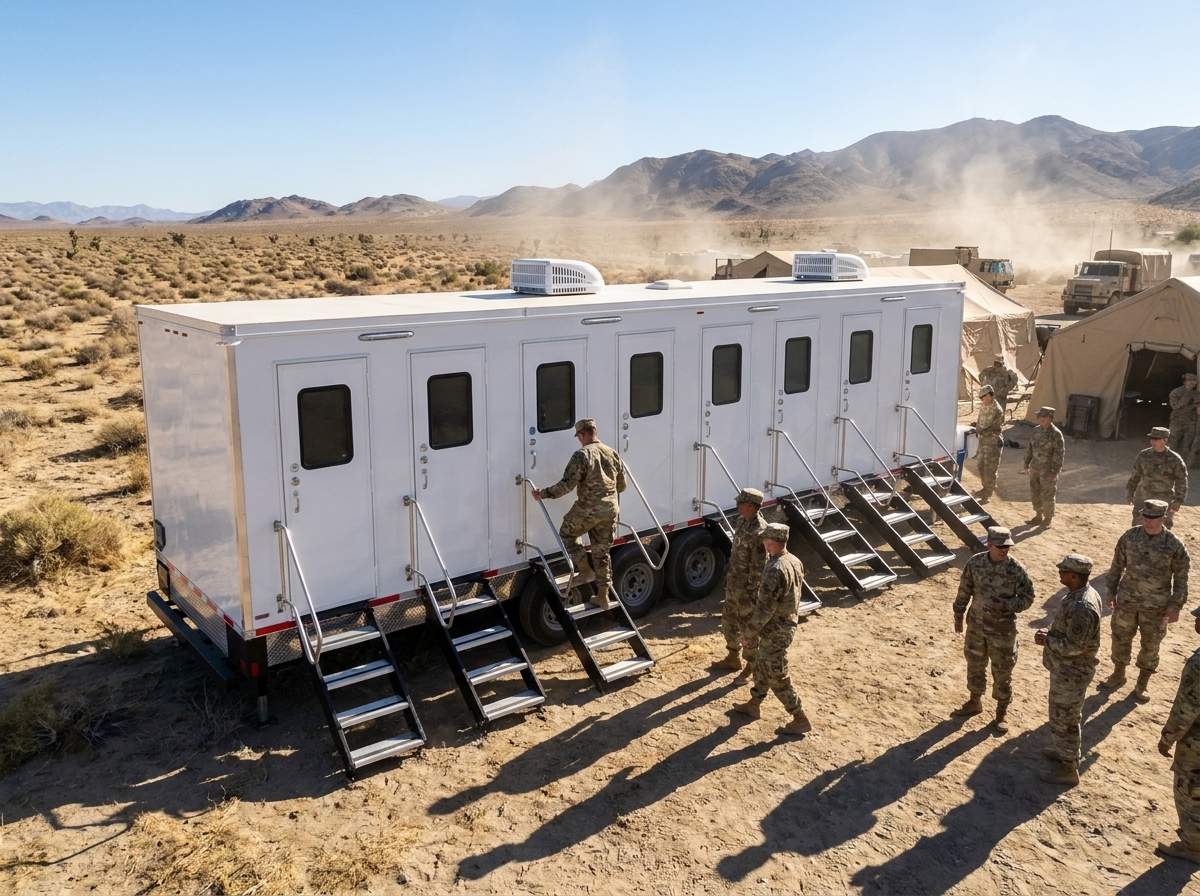
How to size a restroom trailer to your crew or event
The most common rental question is simple. How big a unit do I need? The answer comes down to how many people will use it, how long they will be on site, and whether the public will be there too. Get those three right and the rest is easy. Simple math.
Start with a rough rule of thumb. One toilet station serves a modest number of people through a normal shift. Heavy use over a long shift needs more stations, not fewer. If crews are on site ten hours a day on a Central Valley job, plan for steady traffic, not a quick peak. On a job where the crew runs ten-hour days through a Fresno summer, a single overloaded station turns into a line, a complaint, and a Cal/OSHA note you did not want on the record. It is cheaper to size up a little than to field complaints later. Size up.
For a work crew, size to your busiest day, not your first day. Headcount climbs as the work moves from dirt to framing to finishes. A two-station unit that felt roomy at the start can get swamped once the crew doubles. So if you know the crew will grow, start with a bigger bank or plan a clean way to add stations.
For an event, the math is different. Guests arrive in waves. Drinks and food push more traffic, and lines form fast if you are short. Count your head count at the peak hour, not the average, and add a cushion. A private multi-station trailer handles a crowd far better than a scatter of single units.
Match the unit to the setting, too. A polished corporate campus in Silicon Valley wants a deluxe interior with real sinks and finishes. A rugged Kern County solar site wants a tough, self-contained unit that shrugs off dust and long hours. Same idea, different trim. Ask for the layout that fits the crowd.
Do not forget the accessible unit. If the public or agency staff will be on site, you almost always need an ADA option. An ADA restroom trailer with a wheelchair ramp, grab bars, and a roll-in stall covers California Building Code 11B. It is easier to add it up front than to scramble when an inspector asks.
There is a rule floor as well. Cal/OSHA sets a minimum number of toilet facilities for a work site under Title 8, based on head count. But meeting the rule is the floor, not the goal. A crew that waits in line loses time you are paying for. Size for comfort and you clear the rule without thinking about it.
When you are not sure, describe the site and the crowd and let the provider size it. Tell them the peak head count, the hours, how long the rental runs, and whether the public will be there. A good provider points you to the right unit count and layout the first time. So you are not adjusting mid-job. Ask first.
Sources: Cal/OSHA Title 8 construction sanitation requirements · California accessibility (CBC 11B) reference materials
What to ask before you rent: a planning checklist
Not all restroom rentals are the same, and the gap shows up on site, not in the brochure. A short list of questions up front tells you whether a provider can carry your job. Here is what to ask before you sign. Seven questions.
Ask what is included. The answer you want is delivery, setup, daily service, restocking, waste handling, and pickup in one package. If service or waste hauling is billed as an extra you arrange yourself, that is a job you did not know you were taking on.
Ask how the unit handles a site with no power and water. On many California builds the hookups come late. So you want a self-contained unit that runs on its own tanks until then. If a provider cannot place a unit before the hookups are in, half your timeline is off the table.
Ask whether they are set up for public and agency work. That means a SAM.gov registration for federal jobs and an ADA restroom trailer on hand for 11B. If you might touch a Caltrans zone or a school site later, start with a provider who already clears that bar.
Ask where the waste goes. A straight answer names a permitted disposal site and a documented paper trail. Waste is regulated in California by the State Water Resources Control Board. You do not want to be the one holding the risk if a provider cuts corners.
Ask about response time. If your work can spin up fast, like a Cal OES shelter or a storm cleanup, a 24/7 line and a fleet that can move that day matter more than anything on the spec sheet. Ask for a real answer, not a promise.
Ask about range, and ask who you call when something goes wrong. If your job crosses regions, one provider that covers the whole state keeps billing and service in one place. You want one team that delivers, services, and removes the unit. If the answer is a chain of subcontractors, expect the runaround.
Sources: SAM.gov federal contractor registration · California Waste Discharge Requirements (WDR) program
Delivery, service, and pickup: what happens on the day
People picture a rental as dropping off a unit and driving away. A good one is a full cycle. A planned delivery, a clean setup, steady service visits, and a tidy pickup. Knowing how each step works helps you plan the site and skip the surprises. No guesswork.
It starts before the truck rolls. We confirm the site address, the gate and access route, and where the unit will sit. On a tight downtown LA site we walk it with you or study a site map. So the trailer lands clear of crane picks, material staging, and haul routes on the first try.
On delivery day, the driver levels and stabilizes the unit, fills the fresh-water tank, and checks that every toilet, sink, and light works before leaving. If the site has power and water ready, we tie in. If not, the unit runs on its own tanks until the hookups arrive. Either way, it is ready to use when the driver pulls out.
Service visits are what keep a unit worth renting. On each visit our tech pumps the waste tank, refills fresh water, restocks paper and soap, and wipes the unit down. The schedule matches your traffic. Daily on a busy Fresno jobsite, lighter on a quiet one. On a fast-moving Bay Area high-rise where the trades ramp from a dozen framers to sixty finishers inside a month, the service schedule has to climb right along with the headcount or the units fall behind by Friday. The unit stays stocked and clean between visits. No surprises.
Waste leaves with us. On every service visit, the tech hauls the tank contents to a permitted disposal site. So you never handle it and never have to find a place to dump it. That keeps the site clean and the paperwork in order for the water board.
Restocking is easy to overlook until the paper runs out. We track supplies on each visit and top them up before they run dry. That matters most on a high-traffic site where a unit burns through stock fast. You should not be the one buying toilet paper for a rental.
If the site changes, tell us. Crews grow, work zones shift, and a unit that sat in a good spot in month one can be in the way by month six. We can move a unit, add stations, or change the service frequency, usually with a single call. So the plan keeps pace with the job.
Pickup closes the loop. When the job wraps, we schedule a time, pump and clean the unit one last time, and haul it out without leaving a mess behind. The same team that delivered it removes it. So nothing falls through the cracks between companies.
Sources: California State Water Resources Control Board · Cal/OSHA Title 8 construction sanitation requirements
Cold-weather and remote-site setup for restroom trailers
Most of California is mild. Plenty of job sites are not. Mountain work near Truckee, high-desert sites past Barstow, and winter jobs up in Shasta and Modoc counties all bring cold nights and long hauls from the nearest hookup. A restroom setup that works fine in San Diego needs a few changes to hold up out there. Cold changes things.
Cold is the first problem. Water freezes, and a frozen supply line can put a unit out of service overnight. Our winter setup uses heated units, insulated lines, and freeze protection on the tanks. So the toilets and sinks keep working when the temperature drops below freezing. On a Tahoe job in January, that is the difference between a working restroom and a cold morning surprise.
Heat inside matters as much as freeze protection. A private restroom suite with real heating stays comfortable in a Sierra snowstorm. That keeps crews using it instead of wandering off to find somewhere warmer. Climate control is standard on our deluxe units for exactly this reason.
Distance is the second problem. A remote site can sit hours from the nearest sewer or water main. Think a transmission line in the Tehachapis or a fire camp deep in the Los Padres. Our self-contained units carry their own fresh and waste tanks, so they run with no hookups at all. We plan a water-delivery and waste-pumping schedule around the site.
Power is worth planning for on a remote site. Lights, heat, and water pumps need a source, and a far-out site may have none. A small generator or a solar setup can run a unit where there is no grid. We help you spec what the trailer needs so nothing goes dark at night.
Access is the quiet challenge. A mountain switchback or a soft desert two-track is a different delivery than a paved lot. We check the route and the ground before delivery. We bring the right truck. And we place the unit where it stays level and reachable for service all season, not just on day one.
Servicing a remote site takes more planning, not less. Longer drives mean we size the tanks and set the visit schedule so a unit can go longer between stops. Tell us how remote the site is and how many people use it. Then we build the schedule around that instead of a default.
Cold and distance are both solvable. But only if you plan for them before the unit ships. A provider used to Sierra, Mojave, and North State sites shows up with the right heated, self-contained rig the first time. So a hard location never turns into a daily headache.
Sources: Cal Fire incident information · California Governor's Office of Emergency Services (Cal OES)