Sustainable Hydration for Silicon Valley Corporate Campus Events
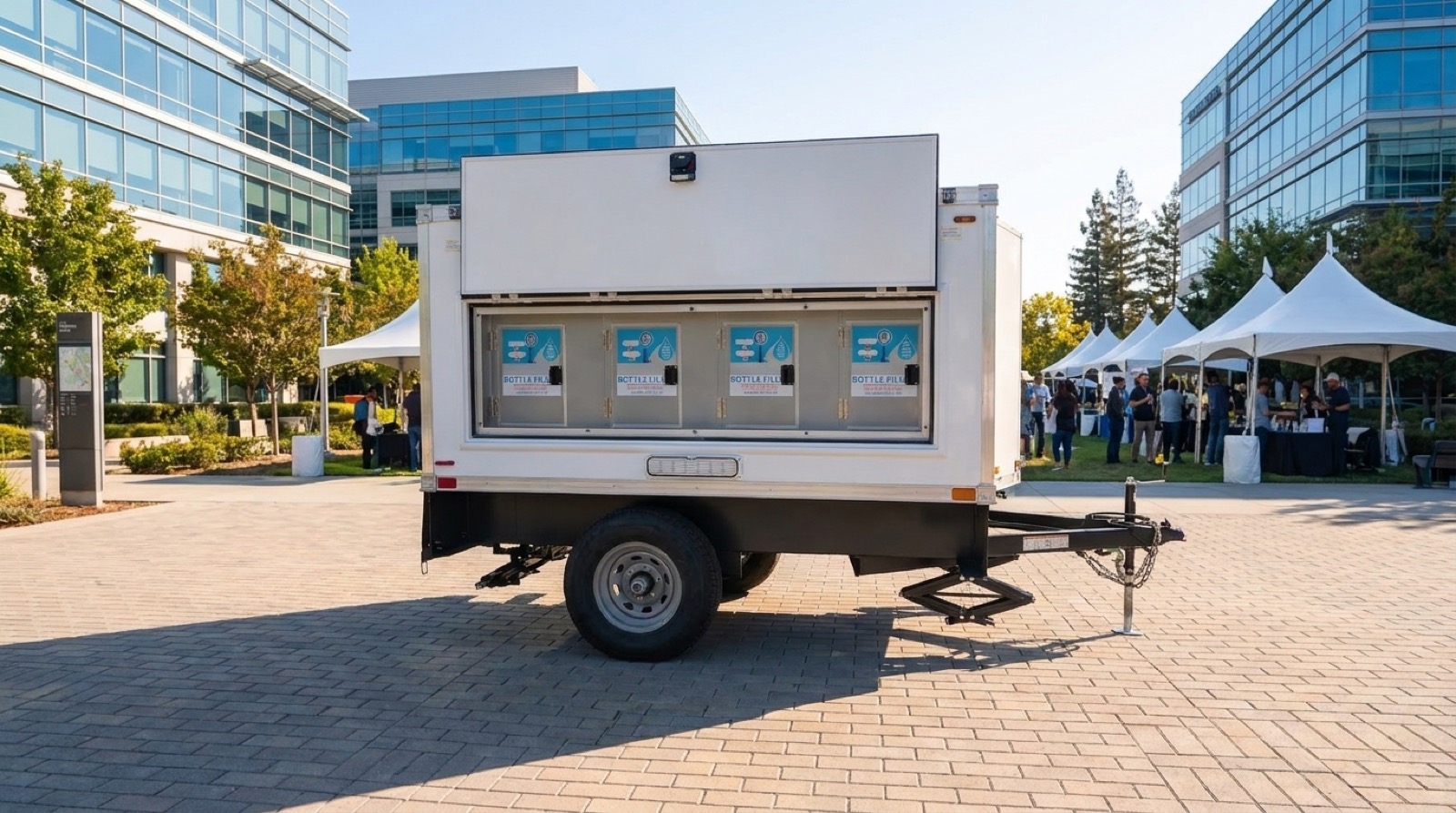
San Jose is the capital of Silicon Valley and the largest city in the Bay Area, which means it hosts a density of corporate campuses that few places can match. Adobe runs its headquarters downtown at 345 Park Avenue. Cisco holds a sprawling campus in North San Jose. eBay and PayPal are both headquartered here. Ring the city and you find Nvidia and Intel in Santa Clara, Apple Park in Cupertino, and Google in Mountain View, with Google's own Downtown West project planned near Diridon Station. When any of these companies throws an all-hands, a product launch, a hackathon, or a summer picnic, the hydration plan is part of the guest experience, not an afterthought.
The default answer for years was pallets of single-use plastic bottles. That answer no longer fits the audience. Silicon Valley companies publish sustainability targets, track waste diversion, and staff teams whose entire job is cutting single-use plastic out of operations. Wheeling in a thousand bottles for a campus event undercuts every one of those commitments, and the people at the event notice. A chilled bottle-fill water station trailer removes the pallet entirely. Attendees refill the bottles and tumblers they already carry, and the only thing left at the end of the day is the trailer rolling back out. Years of campus events also taught us the other gate: facilities teams want the insurance certificates and the service log before the trailer, so we send both ahead of the booking call.
The optics matter as much as the math. A launch event or a press day at a downtown campus is photographed, streamed, and posted. A visible wall of plastic bottles in the background is the kind of detail that draws comment. A clean, branded water station reads as intentional and on-message. It signals that the company thought about the footprint of its own gathering, which is exactly the story most of these brands want their events to tell.
The practical fit is strong too. Campus events in San Jose cluster in the warm months, and a hackathon or an outdoor picnic can run from morning into the evening. A trailer that delivers chilled, filtered water at multiple fill points keeps lines short even when a few hundred people break at once. Engineers coding through a weekend hackathon do not want to hunt for a working fountain, and a picnic on the lawn in August needs cold water within easy reach of every group.
Filtration is part of why a station beats a fountain or a garden hose. The water runs through filtration before it reaches the spout, so what comes out is cold and clean regardless of the building tap it connects to. For an event where the company is hosting employees, partners, or press, that consistency is worth having. Nobody has to wonder whether the water is any good.
The booking conversation is straightforward. Share the headcount, the hours, and whether the event is indoor, outdoor, or both, and the station is sized to keep water flowing without a crowd forming around it. For a company that already reports on plastic reduction, this is one of the simpler wins to put on the board, and it happens to make the event run better at the same time.
Sources: U.S. EPA on recycling and plastic waste · City of San Jose Environmental Services
Keeping Water on South Bay Construction Crews Under Cal/OSHA Section 3395
San Jose is in the middle of a heavy building cycle. The BART Silicon Valley Phase II extension is driving a roughly six-mile push with a single-bore tunnel planned under downtown, and launch structure, utility relocation, and staging work is already underway along the corridor. Downtown high-rises are going up, and airport-area work continues. Every one of those sites puts crews outdoors and underground through the warm months, and every one of them falls under California's heat illness prevention rules. For construction employers in the South Bay, hydration is not a courtesy. It is a written legal requirement. We have serviced linear jobs like this for years, and the constant is crews spread blocks apart from the laydown yard with no plumbing anywhere on the alignment.
The rule is Cal/OSHA Title 8, Section 3395. It sets clear numbers. Employers must provide enough drinking water so each employee can have at least one quart per hour, which is four eight-ounce glasses over a shift. When the temperature reaches 80 degrees, shade must be present and accessible. At 95 degrees, high-heat provisions kick in, which include closer supervision, reminders to drink water, and observation for signs of heat illness. Construction is explicitly covered by these provisions.
One quart per worker per hour adds up fast on a big site. A crew of fifty on an eight-hour day needs four hundred quarts of drinking water, which is a hundred gallons, and that is a floor, not a target. On the hottest days Cal/OSHA and safety trainers push crews to drink more, not less. Hauling that volume in cases of bottled water is expensive, it generates a mountain of empties, and it tends to run out at the worst moment, mid-afternoon on the hottest day of the week.
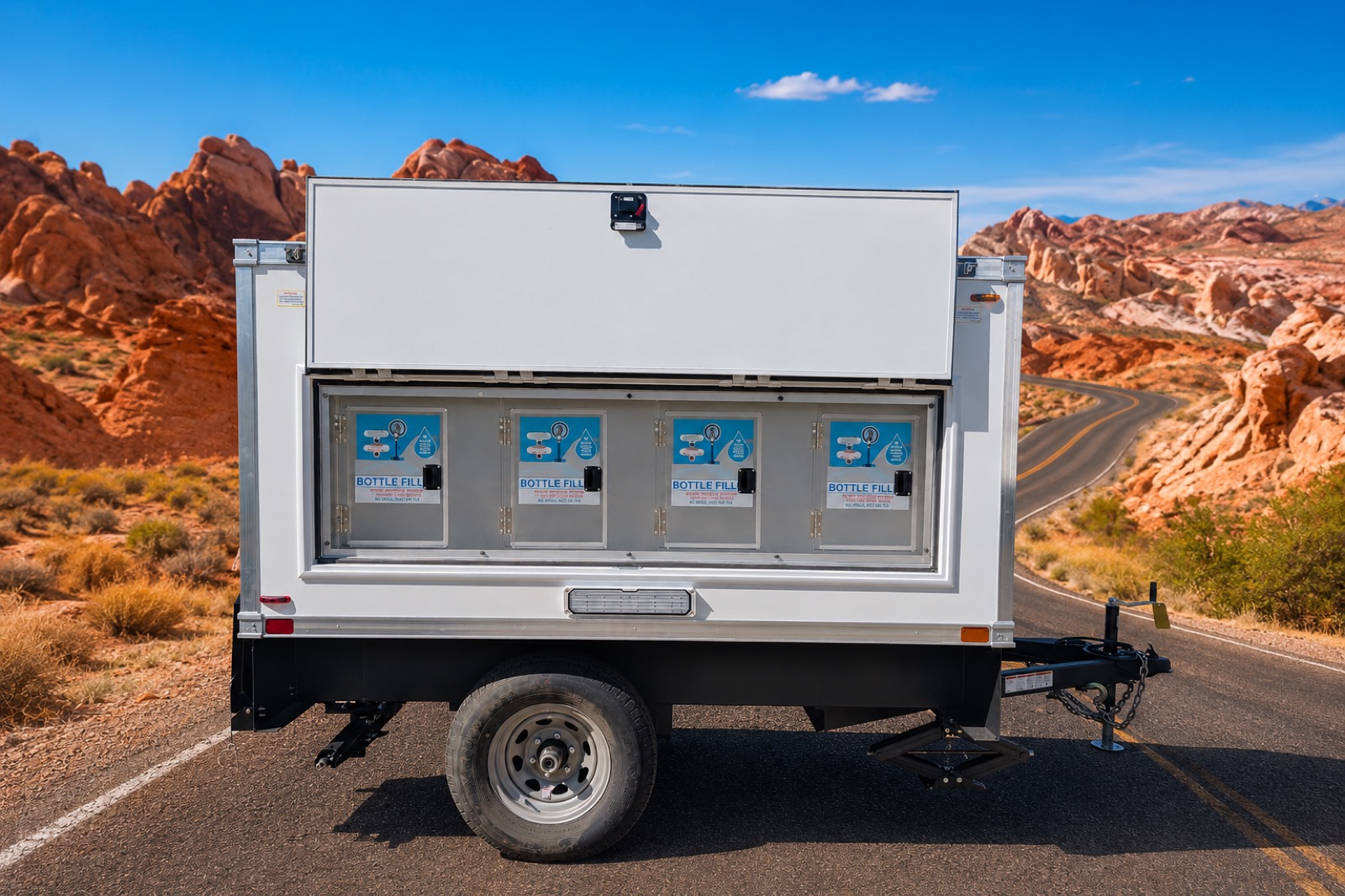
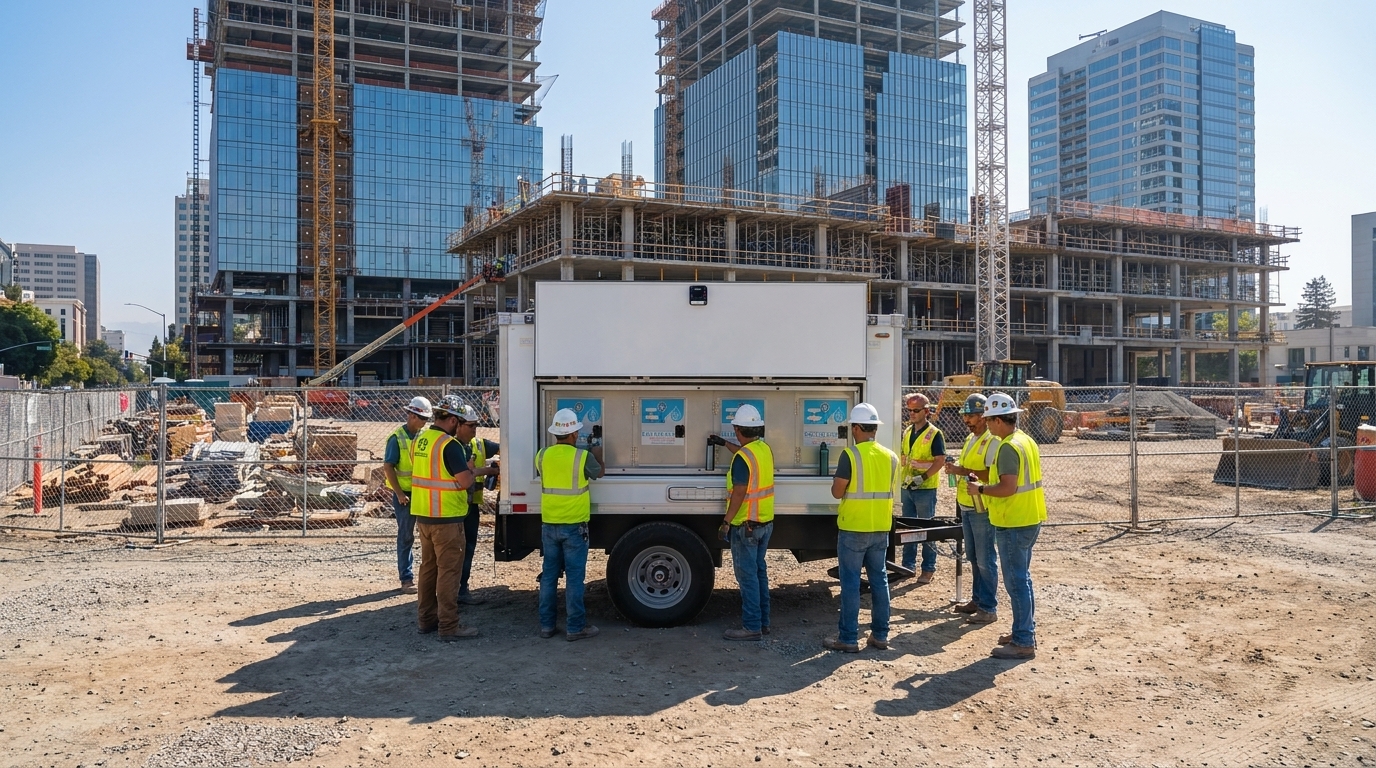
A chilled, filtered bottle-fill water station trailer solves the volume problem in one move. It holds a large supply on site, keeps it cold, and lets every worker refill a bottle in seconds at multiple fill points. Cold water matters here beyond comfort. Cal/OSHA and public health guidance both note that workers drink more when the water is cool, and drinking steadily is the whole point of the standard. Warm water sitting in a jug in the sun is water people avoid.
The tunnel phase under downtown will be its own case. A single-bore tunnel is a confined, warm environment where crews exert hard and the heat does not clear, and keeping cold water staged where those crews cycle in and out will support the hydration schedule the standard calls for. The same logic already applies to the high-rise cores and the airport-area work, where crews are spread across a large footprint and a single fountain or cooler cannot keep up.
There is a documentation angle too. Cal/OSHA expects employers to have a written heat illness prevention plan and to actually provide the water and shade the plan describes. An inspector who shows up on a 95-degree day is going to look for cold water in adequate supply. A well-stocked station on site is visible proof that the water requirement is being met, which is a better position than an empty pallet and a promise.
For a site superintendent, the pitch is simple. Brief us on the crew size and the shift length, and the station is sized to clear the one-quart-per-hour requirement with margin. It keeps water cold through the afternoon, cuts the cost and waste of bottled cases, and gives you something concrete to point at when the heat plan comes up. On a South Bay summer job, that is one less thing to worry about while the temperature climbs.
Sources: Cal/OSHA Title 8 Section 3395, Heat Illness Prevention · Cal/OSHA Heat Illness Prevention information
Water Stations for Downtown San Jose Festivals and Big Crowd Events
Downtown San Jose runs a full calendar of large public events, and most of the marquee ones land in the warm stretch of the year. San Jose Jazz Summer Fest fills Plaza de Cesar Chavez and the surrounding blocks with tens of thousands of people in August, one of the hottest and driest months in the South Bay. Viva CalleSJ closes miles of city streets to cars three times a year and draws huge crowds out walking, biking, and rolling along routes that change with every event. On top of that, SAP Center holds about 17,500 for concerts and games, and PayPal Park brings its own soccer crowds. When any of these fills up in summer, keeping water on hand for everyone is a real logistics problem. We have worked these footprints for years, and the constraint that surprises organizers most is access: once the gates open, service vehicles move only in pre-cleared windows.
The August heat is the part organizers cannot wish away. San Jose has a Mediterranean climate with warm, dry summers, and July and August highs sit in the low 80s, with the hottest days pushing toward 99 or 100 degrees when an offshore wind kicks in. There is almost no rain from June through September, so an outdoor festival is baking under a clear sky for hours. A crowd standing in a plaza listening to music loses water fast, and a lot of attendees do not think about it until they are already lightheaded.
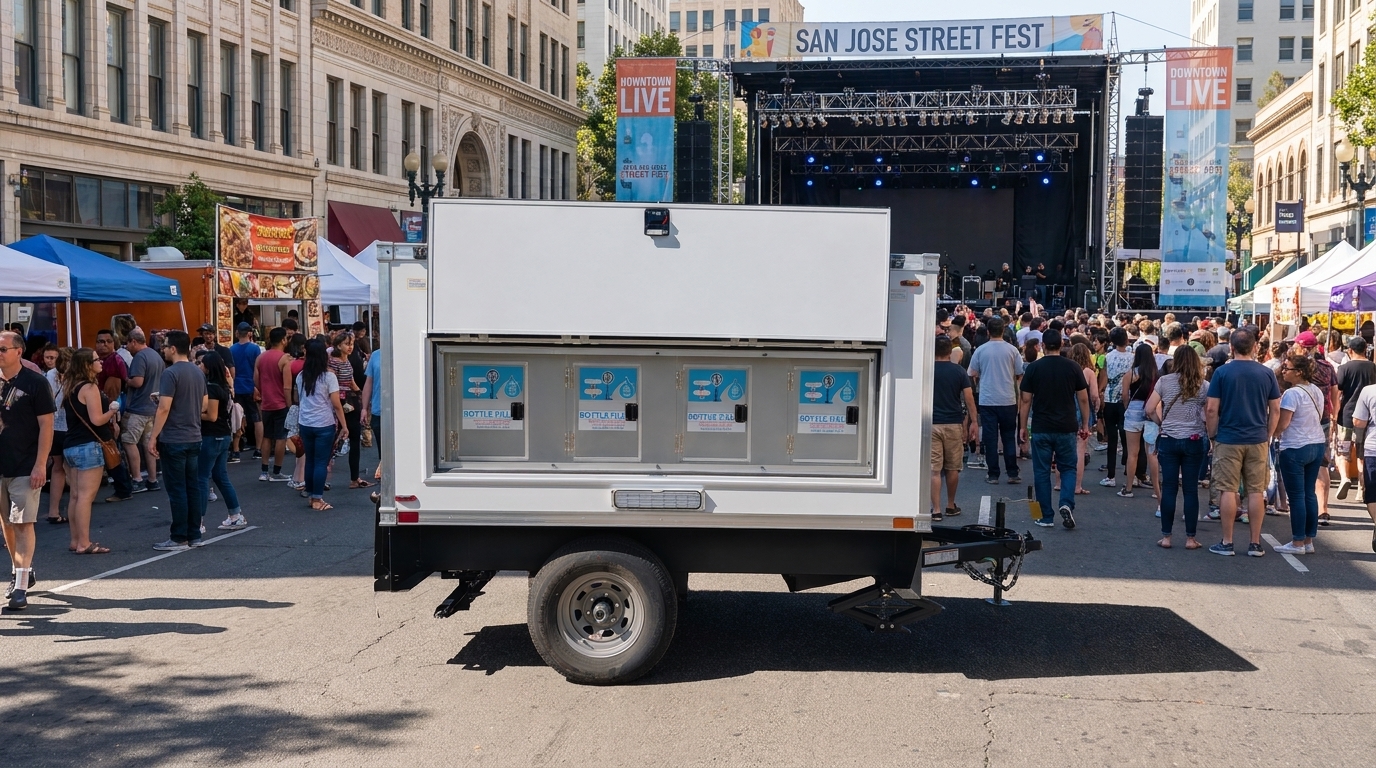
Relying on attendees to bring their own water or to buy bottles all day does not scale. Vendor lines get long, bottle prices push people to skip water they need, and the ground fills with empties that the event has to clean up. A chilled bottle-fill water station trailer changes the pattern. People refill for free at multiple spouts, the water is cold and filtered, and the plastic-bottle waste that a festival normally generates drops sharply.
For an open-streets event like Viva CalleSJ, the geography is different but the need is the same. The route stretches over miles, and people are moving the whole time on foot or on bikes. Placing water stations along the route gives riders and walkers reliable refill points so they are not carrying a full day's water from the start or hunting for a working fountain. It keeps the event comfortable across its whole length, not just at the main hub.
Free, visible water is also a safety measure that event medical teams appreciate. Heat exhaustion is one of the more common problems at a summer outdoor event, and the fix for the early stages is simply drinking cool water and getting into shade. A station that puts cold water within easy reach of the crowd reduces the number of cases that escalate to the medical tent. The Centers for Disease Control and Prevention lists steady water intake as a primary defense against heat illness at outdoor gatherings.
Mavirus Group is registered on SAM.gov and rents chilled, filtered bottle-fill water station trailers throughout San Jose and the surrounding South Bay, including Santa Clara, Sunnyvale, Cupertino, Mountain View, Milpitas, Campbell, Morgan Hill, and Gilroy. For city-permitted events and municipally connected festivals, the SAM.gov registration keeps the vendor side clean.
Booking is a matter of matching the station to the crowd. Share the expected attendance, the footprint, and the hours, and stations are sized and placed so lines stay short even during a set break when a few thousand people all want water at once. For a downtown San Jose festival in August, cold water on site is the difference between a crowd that stays all day and one that thins out when the heat wins.
Sources: CDC on heat and health · Visit San Jose events calendar
Water Stations for San Jose Races: Half Marathons and the Turkey Trot
San Jose hosts some of the larger running events in Northern California, and they bring their own hydration demands. The Rock 'n' Roll San Jose Half Marathon runs through downtown in October, sending thousands of runners across 13.1 miles of city streets. The Applied Materials Silicon Valley Turkey Trot takes over downtown on Thanksgiving morning and is billed as America's largest Thanksgiving race, drawing tens of thousands of participants. When a field that size hits the course, the water plan is not a detail. It is central to whether the race runs safely.
Race hydration has two distinct jobs. On-course water keeps runners going through the miles, and finish-line water helps them recover after they cross. Both matter, and both draw a crowd at once. A half marathon field bunches up at aid stations, and a Thanksgiving race with tens of thousands of walkers and runners produces a wall of people reaching the finish in a compressed window. If the water setup cannot absorb that surge, you get long lines and runners standing around dehydrated after a hard effort.
The old model of stacked paper cups on folding tables works but comes at a cost. It takes a large volunteer crew to pour and hand out cups for hours, and it leaves the course and the finish area carpeted in flattened cups that the city and the race have to clean up. For a downtown San Jose race that shuts streets and answers to permits, that cleanup is a real line item and a real headache.
A chilled bottle-fill water station trailer offers a different approach, especially at the start and finish areas and at fixed festival zones. Runners refill their own bottles or hydration packs, the water is cold and filtered, and the cup waste drops toward zero at those points. Many runners in these fields already carry handheld bottles or vests, so a refill station meets them where they are. It also lets runners top off before the gun and rehydrate at the finish without waiting on a volunteer to pour.
Cup stations still make sense at speed on the course itself, where a runner grabs and goes without breaking stride. The smart setup often blends the two: hand-up cups at the mid-course aid stations for the runners who will not stop, and bottle-fill stations at the expo, the start corrals, and the finish festival where people linger, refill, and recover. Matching the method to the location is how a race keeps water in everyone's hands without drowning in waste.
The timing of these events actually helps. October and Thanksgiving weather in San Jose is milder than the August peak, but the South Bay stays dry and the sun is still strong, and a hard run pushes body temperature up regardless of the air temperature. Runners still lose water fast, and the American Council on Exercise and race medical directors consistently stress steady fluid intake before, during, and after distance events. Cold water at the finish is exactly what a depleted runner wants.
For a race director, the value is in the surge. Brief us on the field size, the start and finish layout, and where the festival zones sit, and stations are placed to handle the moment when thousands of finishers all want water at the same time. It cuts cup waste, eases the cleanup the permit demands, and gives the largest Thanksgiving race in the country a finish line that keeps up with the crowd.
Sources: American Council on Exercise on hydration · Applied Materials Silicon Valley Turkey Trot
Why the Warm, Dry South Bay Calls for Cold Water on Site
People who only know the Bay Area from San Francisco's fog often assume the whole region is cool and gray. San Jose is a different climate. The South Bay sits inland from the coast, shielded from the marine layer that keeps San Francisco chilly, and it runs noticeably warmer and sunnier. For anyone planning an outdoor event, a construction schedule, or a race in San Jose, that difference is the whole reason cold water on site is not optional in the warm months.
San Jose has a Mediterranean climate with warm, dry summers. July and August highs land in the low 80s on a typical day, which already asks a lot of a crowd or a work crew standing outside for hours. The hottest days are the real concern. When an offshore wind pushes in, temperatures climb toward 99 or 100 degrees, and those spikes can arrive with little warning. A plan built around a mild average will not hold up on the day the offshore wind shows up.
The dryness compounds the heat. From June through September, San Jose sees near-zero rain. Day after day of clear sky means direct sun with no cloud cover and no cooling from rain, and the low humidity means sweat evaporates fast. That last part fools people. In a dry climate you can be losing a lot of water without feeling soaked, so the usual cue that tells someone to drink is muted. People get dehydrated in the dry South Bay heat before they realize they are behind.
That is exactly why cold water on site beats warm water in a jug. Public health guidance and Cal/OSHA both note that people drink more when water is cool, and in a dry climate where the body's warning signs are quiet, drinking steadily is what keeps heat illness away. Water that has been sitting warm in the sun is water people sip once and abandon. A chilled bottle-fill station keeps the water cold and inviting, which is the single biggest lever for getting people to actually drink enough.
The audiences who feel this most are the ones outdoors for hours: festival crowds in a downtown plaza, construction crews on a high-rise or a tunnel job, and runners on a race course. All three are exerting or standing in the sun long enough for a low-80s day, let alone a near-100 spike, to become a real health factor. Cold, filtered water within easy reach is the practical fix, and it is far easier to provide with a station than with pallets of bottles that go warm by noon.
Mavirus Group is registered on SAM.gov and rents chilled, filtered bottle-fill water station trailers built for exactly this climate, across San Jose and the surrounding South Bay, including Santa Clara, Sunnyvale, Cupertino, Mountain View, Milpitas, Campbell, Morgan Hill, and Gilroy. The stations keep water cold through the hottest, driest part of a South Bay afternoon, which is when it matters most.
The takeaway for anyone planning in San Jose is simple. Do not treat the South Bay like the coast. Plan for warm, dry days that can spike toward triple digits, and put cold water where people can reach it without thinking about it. That is how a summer event, a work site, or a race stays safe and comfortable when the offshore wind turns up the heat.
Sources: National Weather Service Bay Area office · CDC on heat and health