How Our Water Stations Support Sacramento Emergencies and Disasters
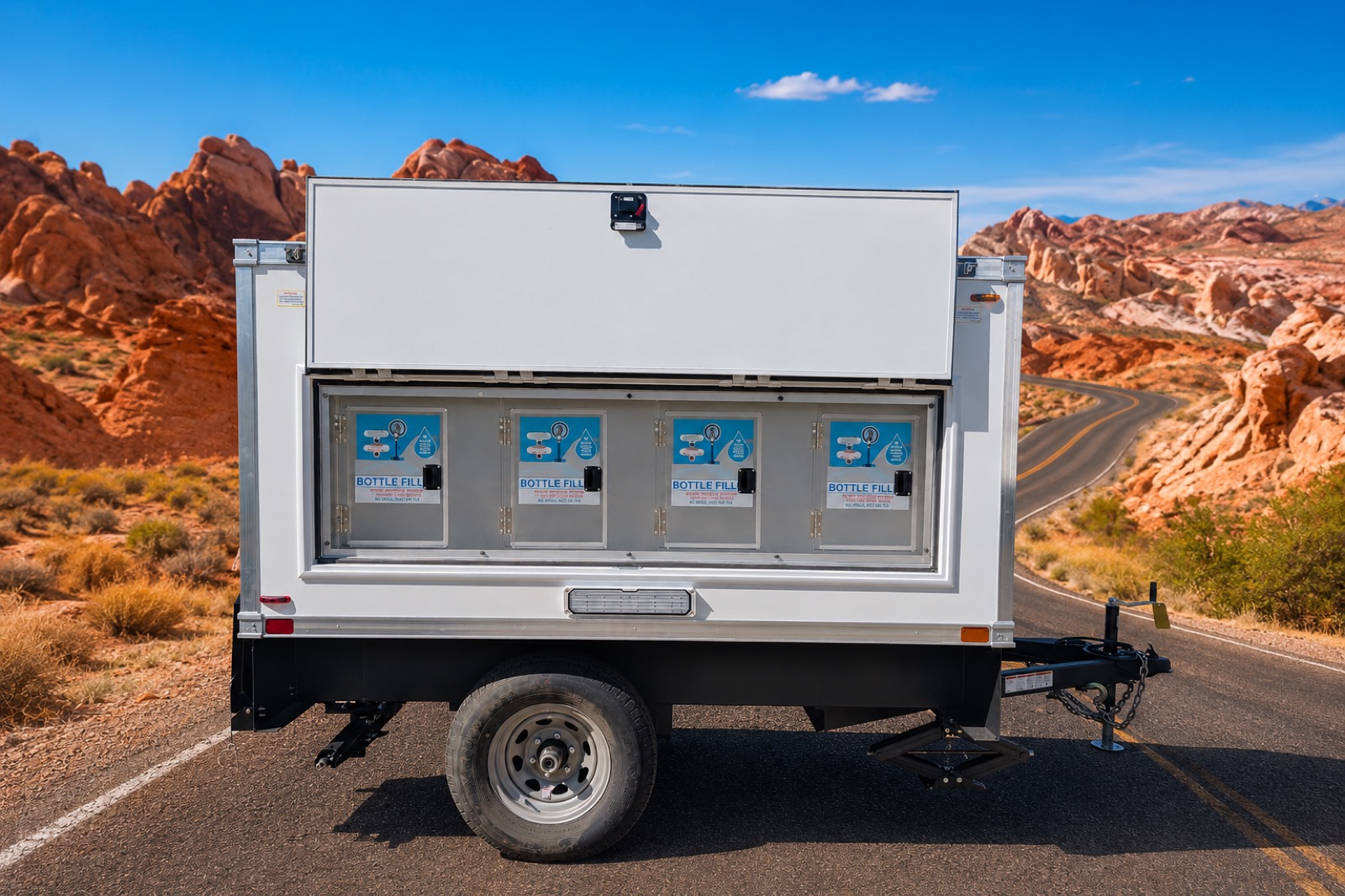
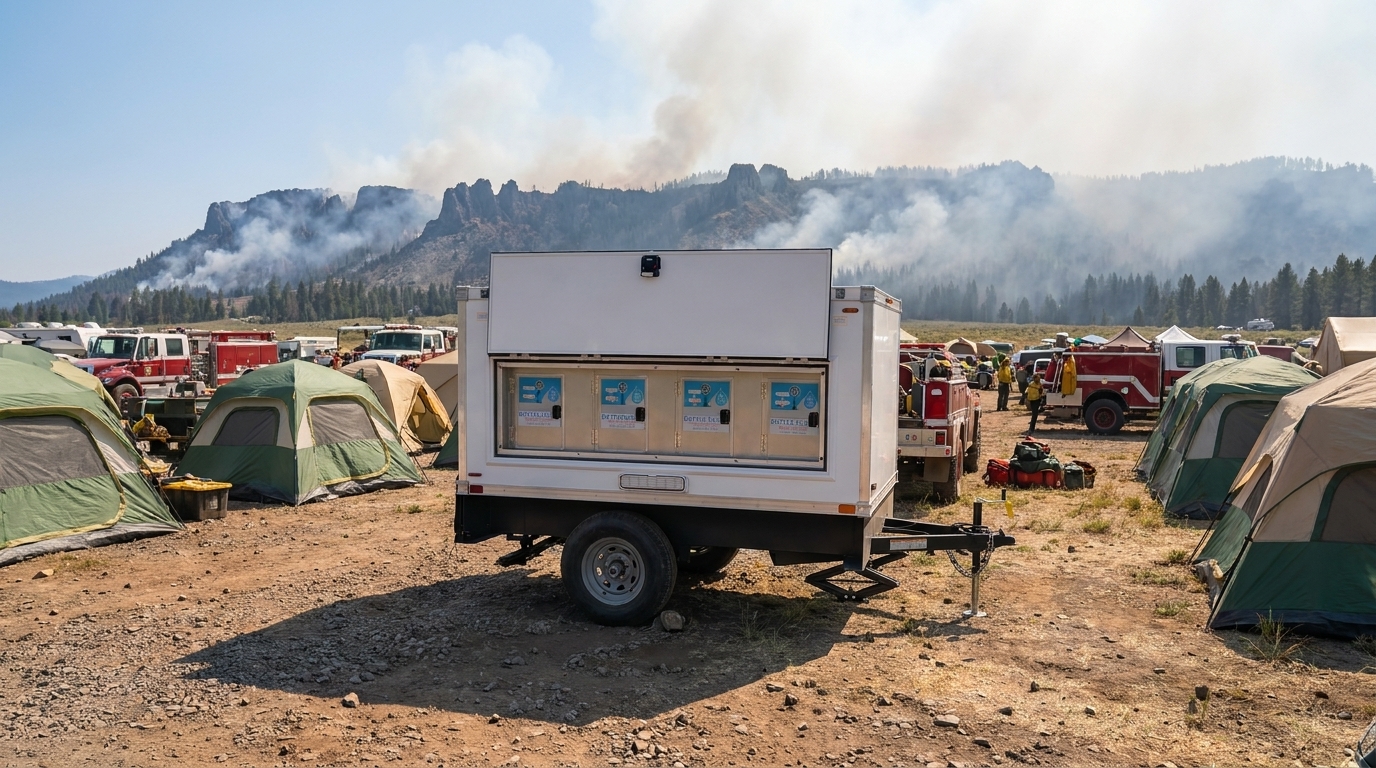
When a wildfire pushes people out of the foothills, a levee gives way on the Cosumnes, or a heat dome settles over the valley, the first thing an evacuation site runs short on is clean drinking water. Sacramento sits at the meeting point of four counties that see this every year. Sacramento, Placer, Yolo, and El Dorado counties all border the burn-prone Sierra front, and the region has lived through the Caldor Fire in 2021, the Mosquito Fire in 2022, and the January 2023 storms that breached levees near Wilton and closed Highway 99. Each ended the way we have watched them end for years: people gathered on a fairground or a school lot with no working water where they stood. Mavirus Group builds around that reality. We rent chilled, filtered bottle-fill water station trailers that can roll into a shelter, a fairground, or a parking lot and start serving people within minutes of arriving.
The agencies that run California's disaster response are headquartered right here. Cal Fire operates an aviation program out of McClellan, north of downtown, where air tankers and helicopters stage for attacks across Northern California. The California Governor's Office of Emergency Services, Cal OES, runs its headquarters out of Mather, on the east side of the county. When those agencies stand up a base camp or a community respite site, they need potable water at volume, and they need it in a form people can actually carry away. A bottle-fill station lets a firefighter, a volunteer, or a displaced resident fill a personal container and keep moving instead of waiting in a line at a single spigot.
Heat waves create the same demand without any smoke in the air. Sacramento County opens respite and cooling sites during excessive heat warnings, and those sites draw people who have no other place to escape triple-digit afternoons. A cooling center that offers cold water keeps its guests longer and keeps them safer. Our trailers deliver water that is already chilled, so the people walking in from a 108-degree sidewalk get relief right away instead of lukewarm water from a warm tank that has been baking in the sun.
Outreach organizations lean on the same infrastructure year-round. Loaves and Fishes serves close to a thousand people a day near downtown, and groups like Mercy Pedalers ride out to reach unsheltered residents where they already are. Both efforts depend on a steady supply of clean water, and both scale up sharply when the temperature climbs. A stationed trailer gives an outreach team a fixed, reliable point to refill from, which frees volunteers to spend their time with people instead of hauling cases of bottled water back and forth.
The trailers filter the water on board, so what comes out of the fill spouts is clean regardless of the source it connects to. That matters at a disaster site, where the local supply may be disrupted, boil-water notices may be in effect, or the only available hookup may be a construction line of unknown quality. Filtration on the unit means the station is not dependent on the surrounding infrastructure being intact. In an emergency, that independence is the whole point.
Chilled water also carries a practical safety benefit during heat emergencies. People drink more when the water is cold, and drinking more is exactly what prevents heat exhaustion and heat stroke from turning into hospital visits. A respite site that hands out cold water is doing real medical prevention, not just offering a comfort. The same holds for responders working long shifts in turnout gear or the sun. Cold, easy-to-reach water keeps the whole crew supplied across a full deployment.
Because our units are trailer-mounted, they move as the incident moves. An evacuation that starts at one fairground and shifts to a school gym does not lose its water supply, because the trailer follows the people. That flexibility is hard to match with fixed plumbing or with pallets of single-use bottles that have to be trucked, stacked, and thrown away. One station replaces thousands of disposable bottles over the course of a multi-day event, which cuts both the logistics burden and the pile of waste left behind.
Mavirus Group is registered in SAM.gov, so agencies and prime contractors can bring us onto a response through the channels they already use. We understand that emergency work runs on short notice and shifting conditions, and we set up our rentals to match that pace. Whether the need is a wildfire base camp at McClellan, a county cooling site during an excessive heat warning, or a daily outreach point downtown, a Mavirus water station puts clean, cold drinking water where the people are.
Sources: California Governor's Office of Emergency Services · Cal Fire
Meeting Cal/OSHA Section 3395 Heat Rules on Sacramento Construction Sites
Sacramento is in the middle of a building boom, and every one of those job sites has to answer to the same state heat rule. California's heat illness prevention standard lives in Title 8, Section 3395 of the state code, and it applies to outdoor work including construction and agriculture. The centerpiece of the rule is water. The employer has to provide enough fresh, pure, and suitably cool drinking water to allow each employee to drink at least one quart per hour, which works out to four eight-ounce glasses every hour. On a hot Sacramento afternoon, a crew of thirty can go through a stunning amount of water, and the standard makes clear that supply is not optional.
The rule sets specific temperature triggers that Sacramento crosses constantly from late spring into fall. Once the temperature reaches 80 degrees, the employer must provide shade and keep it up so workers can take a cool-down rest. At 95 degrees, the high-heat provisions kick in, which add closer supervision, more frequent reminders to drink water, and pre-shift meetings about the day's conditions. Sacramento reaches 95 on a routine basis, so for much of the year the high-heat rules are simply the operating baseline rather than a rare exception.
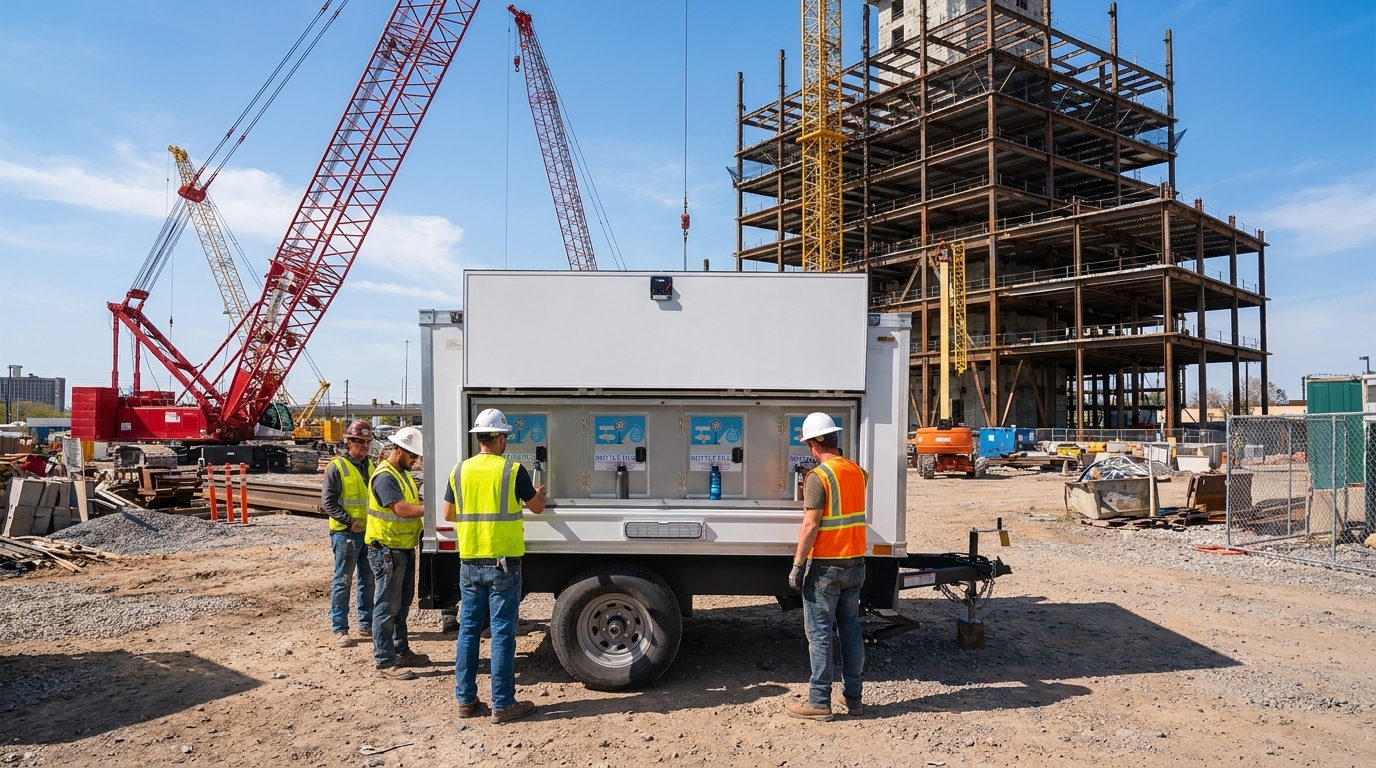
That is where a reliable water source becomes a compliance tool, not just a comfort. A Mavirus bottle-fill station puts clean, chilled water at the point of work so crews can meet the one-quart-per-hour standard without anyone driving off site for cases of bottled water or refilling warm coolers that empty out by mid-morning. The water is filtered on board and kept cold, which satisfies both the purity and the suitably-cool language in the standard. A single station serves an entire crew and refills as fast as they can drink.
The scale of local projects makes this concrete. Aggie Square on Stockton Boulevard is a major research and innovation campus that has drawn a huge construction workforce to the UC Davis Health area. The Railyards site north of downtown covers 244 acres and is slated to include a Kaiser hospital and a stadium for Sacramento Republic FC, which means years of large crews working through valley summers. The airport expansion adds another long-running project with significant outdoor labor. Every one of these sites has to keep drinking water flowing under Section 3395, and the bigger the crew, the harder that is to do with coolers alone.
Water is only half of the compliance picture. Section 3395 also requires shade whenever the temperature is above 80 degrees, positioned close enough to the work that a cool-down rest is practical. A hydration station pairs naturally with a shade structure to create a proper rest area, the kind of setup a Cal/OSHA inspector expects to see. Workers who feel the early signs of heat illness need a place to cool down and rehydrate at the same time, and grouping the water with the shade makes that recovery quick and obvious.
Documentation is the part that trips up a lot of otherwise careful contractors. Cal/OSHA expects employers to have a written heat illness prevention plan and to be able to show that water and shade were actually available. Keeping a simple log of when the station was filled, checked, and restocked gives a site superintendent a paper trail that backs up the plan. If an inspector or an insurer ever asks how the crew got its water, a maintained station plus a fill log tells a clean story.
There is a productivity case here too, separate from compliance. Dehydrated workers slow down, make more mistakes, and get hurt more often. Cold water that is easy to reach keeps a crew drinking steadily instead of rationing warm water and pushing through the heat. On a large Sacramento project running through July and August, steady hydration protects the schedule as much as it protects the workers, because a heat illness incident can stop a whole crew and trigger an investigation.
Mavirus Group works with contractors and their safety teams to place stations where the crews actually are, and to keep them supplied across the length of a project. We are registered in SAM.gov, which matters for the public and institutional work that fills the Sacramento pipeline, from health campuses to airport infrastructure. Meeting Section 3395 is not complicated once the water is handled well, and a chilled bottle-fill station handles the water part cleanly.
Sources: Cal/OSHA Title 8, Section 3395 · Cal/OSHA Heat Illness Prevention
Serving Large Sacramento Outdoor Events With On-Site Water Stations
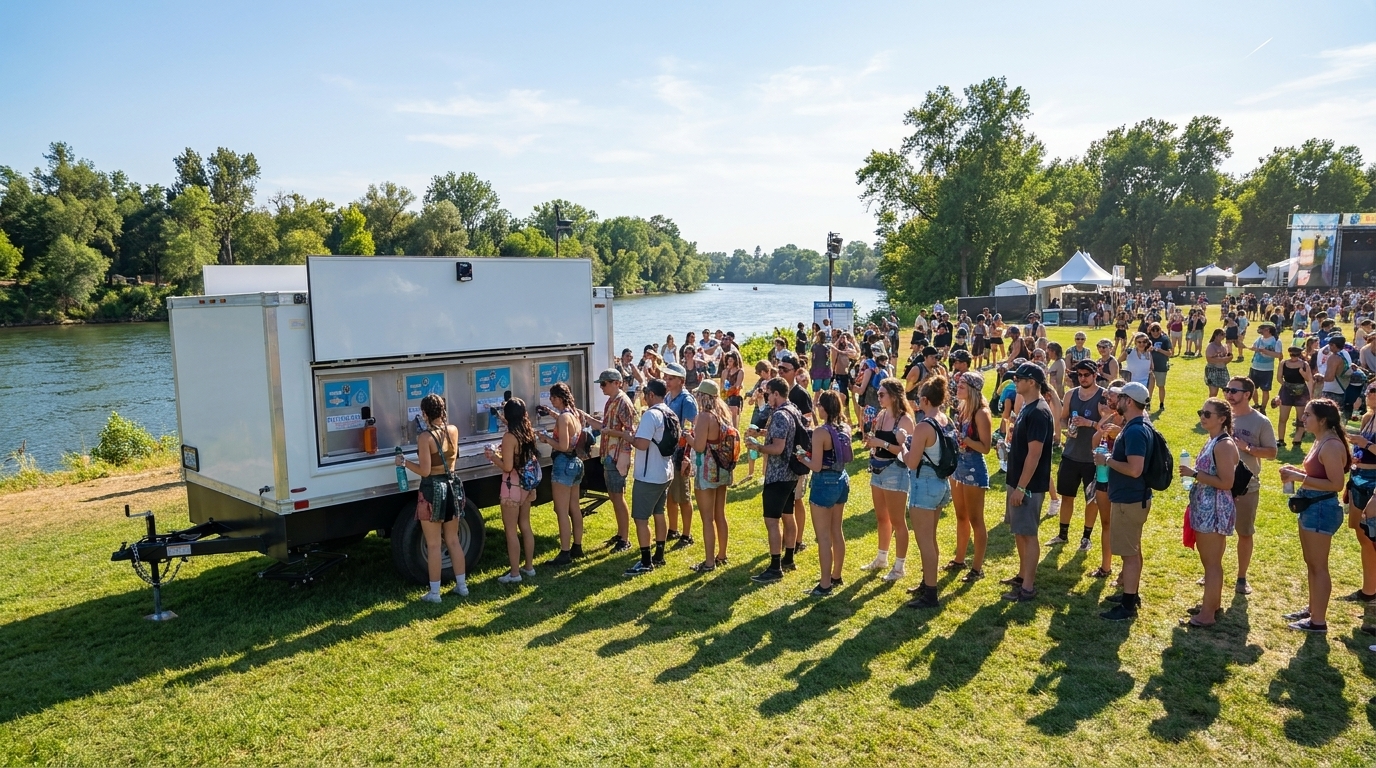
Sacramento hosts some of the largest outdoor gatherings in Northern California, and every one of them runs on water. Aftershock, the rock festival at Discovery Park, draws around 150,000 people across its four days, and its own entry policy allows attendees only an empty refillable bottle, which makes the refill stations the hydration plan for the whole crowd. The California State Fair at Cal Expo pulls in roughly 700,000 visitors over its run. Golden 1 Center anchors a downtown entertainment district that pushes crowds out onto the surrounding streets and plazas before and after events. At that scale, drinking water stops being a nicety and becomes a core piece of event safety, especially in a city where summer highs sit deep in the triple digits.
The math on a large festival is unforgiving, and years of staging water for Sacramento crowds have shown us where it breaks: on floodplain grounds like Discovery Park, every gallon is trucked in. When you plan for a crowd in the tens or hundreds of thousands standing outside for hours in Sacramento heat, you have to think in gallons per person, not cases of bottled water, and relying on vendors selling bottled water leaves gaps that turn into medical tent visits. A network of bottle-fill stations lets organizers meet that demand with a fixed, refillable source instead of a supply chain of pallets that has to be restocked all day.
Mavirus Group rents chilled, filtered bottle-fill water station trailers built for exactly this kind of load. Because the water is filtered on board and served cold, a station at Discovery Park or Cal Expo gives attendees relief the moment they walk up, which is the difference between people drinking enough and people rationing warm water they do not enjoy. Cold water is water people actually consume, and at a summer festival that is the whole safety equation.
Placement is what makes a hydration plan work in practice. Stations belong near entrances, so people arrive already able to fill up, and near the highest-density areas like main stages and food courts, where crowds pack in and the heat builds. At a sprawling site like Discovery Park, spreading stations across the footprint keeps any one point from becoming a bottleneck and keeps walking distances short. The goal is that no attendee has to cross the entire grounds to find water, because the people most at risk of heat illness are the least likely to make that trip.
The refillable model also solves a problem that large events increasingly care about, which is waste. A crowd of 150,000 handed single-use bottles generates an enormous pile of plastic that someone has to collect and haul. Bottle-fill stations let attendees refill personal bottles or cups instead, which cuts that waste sharply and keeps the grounds cleaner through the day. For events working toward sustainability commitments, refill stations are a visible, practical step rather than a slogan.
Reliability matters as much as capacity. A station that runs out of water at 2 p.m. on a 105-degree Saturday is a failure at the exact moment it is needed most. Trailer-mounted stations hold real volume and refill from a supply line, so they keep serving through peak crowds instead of running dry the way coolers and bottled-water tables do. That steady output is what lets a safety team promise medical staff that hydration is covered.
Different venues call for different setups. An open festival ground like Discovery Park spreads people across a wide area, so it needs stations distributed to match. A fairgrounds like Cal Expo has defined walkways and gathering spots where stations can anchor the flow. A downtown event around Golden 1 Center concentrates people on hard surfaces that radiate heat, where a few well-placed stations near the arena and the surrounding plaza cover the crowd. We plan placement around how each site actually moves people.
Mavirus Group is registered in SAM.gov and works with event organizers, promoters, and the public agencies that co-run large gatherings on public land. We size the number of stations to the expected crowd and the forecast, and we place them where they do the most good. For a Sacramento summer event, cold and reliable drinking water spread across the grounds is one of the simplest ways to keep a large crowd safe and comfortable from gates open to last call.
Sources: CDC NIOSH Heat Stress · California State Fair at Cal Expo
Water Stations for Sacramento Races and the 100-Foot Rule
Sacramento is a serious running town, and its biggest races put real demands on hydration. The California International Marathon runs from Folsom Dam to the State Capitol and draws close to 10,000 runners every December, with more than 8,000 crossing the finish line. The Run to Feed the Hungry brings close to 30,000 people to the area near Sacramento State every Thanksgiving morning. Add the training runs on the American River Parkway and the events at Folsom Lake and you have a year-round calendar of people who need water on course and at the finish. Getting that water right is the difference between a smooth event and a line at the medical tent.
Race organizers plan hydration around a simple principle: no runner should be more than about 100 feet from water at an aid station. That guideline shapes how a finish area and a staging zone get laid out, because a cluster of thirty thousand people funneling toward a single water point creates a crush and leaves runners waiting when they most need to drink. Spreading fill points across the aid zone keeps that flow moving and keeps everyone within easy reach of water.
This is where the bottle-fill approach beats the old cup-table method. The classic race image is a table of paper cups and a volunteer trying to hand them out fast enough while half the water ends up on the ground. Cups are wasteful, they slow down at exactly the wrong moment, and they leave a carpet of litter that someone has to clean up. A bottle-fill station lets runners top off a handheld bottle or a hydration pack quickly and keep moving, which suits the way most distance runners actually carry water now.
Mavirus Group rents chilled, filtered bottle-fill water station trailers that fit this model well. For a marathon that starts at Folsom Dam and finishes downtown at the Capitol, the finish area is where hydration demand spikes, because thousands of runners cross the line within a tight window and all need water at once. A cluster of stations at the finish, spaced so no one is far from a spout, handles that surge far better than a single point can. The water comes out cold, which matters even on a cool December morning once runners have been working for hours.
The Run to Feed the Hungry shows the other side of the challenge, which is sheer headcount. Close to thirty thousand people near Sacramento State on Thanksgiving morning is a small city's worth of runners and walkers, and the start and finish zones get dense fast. Distributing stations across the staging area, near the start corrals, along the finish chute, and around the gathering spots keeps the 100-foot principle intact even in heavy crowd conditions. The filtration on board means the water is clean no matter what supply line the station connects to.
Cold water is not just about comfort at a race. Runners who finish a hard effort need to rehydrate quickly, and cold water is water they will actually drink in volume. Warm water from a tank that has sat in the sun gets sipped and set down. Chilled water from a fill station gets consumed, which is what supports recovery and keeps the medical team from dealing with cramping and dehydration cases in the finish corral.
The refillable format also reduces the cleanup burden that big races dread. Cup litter along a course and across a finish area is a major post-event chore and a source of complaints from parks and neighborhoods. Bottle-fill stations shrink that footprint dramatically, because runners are refilling their own bottles instead of grabbing and dropping thousands of paper cups. For events on public land like the American River Parkway corridor, that lighter footprint helps keep the relationship with parks agencies healthy.
Mavirus Group is registered in SAM.gov and works with race directors and the agencies that permit events on Sacramento's trails and streets. We plan station counts and placement around the field size, the course layout, and the pinch points where runners bunch up. Whether it is a December marathon finishing at the Capitol or a Thanksgiving run of thirty thousand near Sacramento State, keeping every runner within easy reach of cold, clean water is the core of a hydration plan that holds up under real race-day pressure.
Sources: USA Track and Field · CDC NIOSH Heat Illness Prevention
Why Sacramento's Record Heat Drives Demand for Cold Water On Site
Sacramento heat is not what it used to be, and the numbers make that plain. In a normal year the city sees about 23 days at or above 100 degrees. In 2024 it recorded roughly 49 such days, a new record that broke the previous mark of 44 set in 2022, and the 2025 season opened with a May heat wave strong enough that the city activated cooling centers before June arrived. We have watched the season stretch on both ends from behind our own fill rails, and it has changed how anyone planning outdoor work or events in the region has to think about water. When triple-digit days more than double the historical average, cold drinking water stops being a summer convenience and becomes basic infrastructure.
The single most extreme moment came on September 6, 2022, when Sacramento hit 116 degrees, the highest temperature ever recorded in the city. That reading came during a prolonged heat dome that parked over the valley and refused to move. A heat dome traps hot air under a ridge of high pressure and holds it in place for days, which is exactly the pattern that pushes overnight lows up and never lets the ground cool off. Under those conditions, the human body loses its usual nighttime recovery, and the risk of heat illness climbs through the entire event rather than peaking for an hour in the afternoon.
Sacramento does have a natural relief valve in the Delta breeze, the flow of cooler marine air that pushes up from the San Francisco Bay and the Delta in the evenings. On a typical summer day that breeze knocks the temperature down after sunset and makes the heat survivable. The problem is that a strong heat dome can shut the Delta breeze down, and when that happens the valley bakes with no evening break. Those are the days that fill cooling centers and send outdoor crews looking for shade and water, and they are becoming more frequent.
This climate reality is the backdrop for everything Mavirus Group does in Sacramento. We rent chilled, filtered bottle-fill water station trailers because in this city warm water simply is not good enough. People do not drink enough warm water to stay safe on a 108-degree day, and dehydration is what turns a hot afternoon into a medical emergency. Cold water is water people actually consume in the volume their bodies need, which is why the temperature of the water matters as much as the quantity.
The demand shows up across every sector at once during a heat wave. Construction crews on the region's big projects have to hit the state's one-quart-per-hour standard under the worst conditions of the year. Outdoor events packed with attendees need far more water than usual. Cooling and respite sites open across the county and draw people who have nowhere else to escape the heat. All of that demand lands in the same stretch of days, which is why having a reliable, high-capacity source ready before the heat arrives beats scrambling for bottled water once the warning is issued.
Filtration on the unit adds a layer that matters more as heat stresses the region. Cold water from a station is clean water regardless of the source line it connects to, so a site does not have to depend on the surrounding supply being pristine. During extended heat events, when demand spikes and infrastructure gets stressed, that self-contained quality keeps a station serving safe water without relying on outside conditions holding up.
The trend is not reversing. Going from a 23-day average to a 49-day record in the span of a couple of years is the kind of shift that changes planning for good. Anyone who runs a Sacramento job site, a festival, a race, or a public facility now has to assume more triple-digit days, longer heat waves, and stretches when the Delta breeze fails to show up. Planning hydration around the old averages leaves people exposed on the days that matter most.
Mavirus Group is registered in SAM.gov and works with contractors, event organizers, and public agencies across Sacramento, Placer, Yolo, and El Dorado counties to get cold water on site before the heat hits. The record-setting summers of recent years are the clearest possible argument for treating drinking water as planned infrastructure rather than an afterthought. In a valley that now expects close to fifty triple-digit days, a reliable source of chilled, filtered water is one of the most practical safeguards a site can put in place.
Sources: National Weather Service Sacramento · CDC Extreme Heat and Health