Keeping Water on Fresno Farm and Harvest Crews Under Cal/OSHA Section 3395
Fresno County grows more food than any other county in the United States. Farm production here topped 9 billion dollars in 2024, led by almonds at around 1.45 billion dollars, plus grapes, pistachios, and dozens of other row and tree crops. Behind those numbers are thousands of field workers who spend long days outdoors during the hottest months of the year. When harvest hits, labor demand surges, and so does the risk of heat illness. Getting water to those crews is not a nice-to-have. It is the law, and it is the difference between a normal shift and a medical emergency. After years of setting water stations along these harvest rows, we plan our own season around the same calendar the growers do: stone fruit from mid May, grapes from mid July, almond shake in August, then the September raisin sprint, when crews race to get fruit on trays before the insurance cutoff.
California's heat rule for outdoor workers is Title 8, Section 3395, enforced by Cal/OSHA. Agriculture is named directly in that regulation, right alongside construction and other outdoor industries. The rule sets clear numbers. Employers have to provide at least one quart of cool drinking water per employee per hour, which works out to four cups every hour, for the entire shift. On a ten-hour day in a Fresno County vineyard, that is more than two and a half gallons per worker. Multiply that across a full crew and you can see how fast a job site burns through water.
Access and quality both matter. The water has to be fresh, pure, and suitably cool. Warm water sitting in a jug in direct sun does not meet the intent of the rule, and crews are far less likely to drink it. Cal/OSHA also expects water to be located as close as practicable to where employees are working, so nobody has to walk halfway across a field to refill. That is a real problem on large ag operations where the work moves down the rows all day and the parking area stays put.
Shade requirements kick in when the temperature climbs above 80 degrees. At that point, employers must have shade structures in place that workers can reach and use for cool-down rest breaks. When the temperature hits 95 degrees, the high-heat provisions apply. Those add pre-shift meetings on heat illness, closer observation of workers, and reminders to drink water often. In Fresno, where the hot season runs from April all the way through October, high-heat conditions are not rare. They are the default for much of the harvest calendar.
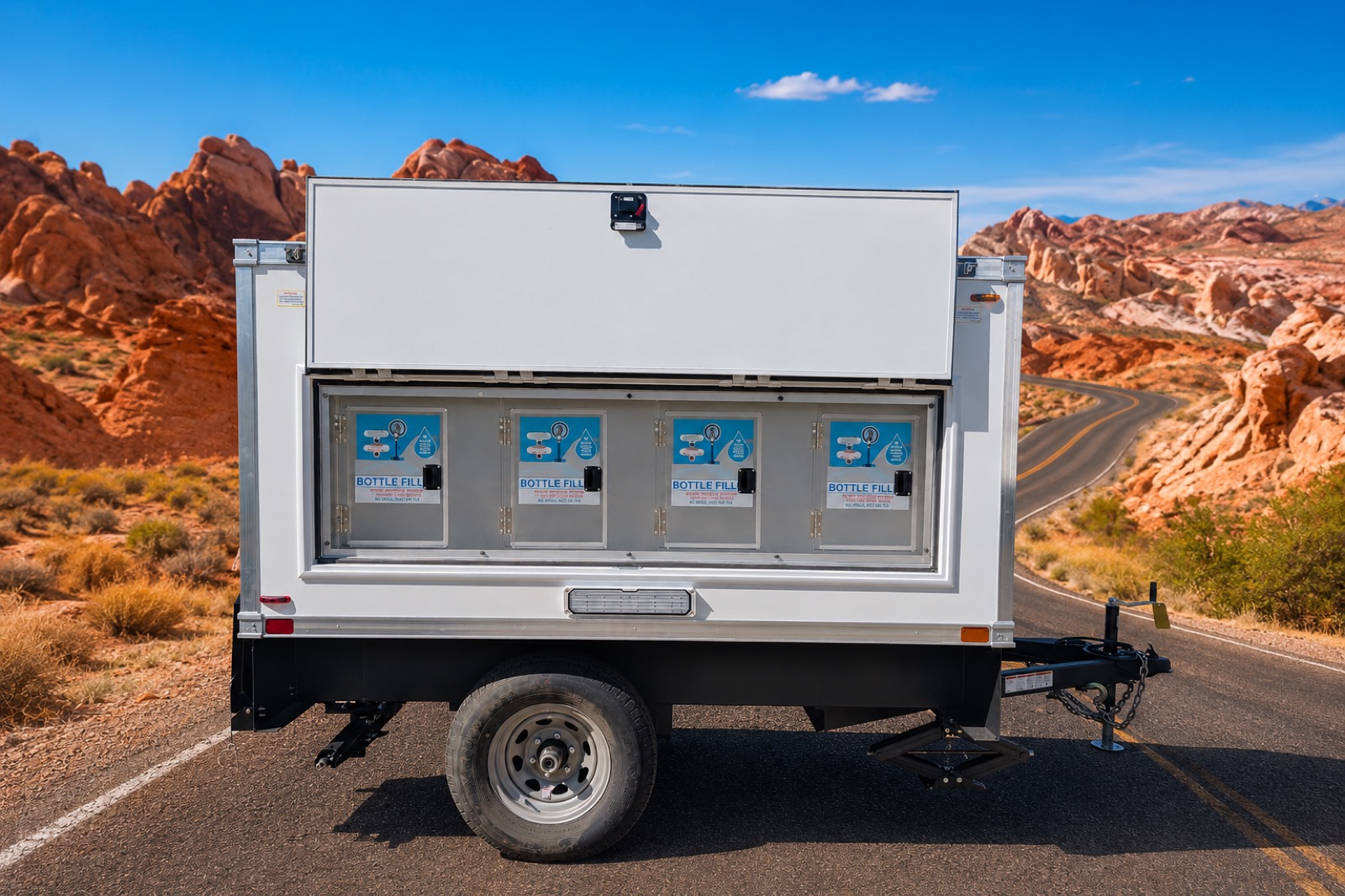
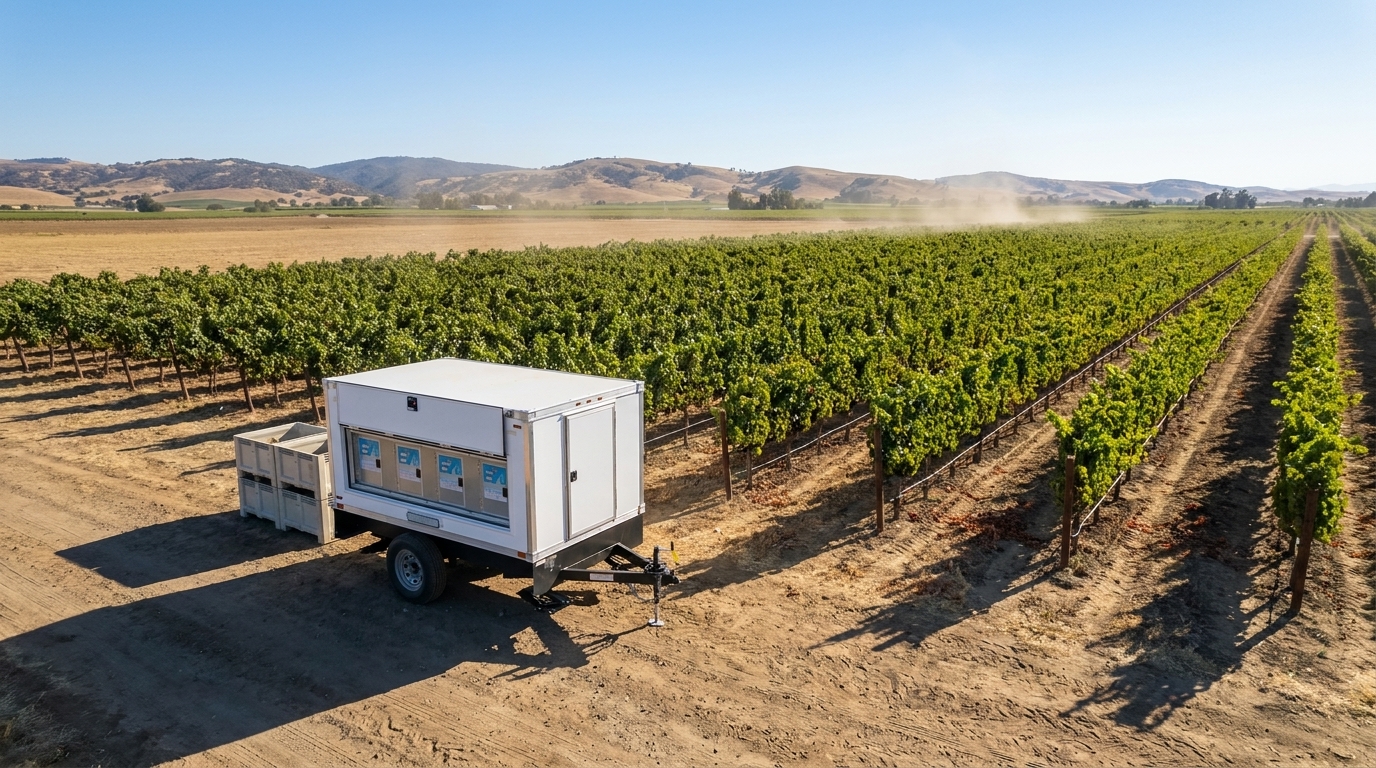
This is where a chilled water station trailer earns its place on an ag operation. A single trailer holds a large reserve of filtered water and keeps it cold through triple-digit afternoons, which is exactly what the rule asks for and exactly what tired crews actually want to drink. Bottle-fill stations let workers top off personal containers quickly and hygienically, without everyone sharing a common cup or dipping into an open cooler. When the crew moves to a new block, the trailer moves with them, keeping the water source close to the work.
Compliance also comes down to records and reliability. Cal/OSHA inspectors do show up during harvest season, and a farm that cannot demonstrate adequate cool water for every worker is exposed to citations and, worse, to a heat illness event that could have been prevented. A dedicated water station trailer gives a foreman one clear, visible answer to the question of where the water is and whether there is enough of it. It removes the daily scramble of hauling cases of bottles and hoping the ice holds.
Mavirus Group provides chilled, filtered bottle-fill water station trailers for farms across Fresno and Madera counties, including Selma, Kingsburg, Sanger, Reedley, Kerman, and the west side around Firebaugh, Mendota, and Huron. As a SAM.gov registered vendor, we work with growers, labor contractors, and ag operations that need dependable hydration in the field. The goal is simple. Keep cold water within reach of every worker, every hour, through the whole Central Valley harvest.
Heat illness moves fast, and the early signs are easy to miss when a crew is focused on getting the crop in. Steady hydration is the single most effective defense a farm has. Meeting the quart-per-hour standard with water people are willing to drink protects both the workers and the operation that depends on them.
Sources: Cal/OSHA Title 8 Section 3395, Heat Illness Prevention · Fresno County Department of Agriculture
Water Stations for Central Valley Construction: High-Speed Rail and Utility-Scale Solar
Fresno sits at the center of the largest construction program in California history. The California High-Speed Rail project runs its Central Valley construction through the Fresno area, and the work is enormous. Crews have built roughly 80 miles of guideway across the valley, with up to about 1,700 workers on the job on a peak day and something on the order of 16,700 construction jobs supported over the life of the effort so far. Much of that work happens on open guideway, viaducts, and grade separations where there is no building, no plumbing, and no easy source of drinking water.
The same is true for the wave of utility-scale solar going up on the Fresno County west side. Projects like Darden Clean Energy, a large solar and battery storage development, are expected to put more than 2,000 prevailing-wage workers on remote ground for months at a time. Solar construction spreads crews across hundreds or thousands of acres of former farmland, far from any water main. When the nearest tap is miles away, hydration becomes a logistics problem that has to be solved on purpose, not left to chance.
Construction is named directly in Cal/OSHA's heat illness standard, Title 8 Section 3395. The rule requires at least one quart of cool water per worker per hour for the full shift, shade once the temperature passes 80 degrees, and high-heat procedures at 95 degrees. On a Fresno-area job site in July, those thresholds are crossed by mid-morning. A general contractor running a large crew has to plan for thousands of gallons of drinking water a week, and it all has to stay cool enough that people will actually drink it.
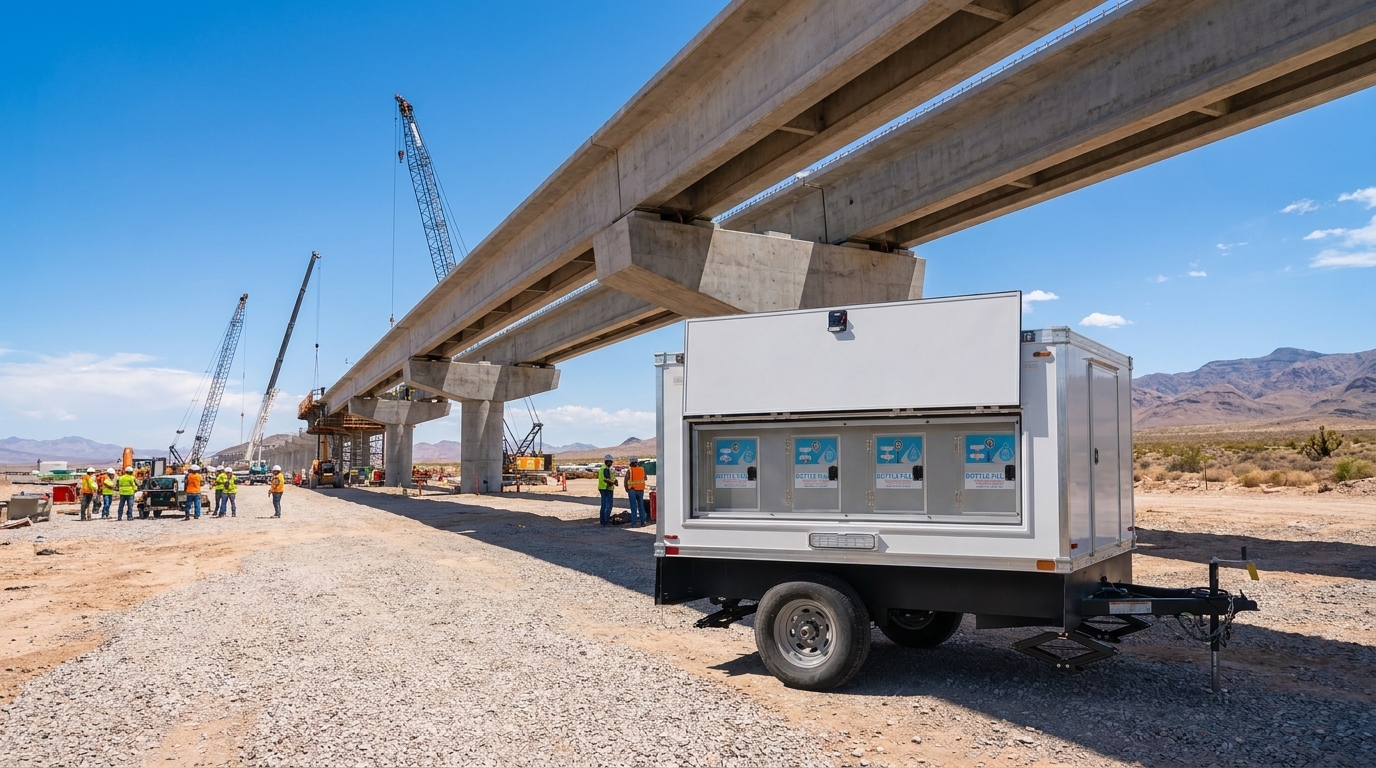
The old approach of trucking in pallets of bottled water breaks down at this scale. Bottles get warm in the sun, generate mountains of plastic waste, run out at the worst moment, and force someone to spend part of every day restocking. On a remote guideway segment or a sprawling solar field, that resupply drive can eat hours. A chilled water station trailer changes the math. One trailer parks on site, holds a large reserve of filtered water, and keeps it cold through the afternoon, giving crews a fixed, reliable point to refill personal bottles.
Mobility is the key advantage for linear projects like high-speed rail. The work moves down the alignment, and the water source has to move with it. A towable station repositions as the crew advances, so nobody is walking a quarter mile off the line to get a drink. For solar sites, a trailer can be staged near the active installation zone and moved as construction rolls across the parcel. Either way, the water stays close to the work, which is exactly what the regulation intends.
There is also a compliance and safety record angle that matters on public infrastructure. High-speed rail and prevailing-wage solar projects carry heavy oversight, and heat illness prevention is part of that scrutiny. A visible, well-stocked water station makes it easy for a superintendent to show that cool water is available to every worker at all times. It also cuts down on the small daily failures, the empty cooler or the missing case of bottles, that create real exposure on a hot afternoon.
Mavirus Group supplies chilled, filtered bottle-fill water station trailers to construction sites across Fresno and Madera counties, from the high-speed rail corridor through Fresno and Madera to the solar developments on the county's west side near Firebaugh, Mendota, Coalinga, and Huron. As a SAM.gov registered vendor, we are set up to work with contractors on public infrastructure and prevailing-wage projects that demand dependable hydration in remote locations.
Big construction in the Central Valley runs straight through the hottest part of the year. Whether it is guideway for the state's rail spine or gigawatts of new solar, the crews doing the work need cold water within reach every hour of every shift. A dedicated station trailer turns that requirement into something a site can count on.
Sources: California High-Speed Rail, Construction in the Central Valley · Cal/OSHA Heat Illness Prevention for Outdoor Workers
Water Stations at the Big Fresno Fair and Central Valley Events
The Big Fresno Fair is one of the largest annual gatherings in the Central Valley. Held every October at the Fresno County Fairgrounds, it draws more than 600,000 patrons over its run. October in Fresno still delivers real heat, with afternoons that can push well into the 90s and beyond, and that combination of huge crowds and warm weather makes drinking water a serious operational concern, not an afterthought. A crowd that size moving through midways, livestock barns, and concert grounds needs a lot of water, and it needs it fast. We have staged water stations on those grounds enough Octobers to know the pattern: the first warm Saturday is when demand spikes and layouts get tested.
The challenge with a fair or festival is concentration. Tens of thousands of people arrive in the same few hours, spread across a large site, and all get thirsty at once. Relying only on concession sales creates long lines and a lot of plastic, and it leaves anyone who cannot afford another bottle without an easy option. A run of chilled bottle-fill water stations placed near entrances, main walkways, and high-traffic zones gives everyone a fast, free, sanitary way to get cold water and cuts down on heat-related incidents that medical tents would otherwise handle.
Fresno's event calendar goes well beyond the fair. ClovisFest brings big crowds to Old Town Clovis. The Save Mart Center hosts concerts and games that fill the surrounding grounds. And the Two Cities Marathon runs the Fresno-Clovis Rail Trail in early November, putting thousands of runners on a long course where hydration is not just comfort, it is safety. Endurance events in particular live or die on water access, and organizers are judged on how well they keep participants and spectators supplied.
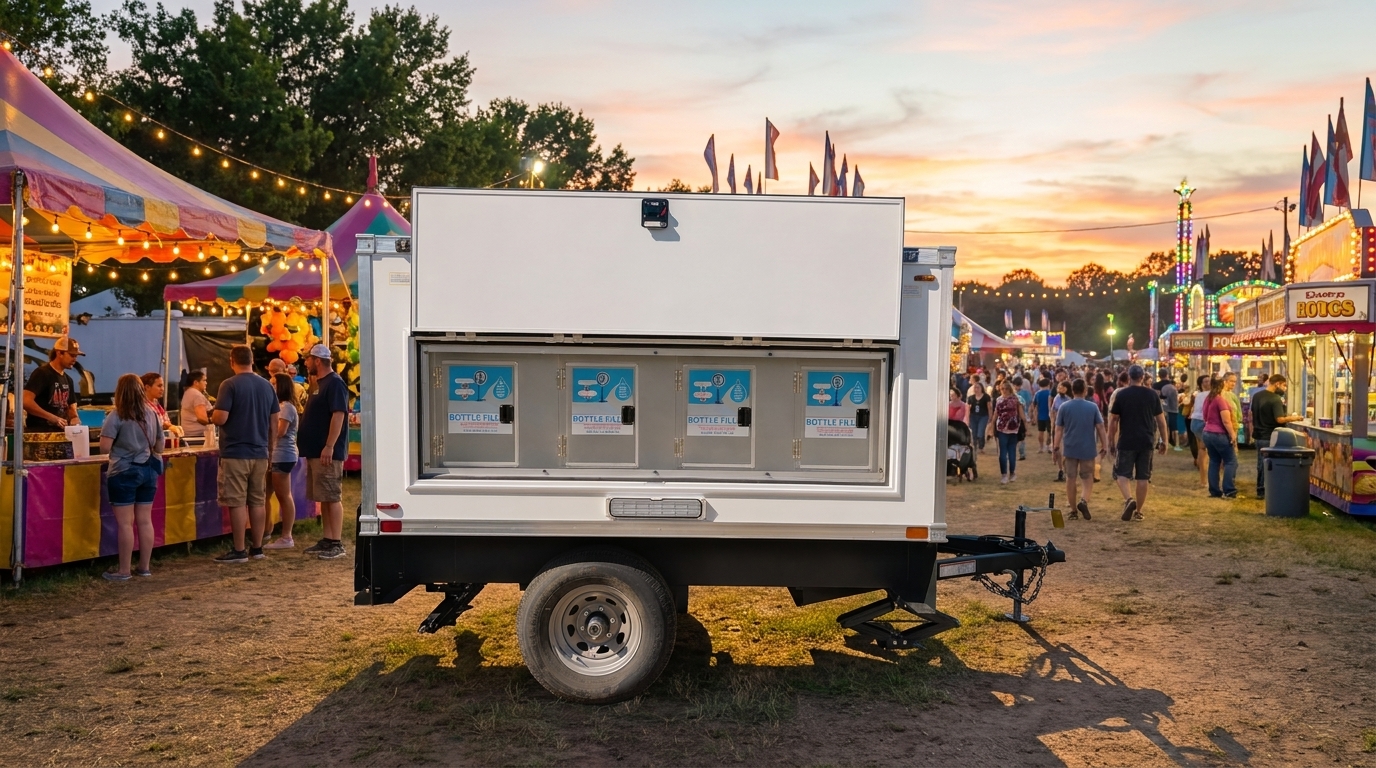
A water station trailer solves the placement problem that portable coolers never quite handle. One trailer serves many people from a single point, keeps the water genuinely cold through a hot afternoon, and offers multiple bottle-fill spouts so lines stay short. For a marathon, stations can be staged at the start, finish, and gathering areas to handle the surges before and after the race. For a fair, they anchor the busiest corners so the crowd always has water within a short walk.
Event organizers also care about cleanliness and reliability. Filtered water from a maintained station is a better experience than a warm garden hose or a communal cooler that everyone dips into. Bottle-fill spouts let people refill their own containers without touching a shared surface, which matters for public health at any large gathering. And because the trailer holds a large reserve, it does not run dry in the middle of the busiest hour the way a stack of cases will.
There is a real cost side to this as well. Heat cases at a crowded event tie up medical staff, slow things down, and can turn into liability. Keeping water moving through the crowd is one of the simplest ways to reduce those incidents. Free, visible, cold water tells attendees the organizers are looking out for them, and it keeps people on the grounds and comfortable rather than leaving early because they overheated.
Mavirus Group provides chilled, filtered bottle-fill water station trailers for fairs, festivals, races, and large events across Fresno and Madera counties, including Fresno, Clovis, Madera, Selma, and the surrounding communities. As a SAM.gov registered vendor, we work with event producers, municipalities, and organizers who need dependable hydration for big crowds in warm weather.
Whether it is 600,000 people over a two-week fair or a few thousand runners on the Rail Trail, the math is the same. Warm weather plus a large crowd equals a lot of water, delivered where people actually gather. A dedicated station trailer makes that dependable instead of a scramble.
Sources: The Big Fresno Fair · Ready.gov, Extreme Heat Safety
Water for Remote Sierra-Gateway Job Sites and Recreation Near Fresno
Fresno is the southern gateway to Yosemite and the doorway to a huge stretch of the Sierra Nevada. Head east out of the city and you reach Millerton Lake, then climb toward Shaver Lake and Huntington Lake. Follow the San Joaquin River Parkway, a 22-mile corridor of trails and open space, and you move quickly from urban Fresno into country with no water mains. This is where a lot of work and a lot of recreation happens, and it is exactly where reliable drinking water gets hard to find.
Crews working these gateway areas face a basic problem. Trail construction, forestry work, utility maintenance, park projects, and event setup all happen miles from the nearest tap. Bringing enough water for a full crew through a hot Central Valley and foothill summer means hauling it in, and the amount adds up fast. Cal/OSHA's heat rule still applies out here. Workers need at least one quart of cool water per person per hour, and that standard does not bend just because the job site is remote.
Recreation puts its own demands on water access. Trailheads along the San Joaquin River Parkway and staging areas near the foothill lakes see heavy use, especially on hot weekends, and many have no potable water at all. Organized events, from trail races to volunteer restoration days to group outings, gather people in places the water system never reached. When the temperature is in the triple digits down in the valley and still hot in the foothills, a group without a dependable water source is one long afternoon away from trouble.
A chilled water station trailer is built for exactly this gap. It is self-contained, so it does not need a hookup to a water main. It tows to the staging area, holds a large reserve of filtered water, and keeps it cold through the day. For a work crew, that means the quart-per-hour requirement is met on site without a resupply run back to town. For an event or a busy trailhead, it means a fixed, sanitary place for people to refill bottles instead of rationing what they carried in.
The bottle-fill design fits the outdoor setting well. Hikers, workers, and event participants can top off their own containers quickly, which keeps a group moving and cuts down on single-use plastic left behind in sensitive areas. Filtered, cold water is also simply more appealing than warm water from a jug, and people drink more of it, which is the whole point when you are trying to prevent heat illness far from help.
Access and timing matter in the backcountry gateway too. A trailer can be staged before a work project or event and repositioned as the job or the crowd moves. Because it carries its own supply, it works in spots where trucking in a resupply mid-day would burn hours on foothill roads. That independence is what makes remote sites manageable rather than a constant logistics headache.
Mavirus Group supplies chilled, filtered bottle-fill water station trailers for remote job sites and recreation areas across Fresno and Madera counties, from the San Joaquin River Parkway and Millerton Lake to the roads toward Shaver and Huntington lakes and the communities of Sanger, Reedley, and beyond. As a SAM.gov registered vendor, we work with contractors, agencies, and event organizers operating where the water system stops.
The country east of Fresno is beautiful and unforgiving, and a lot of important work and recreation happens where there is no faucet in sight. Bringing a dependable, self-contained source of cold water to those places keeps crews compliant and keeps everyone else safe through a long, hot day.
Sources: National Park Service, hydration guidance for Yosemite · Millerton Lake State Recreation Area, California State Parks
Why Fresno's Extreme Heat Makes Cold Water on Site Essential
Fresno is one of the hottest large cities in California, and the numbers back it up. The city averages more than 30 days a year above 100 degrees, with recent seasons clustering in the low-to-mid 30s. The all-time record reached 115 degrees back on July 8, 1905, and the heat is not just history. On July 7, 2024, Fresno hit a daily record of 114 degrees. The hot season stretches from April through October, which means roughly half the year carries real heat risk for anyone working or gathering outdoors. The season keeps stretching, too. In March 2026, Fresno hit 93 degrees and broke a monthly record that had stood since 2015.
Geography is the reason. Fresno sits in the San Joaquin Valley, a broad, flat basin ringed by mountains. That bowl shape traps hot air, holds it in place, and lets it build day after day during summer high-pressure ridges. There is little marine influence to break the heat, so daytime highs stack up and overnight lows often stay warm, giving bodies less chance to recover. For outdoor crews and crowds, that combination is what makes Central Valley summers so punishing. It is also why the city itself draws its emergency line at 105 degrees, the forecast that opens Fresno's cooling centers.
Heat at this level is a health hazard, not just discomfort. The human body cools itself by sweating, and that only works if fluids are replaced fast enough to keep up. In triple-digit heat, a working adult can lose water faster than they realize, and the early signs of heat illness, headache, dizziness, cramps, are easy to brush off until they turn serious. The single most effective countermeasure is steady access to cool water that people are willing to drink throughout the day.
The temperature of the water matters more than people expect. Cool water is easier to drink in volume, and crews and crowds consume more of it when it is genuinely cold. Warm water sitting in a jug in the sun gets ignored, which means the supply is there on paper but not doing its job. That is exactly why Cal/OSHA's heat standard calls for water that is suitably cool, not just present. In Fresno's climate, keeping water cold through a long afternoon is a real challenge that ordinary coolers lose by mid-day.
This is the core case for a chilled water station trailer in the Central Valley. It is designed to hold a large reserve of filtered water and keep it cold through the hottest part of the day, so the last hour of a shift or an event gets the same cold refill as the first. That reliability is the difference between a hydration plan that works and one that quietly fails when the temperature peaks and people need it most.
The stakes are highest for the industries and gatherings that define the region. Fresno County agriculture, the high-speed rail and solar construction across the valley, big events like the Big Fresno Fair, and remote work near the Sierra gateway all put people outdoors during the hottest months. Even the region's largest employers, like the Community Medical Centers system, feel the downstream effect when heat illness sends people to emergency rooms. Preventing those cases on site is far better than treating them later.
Mavirus Group provides chilled, filtered bottle-fill water station trailers built for exactly these conditions across Fresno and Madera counties, serving Fresno, Clovis, Madera, Selma, Kingsburg, Sanger, Reedley, Kerman, and the west-side communities of Firebaugh, Mendota, Coalinga, and Huron. As a SAM.gov registered vendor, we help operations meet the heat head-on with a dependable source of cold water.
In a place that spends months over 100 degrees and once hit 115, cold water on site is not a luxury. It is basic safety infrastructure. Meeting the heat with a reliable, chilled water source protects the people who keep the Central Valley running.
Sources: National Weather Service, Hanford/Fresno Forecast Office · CDC, Heat and Your Health