Home / Services / Nevada
Nevada

Temporary Refrigerated & Freezer Trailer Rentals in Nevada

Mavirus Group rents freezer and refrigeration trailers across all of Nevada, from the Las Vegas Strip to the Reno logistics corridor to remote federal ground and wildfire country. A cold storage trailer arrives already at temperature, plugs into ordinary 120 volt power, and holds your product safely down to 10 below zero for as long as the job lasts.

Nevada cold storage on call

The cold storage trailers Nevada operations call when the walk in dies

When a walk in fails in a Nevada July, the desert heat is not a background detail. It is the whole problem. Mavirus Group is a national government, disaster relief, and large scale provider, registered on SAM.gov as a federal contractor and partnered with Cal Fire, the U.S. Forest Service, and FEMA. We are licensed and insured, we hold an A plus rating with the Better Business Bureau, and we have completed more than 11,000 deliveries. Across Nevada, that means refrigeration and freezer capacity at your dock in hours, not a construction project and not a diesel truck droning behind your kitchen.

24/7statewide emergency dispatch
-10°Fdeep freeze holding range
11,000+deliveries completed
120Vruns on ordinary power
Our Freezer Trailer Fleet

Meet the freezer trailers we deliver to Nevada

A Mavirus portable freezer trailer holding pallets of frozen product, ready for Nevada delivery
A Mavirus freezer trailer, sub-zero cold storage that plugs into ordinary power

Our freezer trailers hold product sub-zero in a road-towable box that plugs into ordinary 120V power, in three sizes matched to how you actually receive product. A compact unit fits a single parking stall behind a restaurant, the workhorse absorbs a walk-in failure or a renovation, and a long box takes an institutional or disaster feeding load a full pallet at a time.

The trailers are self-contained. Each unit runs off standard power at your dock, and when the grid goes down the fleet keeps running on generators we bring, so a cold chain emergency does not become a total loss. We quote by case count and delivery cadence, not square feet, and match the box to your inventory.

Every unit holds temperature accurately and we keep a written temperature log your auditors will like. Delivery, setup, monitoring, and pickup are all part of the rental, and a dispatcher answers at 2 a.m. when a compressor quits without notice. Every trailer in the fleet is dual purpose, running as a refrigerator that holds fresh product near the high 30s or as a deep freezer that holds frozen inventory down to 10 below zero, which is the exact range a Nevada kitchen, warehouse, or feeding program needs when the built in cold storage quits in the middle of a heat wave.

Who relies on us

The Nevada operations that keep our cold storage trailers working

Nevada runs on cold that never gets a day off. Three out of four residents live in greater Las Vegas, where the hospitality machine never stops, and the rest of the state is spread across distribution corridors, military ranges, and small towns that have no second option when a cooler goes down. Here is who leans on our cold storage trailers, and why.

Hospitality and events

Cold storage trailers behind the Strip and every marquee event

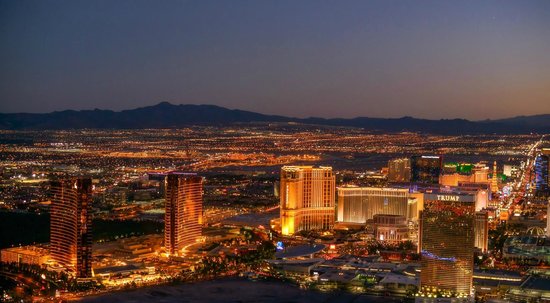
Las Vegas welcomed 40.8 million visitors in 2024 and cleared 40 million for the second year running. Roughly 6 million of those were convention visitors, driving about 15 billion dollars in economic impact through venues like the 4.6 million square foot Las Vegas Convention Center. Behind more than 150,000 hotel rooms sits a food and beverage operation running at industrial scale, and a single Strip resort is not one kitchen but dozens of restaurants, buffets, banquet halls, and catering kitchens sharing a back of house cold chain measured in tons.

When a walk in freezer goes down in that environment, or when a convention's catering demand outruns the house cold storage, the operator needs frozen and refrigerated capacity on the dock the same day. A cold storage trailer absorbs that overflow and that emergency without shutting a single restaurant. During the 2024 Formula 1 weekend, organizers moved enough food that they diverted 75,000 pounds of scraps from the landfill and donated over 171,000 pounds, a hint at the volume one Vegas mega event pushes through cold storage.

The event calendar never quiets. Electric Daisy Carnival draws more than 525,000 people to the Las Vegas Motor Speedway across three nights, roughly 170,000 a day, all fed by vendors on a bare infield with no built in refrigeration. The Las Vegas Grand Prix pulled about 315,000 attendees with up to 1.2 billion dollars in economic impact. The National Finals Rodeo brings around 170,045 people to the Thomas and Mack Center every December for a 200 million dollar boost, and Life is Beautiful turns downtown into a food and music festival each fall.

Every one of those events is a temporary city with its own cold chain. A cold storage trailer parks where the vendors work, plugs into event power or a generator we provide, and holds frozen and chilled product for the run of the show. Load in Monday, load out Sunday, no permanent freezer required.

A white refrigerated trailer parked at a Las Vegas resort loading dock at night with the Strip glowing in the background
A refrigerated trailer backed against a large distribution warehouse dock in the Reno Sparks industrial corridor under a clear high desert sky
Logistics and warehousing

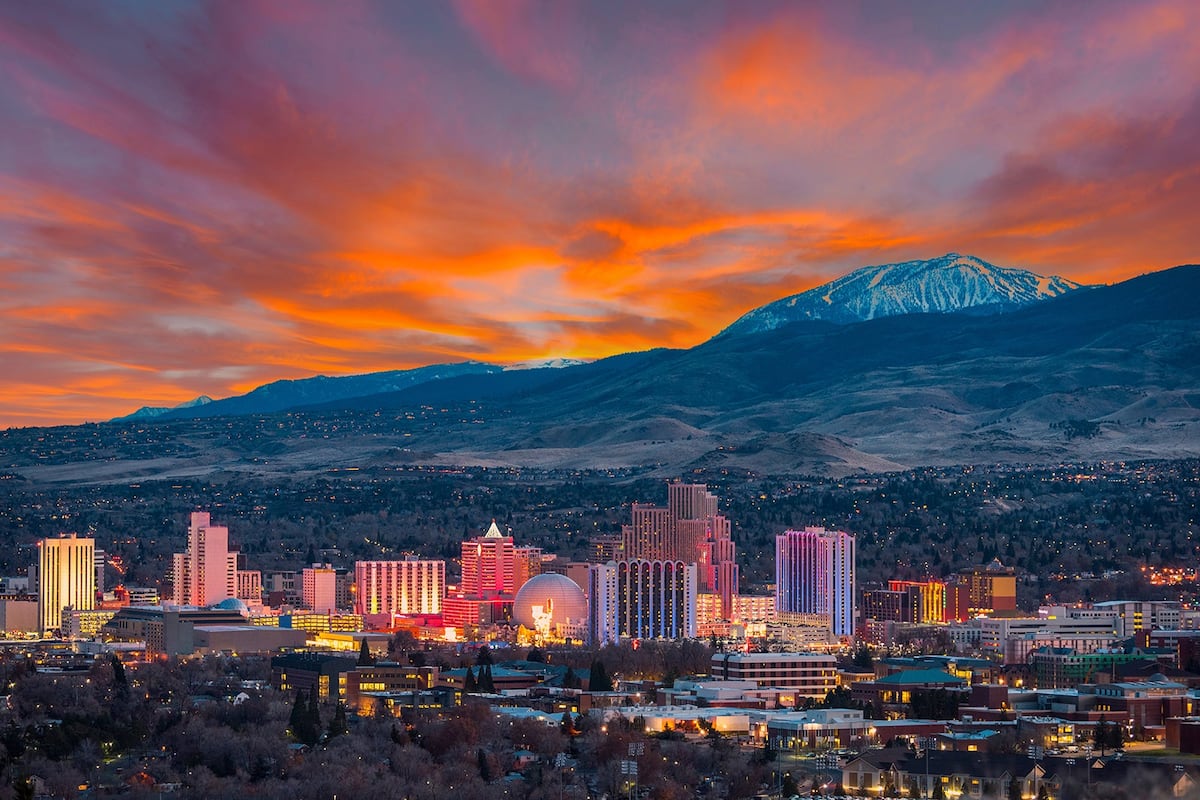
Surge cold storage trailers for the Reno and Sparks corridor

Reno and Sparks have become the distribution hub of choice for the western United States. From the corridor, a truck reaches 66 million people within a 24 hour drive, and Nevada's tax structure seals it with no corporate income tax, no personal income tax, and no inventory tax, a direct incentive to hold and stage product in Nevada rather than California.

The result is a dense cluster of distribution and fulfillment operations. Amazon and Walmart both opened major distribution centers here over the last two decades. The region is home to ITS Logistics, OnTrac, UPS, NOW Foods, Thrive Market, Petco, Polaris, and more, several of them moving temperature sensitive product every day. Tesla runs the world's largest manufacturing facility here, a 1.9 million square foot Gigafactory on a 3,200 acre site, and Switch operates its SuperNAP campus nearby.

A distribution corridor this size lives or dies on cold chain integrity. When a cold storage warehouse in Sparks needs surge capacity for a seasonal push, or a fulfillment operation's built in freezer goes down, a cold storage trailer backs up to the dock and adds frozen or refrigerated capacity immediately. Frozen logistics runs at odd hours by design, with distributors routing overnight to fight less heat between docks and commissaries loading out at 3 a.m. for morning routes, so a box that holds 11 below at midnight is exactly as useful as one holding it at noon.

Northern Nevada carries its own heat load too. Reno was named alongside Las Vegas as one of the two fastest warming cities in the country, so the compressor stress that hammers the south reaches the north as well, just a few degrees behind.

Government, military, and disaster

Cold storage trailers for base camps, federal sites, and emergency feeding

Nevada hosts some of the largest military ranges in the country, each feeding thousands of people in remote high desert conditions. Nellis Air Force Base covers 11,300 acres, hosts Red Flag and the U.S. Air Force Weapons School, trains about 10,000 pilots a year, and carries roughly 14,000 personnel. Creech Air Force Base operates the 432nd Wing with about 3,000 personnel, and Hawthorne Army Depot spans 147,000 acres and stores roughly 40 percent of the Army's munitions. Feeding populations that size, plus surge exercises that bring visiting units, is exactly the kind of large scale cold storage demand Mavirus is built for as a SAM.gov registered federal contractor.

Nevada is also a heavy wildfire state, and the fires run large and remote. In July 2025, dry lightning ignited the Bloody and Barber Fires around Winnemucca, prompting evacuations across Pershing and Humboldt counties. In August 2025, lightning across Elko County lit the Snowstorm, Jakes, and Adobe Mountain fires, drawing crews from every BLM district in Nevada. In 2024 the Castle Ridge Fire burned about 25,000 acres in Elko County and threatened the town of Midas. Large fires mean large base camps that house and feed hundreds of firefighters miles from the nearest town.

As a Cal Fire and U.S. Forest Service partner, we supply cold storage trailers straight into those deployments, where a self contained frozen box running on a generator is often the only realistic way to hold food safely far from infrastructure. As a FEMA disaster relief partner, we stage refrigeration and freezer capacity ahead of and during heat, fire, and grid events under state and federal coordination, because FEMA's own planning recognizes that a grid outage cascades into food safety failures across a whole community's kitchens at once.

Feeding programs lean on us hardest of all. Three Square Food Bank distributed more than 41 million meals, about 49 million pounds of food, across Clark, Nye, Lincoln, and Esmeralda counties in 2024, and the Food Bank of Northern Nevada reaches over 160,000 neighbors a month through 155 partner agencies. Both recently absorbed federal funding cuts, which only raises the pressure to move rescued and donated food through limited cold storage. A cold storage trailer gives a feeding operation the surge freezer and cooler capacity it cannot build permanently.

A generator powered freezer trailer at a remote wildfire incident base camp in the Nevada high desert with mobile catering tents nearby
Every kind of Nevada cold storage job

What Nevada rents cold storage trailers for

Walk in failures

A compressor quits in the middle of a Vegas July and thousands of pounds of product start a slow march toward the danger zone. A pre chilled trailer at your dock stops that clock the same day.

Kitchen and facility renovations

Restaurant remodels, school kitchen upgrades, and hospital dining rebuilds need cold storage that stays put for weeks or years. A trailer prices and behaves like storage, not a vehicle, so it can sit as long as the project does.

Festivals and large events

EDC, the Grand Prix, the National Finals Rodeo, and Life is Beautiful feed hundreds of thousands on temporary footprints with no permanent refrigeration. Trailers hold vendor product for the run of the show.

Distribution and warehouse surge

Seasonal pushes and cold storage outages in the Reno Sparks corridor call for freezer and cooler capacity that scales up fast and comes back down when the season ends.

Disaster and emergency feeding

Wildfire base camps, heat events, and mass care operations need cold storage staged and deployed in remote country. Generator ready trailers deliver where the grid does not reach.

Government and military dining

Federal installations and institutional dining across Nevada feed thousands daily and surge for exercises. We serve those needs through the procurement channels agencies already use.

A refrigerated trailer backed against a large distribution warehouse dock in the Reno Sparks industrial corridor under a clear high desert sky
The Mojave heat multiplier

Why Nevada heat makes cold storage a continuity plan, not a luxury

The desert heat is the single largest multiplier on Nevada cold storage risk. On July 7, 2024, Las Vegas hit 120 degrees, its hottest reading since record keeping began in 1937, breaking the old record of 117 set in 1942. The city then reached 119 two days later, followed by a run of 118 degree days, and recorded seven straight days at or above 115. A National Weather Service veteran called it the most extreme heat wave in the recorded history of Las Vegas.

That heat does two things to cold storage. First, it pushes every compressor to the edge of its duty cycle, so an aging walk in that limped through spring finally quits in July. Second, when a unit fails, the ambient heat drives product into the danger zone far faster than the textbook 24 to 48 hour closed door window. In a Nevada July, a half loaded walk in that loses power can be in trouble before the afternoon is over.

The human toll makes the point in the starkest terms. 527 people in southern Nevada died from heat related causes during the 2024 heat. Henderson firefighters became the first in the region to deploy polar pods to treat heat stroke, and Nevada passed a new heat law to address heat deaths and illnesses. For any operation that stores perishable food, backup cold storage is no longer optional. It is basic continuity planning.

The demand map

Where Nevada cold storage demand concentrates

Roughly 75 percent of Nevadans live in Clark County, which held about 2.42 million residents in 2024, but the demand for cold storage stretches from the Las Vegas valley to the northern logistics corridor. Here are the state's largest cities by population.

Nevada's largest cities by population
Clark County core, nonstop hospitality and events660,400
second largest city, hospitals and schools332,141
industrial and distribution base278,595
logistics hub of the western United States273,212
fast growing Las Vegas valley community240,464
Clark County alone holds about 2.42 million residents, roughly 75 percent of Nevada's 3.21 million people.
Why Choose Us

What sets our freezer trailers apart

A trailer, not a diesel truck

When cold storage dies, the first call is usually to a refrigerated truck company, because that is the vendor everyone can name. It is the wrong tool for storage. A reefer truck runs a diesel engine around the clock, needs fuel deliveries, and prices like a vehicle for a drivetrain that never moves an inch. Our trailers sip from an ordinary 120 volt wall circuit or a generator we provide, price like storage, and place where your crew actually works, at dock height at a dock or with steps and a ramp where there is not one.

Sub-zero on ordinary power

Each trailer plugs into standard 120V power at your dock and holds product sub-zero, so placement is usually the only planning question worth asking.

Sized by how you receive product

Three sizes matched to case count and delivery cadence, from a caterer's overflow box to a long unit that absorbs a facility's whole inventory in one transfer.

Temperature you can document

Every unit holds temperature accurately and we keep a written log, which is exactly what feeding programs, health inspectors, and auditors ask to see.

Runs through a power failure

When the grid goes down the freezer fleet keeps running on generators we bring, so a cold chain emergency does not turn into a total loss.

Built for scale and agencies

From a single restaurant to a multi-box disaster feeding operation, with a 24/7 line for emergencies. As a SAM.gov registered contractor we work directly with government and military agencies.

Answered at 2 a.m.

Frozen logistics never learned about business hours, and neither did we. A dispatcher answers the emergency line around the clock when a walk-in quits without notice.

Customer Stories

A few Nevada jobs we have handled

A Strip banquet operation, walk in down during the July heat wave

A large convention caterer lost a walk in freezer on the hottest week of 2024 with a banquet for thousands already on the books. We had a pre chilled trailer at their loading dock the same afternoon, and their crew transferred proteins straight into cold that was already holding temperature. Not one plated dinner was cancelled, and the trailer stayed on site through the rest of the convention season.

A wildfire incident base camp near Winnemucca

When lightning fires forced evacuations across Humboldt and Pershing counties, the catering contractor feeding the fire crews needed refrigerated and frozen storage miles from the nearest town. We delivered generator ready trailers to the base camp, and the crews holding the line got hot meals and cold drinks around the clock without a single food safety break in the field.

A northern Nevada food bank during a holiday surge

A feeding operation faced a wave of donated frozen protein arriving faster than its permanent freezer could hold, right before the winter holidays. We placed a long box trailer that absorbed the entire surge in one transfer, with shelving that kept first in first out rotation honest, and every pound of that donated food reached families instead of a dumpster.

Around the Region

Cold storage trailers delivered across every corner of Nevada

Las Vegas and the Strip corridor

The densest cold storage demand in Nevada. 40.8 million annual visitors, more than 150,000 hotel rooms, a nonstop convention and event calendar, and the most extreme desert heat in the country. Resort back of house kitchens, convention caterers, and marquee event vendors across Las Vegas, Paradise, Enterprise, Spring Valley, and Summerlin all rely on trailers here.

Henderson

Nevada's second largest city at about 332,141 residents, with its own hospitals, schools, event venues, and a fast growing restaurant scene. Henderson firefighters pioneered polar pod heat treatment in 2024, a marker of how seriously the city takes extreme heat, and its institutional and commercial kitchens need dependable cold storage backup.

North Las Vegas

About 278,595 residents and a major industrial and distribution base inside the Las Vegas valley, with warehousing, manufacturing, and food processing that depend on temperature control and surge freezer capacity when built in cold storage runs short.

Reno and Sparks

The logistics hub of the West, reaching 66 million people within a 24 hour drive and anchored by Tesla, Switch, Amazon, Walmart, and food distributors like NOW Foods and Thrive Market. Cold storage warehousing and fulfillment surge capacity drive demand, and Reno's own fast rising summer heat adds to the load.

Carson City and the Capital region

The state capital and the seat of Nevada government, plus Douglas County communities like Gardnerville and Minden and nearby Fallon and Fernley. Government facilities, institutional dining, and rural markets rely on cold storage where local options are thin.

Rural and Great Basin Nevada

Elko, Winnemucca, Ely, Tonopah, Pahrump, Hawthorne, and Mesquite anchor ranch country, mining operations, and remote federal ground. This is wildfire base camp territory, where a cold storage trailer that runs on a generator is often the only realistic cold chain option for many miles.

Nevada compliance and placement

The Nevada rules that shape a cold storage rental

Nevada food establishments follow the FDA Food Code framework as adopted and enforced by local health authorities, chiefly the Southern Nevada Health District in Clark County and the Washoe County Health District in the north. Refrigerated potentially hazardous food must be held at or below 41 degrees, and frozen product must be held frozen and held continuously. Continuous cold chain records are what health inspectors, HACCP plans, and USDA commodity programs want to see, and our service visits record the setpoint and the actual temperature so an operation has that documentation on file.

Extreme heat has become a formal emergency management concern in Nevada after the 2024 record, and a new state heat law now addresses heat related deaths and illnesses. That raises the stakes on continuity planning for anyone storing perishable food, and it is a direct reason to line up backup cold storage before the peak of summer rather than during a failure. Government and disaster cold storage needs run through established procurement and mutual aid channels, and our SAM.gov registration along with our Cal Fire, U.S. Forest Service, and FEMA partnerships means we can be engaged through the pathways agencies already use.

Placement is simple. A cold storage trailer needs either a generator, which we can provide, or a dedicated 120 volt, 20 amp circuit located within 100 feet of the trailer. No special high voltage service is required. Plan for that power source plus a clear path for delivery, and the rest is straightforward. The trailer draws from a standard circuit and runs quietly like the appliance it is.

Service Area

Nevada cities and towns we serve

Mavirus Group delivers freezer and refrigeration trailers statewide, from the Las Vegas valley and the Reno Sparks corridor to Carson City and the remote Great Basin. Same day and 24/7 emergency dispatch reaches communities across Nevada.

Las VegasHendersonNorth Las VegasEnterpriseParadiseSpring ValleySunrise ManorSummerlinBoulder CityMesquiteLaughlinPahrumpRenoSparksCarson CityElkoWinnemuccaFernleyFallonGardnervilleElyTonopahHawthorneDayton
Reviews

What Nevada operators say about our cold storage trailers

Marcus D., banquet chef, Las Vegas Strip
Marcus D.banquet chef, Las Vegas Strip
★★★★★

Our walk in freezer died the hottest week of the summer with a convention banquet already booked. They had a trailer at our dock the same afternoon, already cold, and we never cancelled a single dinner. That kind of response is exactly what you want when the temperature outside is 118.

Renee T., school nutrition director, Henderson
Renee T.school nutrition director, Henderson
★★★★★

We scheduled a kitchen renovation over the break and needed cold storage that would sit for weeks without a fuss. The trailer ran on an ordinary circuit, held temperature the whole time, and the service visits gave us the temperature records our district wanted. Easy from start to finish.

Paul K., cold storage warehouse manager, Sparks
Paul K.cold storage warehouse manager, Sparks
★★★★★

Our seasonal surge outran our permanent freezer and we needed capacity fast. They dropped a long box at the dock and we filled it the same day. When the season wound down, they picked it up. No drama, no diesel truck droning behind the building, just cold storage that worked.

Denise M., wildfire catering contractor, Elko
Denise M.wildfire catering contractor, Elko
★★★★★

Feeding fire crews out in the middle of nowhere means you bring your own cold chain. Their generator ready trailers held frozen and refrigerated product at the base camp around the clock, and the dispatcher actually answered at 2 a.m. when we needed to talk through placement. These are the people you want on a fire.

Anthony R., food bank operations lead, North Las Vegas
Anthony R.food bank operations lead, North Las Vegas
★★★★★

Donated frozen product was arriving faster than our freezer could hold it right before the holidays. They placed a trailer that absorbed the whole surge in one transfer, and every pound of it reached families. When you move millions of pounds of food, reliable cold storage is not optional, and they delivered.

FAQ

Frequently asked questions

How fast can you get a freezer trailer to Las Vegas or Reno in an emergency?
We run same day and 24/7 emergency dispatch across Nevada. When a walk in fails, the after hours line reaches a dispatcher who can read a unit's status and move a technician, not an answering service reading a script. For a cold chain emergency in the Las Vegas valley or the Reno Sparks corridor, same day placement is the standard, and we pre chill the trailer before delivery so product transfers into cold that is already holding temperature.
Do these trailers actually work in 115 degree Nevada heat?
Yes. The units are built and sized to reject more heat than the worst desert afternoon can push in, with thick insulated walls, a refrigeration plant sized for margin, and door seals that hold the line. Las Vegas hit 120 degrees in 2024 and our trailers held their setpoints through it. Shade helps, and a loaded box holds cold far better than an empty one, but the trailers are designed for exactly this climate.
What power does a cold storage trailer need?
There are exactly two ways to power a trailer. Either a generator, which we can provide, or a dedicated 120 volt, 20 amp circuit located within 100 feet of the trailer. That is it. No special high voltage service is required. The trailer draws from a standard circuit and runs quietly like the appliance it is, which is a major advantage over a diesel reefer truck.
What temperature range do the trailers hold?
Every trailer is dual purpose. One adjustable unit runs as a refrigerator holding fresh product near the high 30s, or as a deep freezer holding frozen inventory down to 10 degrees below zero. That range covers refrigerated produce and dairy, frozen proteins and commodities, ice, and everything in between. You tell us whether you need cooler or freezer temperatures and we set the unit accordingly.
Do you serve rural Nevada and remote federal sites?
Yes. We deliver statewide, including remote Great Basin communities like Elko, Winnemucca, Ely, Tonopah, and Hawthorne, and we support remote federal and military installations. Because the trailers can run on a generator we provide, they work far from grid power and far from the nearest town, which is exactly where a self contained cold storage box earns its keep.
Can you support wildfire base camps and disaster feeding operations?
Yes. Mavirus Group is a Cal Fire partner, a U.S. Forest Service partner, and a FEMA disaster relief partner. We deliver generator ready cold storage trailers straight into wildfire incident base camps and disaster feeding sites, where crews and survivors are fed around the clock miles from any infrastructure. We can stage capacity ahead of a known threat or deploy it during an active event.
Do you provide temperature documentation for health inspectors and USDA programs?
Our service visits record the setpoint and the actual temperature at each visit, so your operation has continuous documentation for the file. Health inspectors, HACCP plans, and USDA commodity programs all want cold chain records rather than a manager's recollection, and food banks holding federal commodities rely on that documentation hardest. We keep the record so you can prove the cold chain held.
What sizes are available?
Three footprints, matched to how you actually receive product. The compact unit fits a single parking stall and tucks behind a restaurant or concession stand. The mid size box is the workhorse for walk in failures and kitchen renovations, with shelving that keeps rotation honest. The long box carries institutional volume for food banks, hospital and campus dining, and pallet scale feeding programs. If you are not sure which one fits, it costs nothing to talk it through.
Can you handle multi trailer institutional volume?
Yes. We have large scale capability and have completed more than 11,000 deliveries. When a facility loses its main freezer or a feeding program needs pallet scale capacity, we can place multiple trailers, including long box units that absorb an entire inventory in one transfer. That scale is central to how we serve casinos, distribution centers, military dining, and disaster feeding across Nevada.
Do you work with government and military procurement?
Yes. Mavirus Group is registered on SAM.gov as a federal contractor and partners with Cal Fire, the U.S. Forest Service, and FEMA. Government and disaster cold storage needs run through established procurement and mutual aid channels, and we can be engaged through the pathways agencies already use, from federal installations to county and municipal facilities.
How long can a trailer stay on site?
As long as the job lasts. A trailer prices and behaves like storage, not a vehicle, so it can sit through a weekend festival, a summer surge, or a multi year renovation without a route company wanting its asset back. Our trailers have held through long institutional rebuilds. Storage should stay put, and so should the trailer that provides it.
Refrigerator or freezer, which should I rent?
It depends on your product. If you are holding fresh produce, dairy, prepared foods, or beverages, you want refrigerator temperatures near the high 30s to low 40s. If you are holding proteins, frozen commodities, ice, or anything that must stay frozen, you want deep freeze temperatures at zero or below. Because every unit is dual purpose, one trailer can do either, and we set it for your exact need before delivery.
Resource Library

Nevada cold storage resource library

How Nevada's record heat turns a walk in failure into an emergency

Cold storage failures happen everywhere, but Nevada raises the stakes in a way few other states do. The reason is the ambient heat. When a walk in cooler or freezer loses power in a temperate climate, the closed door buys the operator a real cushion, often 24 to 48 hours for a packed unit. In a Nevada July, that cushion collapses. The heat pressing in from outside drives interior temperatures up far faster, and product that would have been safe overnight elsewhere can cross into the danger zone in an afternoon.

The numbers behind the 2024 heat wave show just how extreme the environment has become. On July 7, 2024, Las Vegas reached 120 degrees, the hottest temperature ever recorded in a city whose weather records reach back to 1937. It was not a one day spike. The city hit 119 two days later, then a series of 118 degree days, and it recorded seven consecutive days at or above 115 degrees. A National Weather Service meteorologist with three decades of local experience called it the most extreme heat wave in the recorded history of Las Vegas.

That heat attacks cold storage from two directions. The first is compressor stress. A refrigeration plant is in a constant fight against heat, and the hotter the day, the harder the compressor works and the longer its duty cycle runs. A unit that cycles normally in spring can run continuously in July, and a marginal or aging compressor that was quietly failing finally gives out under that load. The failures cluster in the hottest weeks precisely because the heat exposes every weakness at once.

The second direction is speed of loss. Thermal mass is the whole game in a power interruption. A fully loaded freezer holds cold the way a packed room holds temperature, riding out a brief outage that would ruin an empty one. But even a loaded unit loses the fight faster in extreme ambient heat, and a half empty one fails quickly. The math is unforgiving. Miss the window by an afternoon and the loss report writes itself one thawed line at a time in the inventory software.

The human cost of the 2024 heat underlines why continuity planning matters. 527 people in southern Nevada died from heat related causes that year. Henderson firefighters became the first in the region to deploy polar pods, vehicle mounted ice water immersion devices, to treat heat stroke on the way to the hospital. Nevada passed a new heat law to address heat related deaths and illnesses, and in 2025 a state lawmaker sought to classify extreme heat as a federal disaster to unlock emergency funding.

For any operation that stores perishable food, the lesson is to line up backup cold storage before the peak of summer rather than during a failure. A cold storage trailer that arrives pre chilled and holds product safely is the difference between a routine equipment repair and a total inventory loss. The trailer takes the whole problem off the operator's hands at whatever volume the failure involves, from a single restaurant walk in to a distribution warehouse freezer bank.

The practical move is simple. Know where your backup capacity comes from before you need it, understand that same day dispatch exists because the window is real, and place the call early. As our dispatchers put it, no client has ever regretted calling too early. It is the late calls, the ones placed at 11 p.m. when the product is already warming, that carry regret. In a Nevada summer, early is the only safe way to call.

Cold storage trailers on the front line of Nevada wildfire and disaster response

Nevada is one of the most fire prone states in the country, and its fires tend to run large and remote. Unlike a structure fire in a dense city, a Nevada wildfire often burns across tens of thousands of acres of high desert and rangeland, far from any town, and it draws firefighting crews from across the region who have to be housed and fed on site for days or weeks. That is where cold storage becomes a life support function for the response itself.

The recent fire seasons show the pattern. On the evening of July 3, 2025, dry lightning ignited several wildfires around Winnemucca, including the Bloody and Barber Fires, which prompted evacuations and threatened infrastructure across Pershing and Humboldt counties. In early August 2025, lightning moved through Elko County and lit the Snowstorm, Jakes, MP 22, and Adobe Mountain fires, drawing crews from every Bureau of Land Management district in Nevada and from Idaho. In 2024, the Castle Ridge Fire burned about 25,000 acres in Elko County over 11 days and threatened the town of Midas from less than three miles away.

Every large fire generates an incident base camp, a temporary settlement that can house and feed hundreds or even thousands of firefighters. Those crews work grueling shifts and need substantial, safe meals around the clock, which means the catering operation supporting them needs refrigerated and frozen storage on site. There is no walk in cooler in the sagebrush. The cold chain has to be trucked in and stood up from nothing, and it has to run on generator power because the grid does not reach the fire line.

This is exactly the scenario a cold storage trailer is built for. It arrives pre chilled, runs on a generator, and holds frozen and refrigerated product safely regardless of how far the camp sits from the nearest town. A box holding 11 below zero at a remote base camp works no differently than one holding it at a city loading dock, and the door hardware works fine by flashlight. As a Cal Fire partner and a U.S. Forest Service partner, Mavirus Group supplies trailers directly into these deployments.

Wildfire is only one face of Nevada disaster response. The state also plans for prolonged heat events, grid strain, and mass care operations coordinated through the Nevada Office of Emergency Management and FEMA. FEMA's own power outage planning recognizes that a loss of grid power cascades into food safety failures across an entire community's kitchens simultaneously. When thousands of households and dozens of institutional kitchens lose refrigeration at once, staged cold storage capacity becomes a public health resource.

As a FEMA disaster relief partner, Mavirus Group can pre position cold storage trailers ahead of a known threat and deploy them during an active event. That pre positioning matters because the worst time to source emergency cold storage is in the middle of the emergency, when every operation in the region is looking for the same capacity at the same moment. Staging ahead turns a scramble into a plan.

The common thread across fire, heat, and grid events is that Nevada disasters happen in a landscape with long distances and thin infrastructure. A cold storage trailer answers that landscape directly. It is self contained, it runs where the grid does not, it holds temperature in extreme heat, and it can stay as long as the recovery lasts. For emergency managers and disaster feeding contractors, that combination is the difference between a cold chain that holds and one that breaks when it is needed most.

For agencies and contractors planning ahead, the right time to establish a cold storage source is before fire season, not during it. Knowing the capacity is available, understanding the generator and placement requirements, and having a partner registered through the procurement channels agencies already use all shorten the path from a request to a trailer on the ground when a fire or a heat emergency finally comes.

Feeding Nevada, the cold chain behind food banks and large scale programs

Behind every meal a Nevada food bank distributes is a cold chain that has to hold from the moment food is donated to the moment it reaches a family. Fresh produce, dairy, and frozen protein are the most nutritious things a feeding program can move, and they are also the most fragile. A break in the cold chain does not just waste food. It removes the healthiest food from the shelves of the people who need it most.

The scale of Nevada's feeding operations is enormous. Three Square Food Bank, the only food bank serving southern Nevada, covers Clark, Nye, Lincoln, and Esmeralda counties. In 2024 it distributed more than 41 million meals, the equivalent of more than 49 million pounds of food and grocery product, through a network of community partners. It set a goal to double its rescued food distribution from 20 million to 40 million pounds, and rescued fresh food is precisely the category that demands reliable cold holding.

Northern Nevada carries its own large operation. The Food Bank of Northern Nevada works with more than 155 partner agencies and creates opportunities for over 160,000 neighbors each month to access fresh, nourishing meals. Between the two organizations, cold storage is not an occasional need. It is a daily requirement that spikes hard during disasters, seasonal surges, and the winter holidays when donated volume peaks.

The challenge has grown sharper recently. Both food banks absorbed federal funding cuts, including a canceled 4 million dollar Home Feeds Nevada grant and a 500 million dollar national reduction to the Emergency Food Assistance Program. When funding tightens, rescued and donated food becomes even more important, and rescued food arrives on an unpredictable schedule, whenever a donated truck happens to show up, which is rarely at a convenient hour. That food needs somewhere cold to land immediately.

This is where cold storage trailers fit a feeding program. A food bank cannot economically build permanent freezer and cooler capacity sized for its peak surge, because that capacity would sit half empty most of the year. A trailer gives the program exactly the surge capacity it needs, exactly when it needs it. A long box trailer can absorb an entire incoming load in one transfer, with shelving that keeps first in first out rotation honest so nothing is lost to the back of a shelf.

Documentation is the other half of the value. USDA commodity programs, which supply a large share of the food that moves through these banks, require continuous cold chain evidence. An unlogged temperature is, for compliance purposes, an unproven temperature. Cold storage trailer service visits record the setpoint and the actual temperature at each visit, producing the kind of continuous documentation that federal commodity programs and auditors want to see. Food banks holding federal commodities rely on that record most heavily.

The stakes are human and immediate. Every pound of donated protein that stays frozen is a pound that reaches a family instead of a dumpster. During a holiday surge, when a permanent freezer overflows and donated loads keep arriving, a trailer placed at the dock can be the difference between distributing that food and losing it. For programs measured in tens of millions of meals, that margin adds up fast.

For a feeding organization, the practical takeaway is to treat surge cold storage as part of the operating plan rather than a last minute scramble. Knowing the capacity is available, understanding that a trailer runs on ordinary power or a generator, and having a partner that provides the temperature documentation the programs require all mean that when the donated truck arrives at an odd hour, the cold chain is ready to receive it.

Serving Nevada's military ranges and government installations

Nevada hosts some of the largest military installations and ranges in the United States, and each one operates in a way that generates real, sustained cold storage demand. These are not small posts. They are large populations working and living in remote high desert, fed daily by dining operations that cannot simply run to the nearest grocery store when demand spikes or equipment fails.

Nellis Air Force Base, northeast of Las Vegas, occupies 11,300 acres and is the Air Force's premier combat training center. It is home to the 57th Wing and the U.S. Air Force Weapons School, and it hosts Red Flag, the world's largest air combat exercise. The base trains roughly 10,000 pilots a year on advanced fighters and carries about 14,000 personnel, with a total military connected population in the surrounding area that exceeds 40,000. Exercises like Red Flag bring visiting units into the base, creating surges in dining demand on top of the daily baseline.

Creech Air Force Base, at Indian Springs northwest of the city, hosts the 432nd Wing operating remotely piloted aircraft for global intelligence, surveillance, reconnaissance, and strike missions, with about 3,000 personnel. Creech runs continuous operations in a remote location where dining and cold storage support have to be brought in and maintained rather than assumed. Hawthorne Army Depot, in western Nevada, spans 147,000 acres and stores roughly 40 percent of the Army's munitions, with a workforce managing storage and demilitarization far from any metro.

What these installations share is a combination of scale, remoteness, and mission continuity that makes cold storage a serious logistics function. Feeding thousands of people in the desert requires substantial refrigerated and frozen capacity, and any interruption, whether an equipment failure, a facility renovation, or a training surge, has to be covered without disrupting the mission. Temporary cold storage that can be delivered and stood up quickly is the natural answer.

Cold storage trailers fit that need precisely. They arrive pre chilled, run on ordinary power or a generator, and can be placed at a dining facility or a field site with minimal preparation. Because they are self contained and generator capable, they work at remote installations and field locations where permanent infrastructure is limited. And because they can stay on site for as long as a project or a surge lasts, they cover renovations and long deployments without a route asset that a vendor wants back.

The path to serving these customers runs through federal procurement, and Mavirus Group is built for it. The company is registered on SAM.gov as a federal contractor, which is the baseline requirement for doing business with federal agencies, and it partners with Cal Fire, the U.S. Forest Service, and FEMA. Those registrations and partnerships mean the company can be engaged through the channels that government and military customers already use, rather than starting the relationship from scratch during an urgent need.

Beyond the named bases, Nevada carries a full slate of government cold storage requirements. County and municipal facilities, correctional and institutional dining, public hospital food service, and disaster staging under state and federal authority all need reliable cold storage, and all of them benefit from a provider that understands both the operational and the procurement side of government work. Large scale capability, backed by more than 11,000 completed deliveries, is what those customers require.

For a government or military customer, the practical advantage is a single provider that can handle scale, remoteness, and compliance at once. Whether the need is covering a dining facility renovation at a base, feeding a training surge, or staging cold storage for a disaster response, a cold storage trailer delivered through the right procurement channel keeps the mission fed and the cold chain intact, wherever in Nevada the requirement sits.

More Rentals

Other trailers we rent in Nevada

We rent more than freezer trailers. If you are running a feeding operation, a base camp, or a disaster response, we can bring the rest of the trailers too.

Get a Quote

Get your Nevada freezer trailer quote today

Tell us the dates, the case count, and the site, and we will size the cold storage plan and hold the trailer. Booking and emergencies are answered around the clock.

Get a Quote Call (855) 687-1887