How many restroom stalls a Colorado job or event calls for
Get the restroom count right and a Colorado job saves both money and time. Too few units, and crews wait in line or wander off to find a bathroom, which burns labor hours you never get back. Too many, and you pay to service units nobody touches. The right number sits between your peak crew and how spread out the site is.
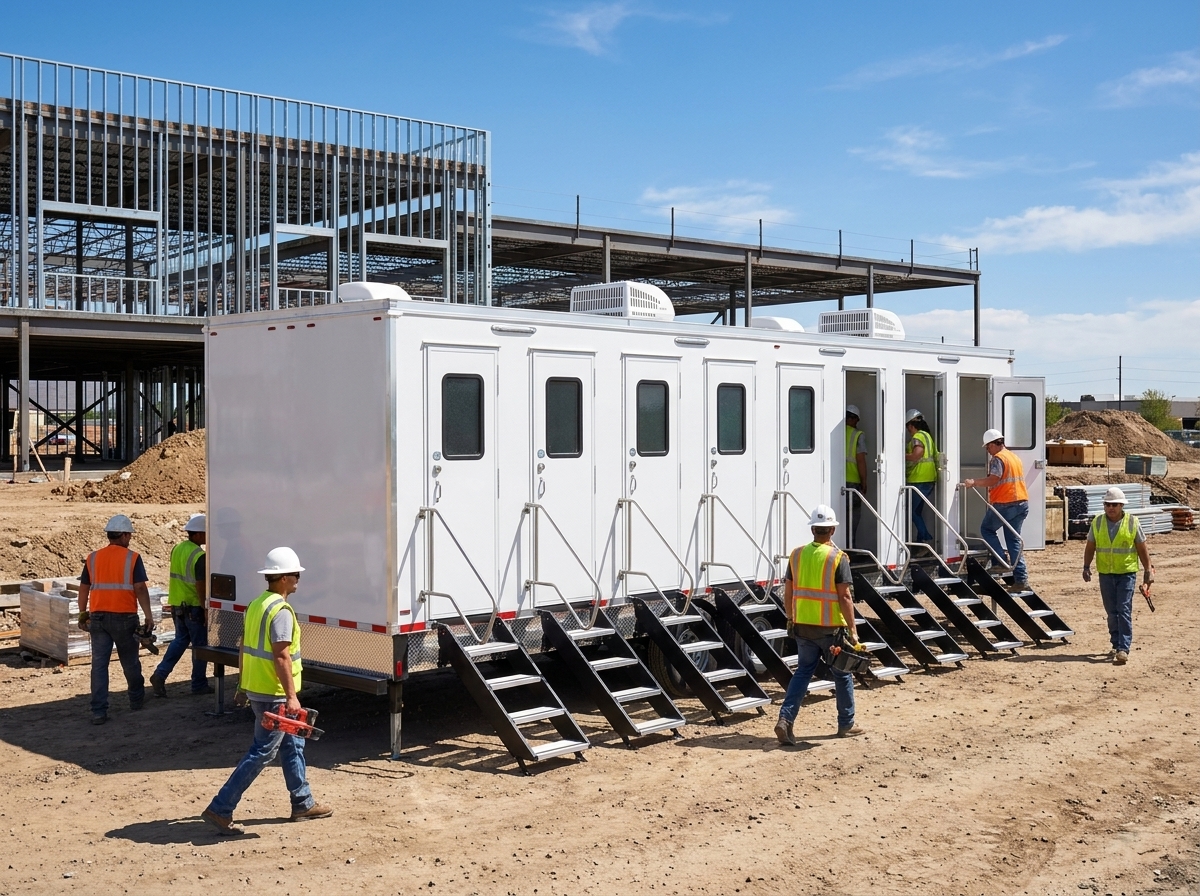
Start with your biggest crew day, not your average. A pour day or a stack of trades can put far more people on the ground than a normal shift. Size for that peak, because that is the day a shortage shows up. Most crews run a simple rule: one station for about every ten workers on a heavy day. Then adjust for how long shifts run and whether visitors and inspectors are around. A small two or three station unit covers a small crew. A big highway or airport job may need a deluxe eight station bank, or a few units together.
Layout matters as much as the count. A long, linear job does better with mobile units that move as the work moves, so the walk stays short and nobody loses time each way. A tight, stacked site does better with one larger private bank in a fixed, easy to reach spot. So we read your site plan and where the crews cluster before suggesting a mix. Put the right number in the wrong spot and you have wasted it.
Access and inspection drive the ADA choice. Public agency, school, and federal jobs almost always need an accessible restroom, so plan the ADA plus six layout in from day one instead of adding it after an inspector flags it. Even on private work, an accessible unit reads well to owners and officials.
For an event, size for the peak hour, not the whole day. Guests show up in the same window, so the line forms fast. Count expected turnout, add a buffer, and lean toward more stations for a short, busy event so nobody stands waiting.
Duration changes the math too. A two week phase and a long build are different problems, and a smart plan sizes for the phase you are in, not the whole job at once. We would rather adjust the unit count as your schedule moves than lock you into one number that is wrong for most of the project.
The easy path: tell us your peak crew size, your site type, your ADA needs, and how long the job runs. From there we size the units, place them where the walk is shortest, and set a service schedule that fits your calendar. Crew changes mid job? We scale up or pull back, so you match the people actually on site instead of a guess made at bid time.
Sources: CDOT active project list · ADA accessibility standards
What to ask before you rent a restroom trailer
Renting a portable restroom trailer is easy once you know what to ask. A few sharp questions up front tell you whether a provider can actually cover your site. Run these before you sign.
First, ask what the rental includes. On our jobs, every rental covers delivery, setup, daily service, restocking, waste handling, and pickup. Get it in writing, so no surprise fees for pumping or supplies land on you later.
Second, ask about service. How often do they clean and restock, and who do you call when something goes wrong? Ask if they run a 24 hour line for after hours needs. On a busy or remote site, response time is what keeps a unit usable.
Third, ask about hookups. Can the unit run with no water, sewer, or power on site? A self contained trailer with onboard tanks sits fine on a bare lot or an open field. Got utilities? Ask whether they will tie in.
Fourth, ask about cold weather. In Colorado that is not optional. Ask if the units are freeze ready with heated, insulated plumbing, and how they route service around cold snaps and mountain access.
Fifth, ask about access needs. Public, school, or federal job? You likely need an ADA unit with a ramp, grab bars, and a roll in stall. Confirm the accessible layout is free for your dates.
Sixth, ask about paperwork. Government and agency work needs a SAM.gov registered provider with clean records and documented waste handling. Ask how they track pumping and disposal. An inspector may want to see proof.
Last, ask how they size and place units. A good provider studies your peak crew, your site plan, and your schedule before quoting, then sets units where the walk is short. Answer these well and a provider is worth signing.
Sources: ADA accessibility standards · Colorado Department of Public Health and Environment
Cold weather and altitude setup on the Front Range
Cold weather on the Front Range asks more of a restroom trailer than most people expect. And it is not just a mountain problem. A hard morning in Denver or Greeley can freeze an unprotected unit as fast as one up in the high country. Good setup is what keeps it working all winter.
Start with a freeze ready unit. Heated, insulated plumbing keeps the fresh water, the waste lines, and the fixtures working through a cold snap. Ask for it by name. A standard unit will freeze its tanks and go out of service right when the crew still needs it.
Power is the piece people forget. Heat trace and insulation only work while the unit keeps power. So if your site drops power at night or over a weekend, say so up front and the plan accounts for it. A unit that loses heat in a deep freeze can still fail.
Placement makes a big difference in winter. Set the unit where the snow gets plowed and where the crew actually walks. A door that ices shut, or a path nobody shovels, turns a good unit into a complaint. Keep it out of the worst wind, and where a service truck can still reach it.
Service timing shifts with the weather. Cold slows everything, and a short winter shift is a different animal than a summer peak. A tank that sits full and unheated through a freeze is a risk. Keep the service routine tight through the cold months.
Altitude adds its own wrinkles on the interstate and near the resorts. Weather turns fast, and a road closes with little warning. A morning that starts clear can end under a chain law by noon. So plan pumping and restocking around those windows, and the unit stays stocked even when the pass slows down.
Set all of this up before the cold hits, not after. Freeze ready gear, steady power, smart placement, weather aware service. The restrooms hold up while the rest of the job fights the cold. On a lot of Colorado sites, that fight runs most of the year.
Sources: CDOT winter conditions and access · Colorado Department of Public Health and Environment
Delivery and service on a remote oil and gas site
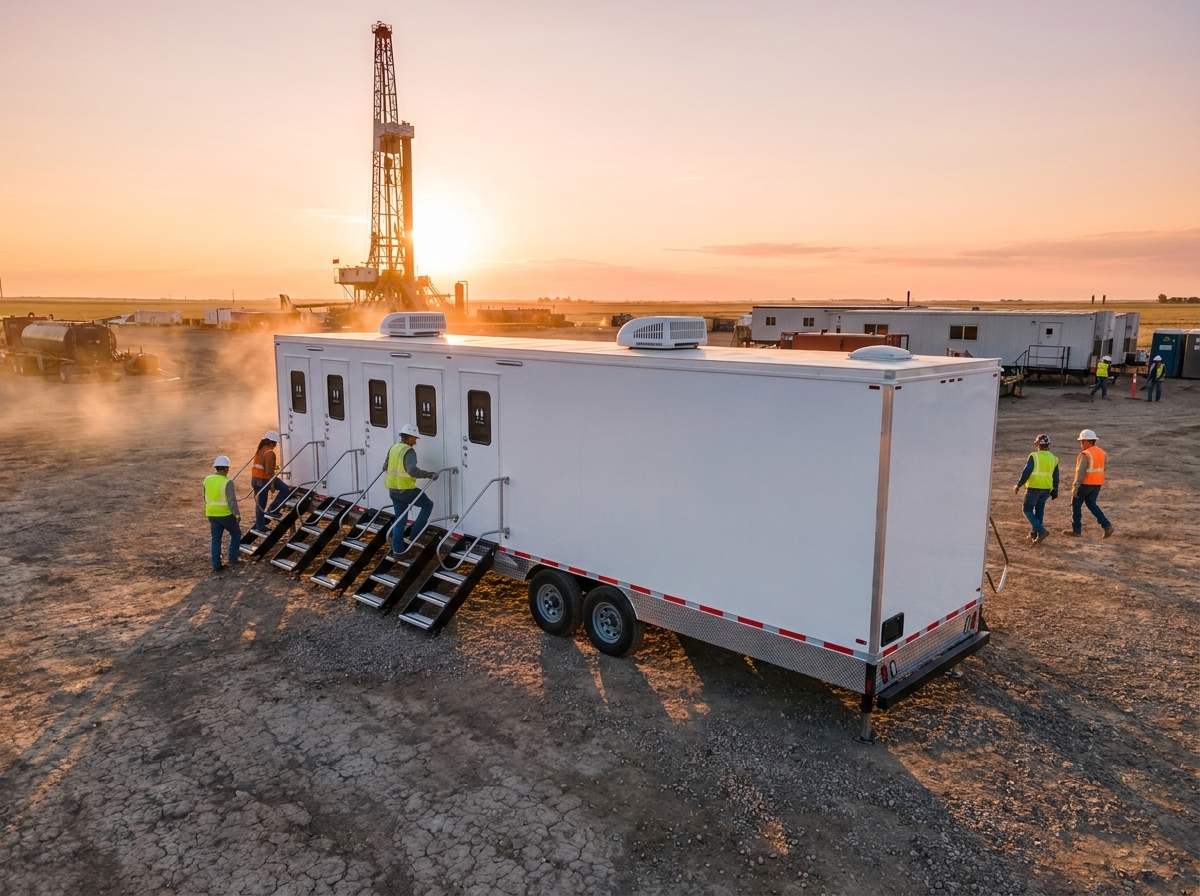
Getting a portable restroom trailer onto a remote pad is a logistics job as much as a rental. The nearest fixed restroom can be miles off. The roads are rough, and the site may open with almost no notice. A provider who plans for that keeps your crew covered without a scramble.
Access is the first question. Lease roads run dirt, mud, or snow pack, and a heavy trailer needs a truck that can reach the pad plus a spot firm enough to set it. Share the location, the road type, and any gate or check in steps up front. Then delivery goes smooth the first time.
Running with no hookups is the norm out here. Most pads have no water, sewer, or power for a restroom, so the unit stands on its own. Onboard fresh and waste tanks let a trailer run with no hookup at all, and our crew handles the fill and the pumping on a set schedule.
Service routes are what keep a remote unit working. A far off site is easy to skip if the provider is not built for it. So ask for a routed pumping and restocking schedule that fits how the site runs, and the unit never sits full or out of supplies.
Short notice comes with the work. New pads open fast, and weather rolls in off the plains. A 24 hour dispatch line means you get a unit placed or serviced when the schedule moves, not three days later.
Weather planning matters too. Cold, wind, and mud all change what a delivery takes. Freeze ready units and a service plan built around the season keep the restroom working when the site is at its hardest to reach.
The goal is simple. You tell us where the pad is and how it runs. We handle delivery, setup, pumping, restocking, and pickup on a routine. One thing the site lead never has to chase.
Sources: CDOT active project list · Colorado Department of Public Health and Environment