When the cooler dies or the event outgrows the kitchen, working cold storage shows up pre chilled, runs off a normal outlet and keeps the log your inspector wants to read.
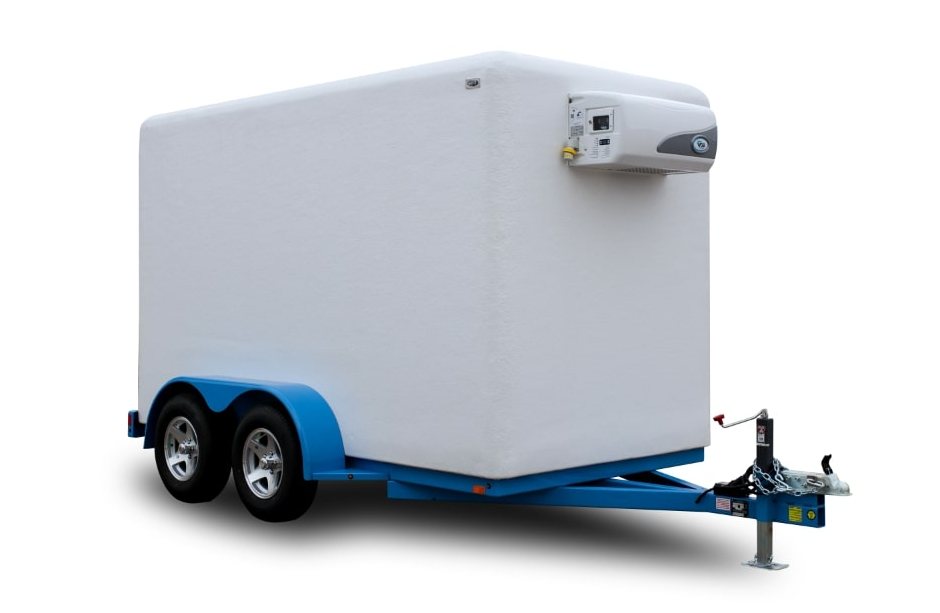
Every food operation actually runs out of the cooler, not the freezer. The day's produce and dairy live there. So do tomorrow's thawing proteins and the beverage backstock, plus every finished tray waiting for service. All of it sits inside that narrow band above freezing and below the FDA's 41 degree line. When a kitchen loses that room (or never had enough of it in the first place), the whole operation starts improvising within hours, and improvisation is how food cost dies. Our refrigeration trailer rentals restore the room. A walk in cooler arrives on wheels, plugs into a normal 120V outlet and gives the operation its working margin back the same day. So the improvising stops and the ordering calendar relaxes. The prep list goes back to being the hardest thing in the kitchen, which is how kitchens prefer it.
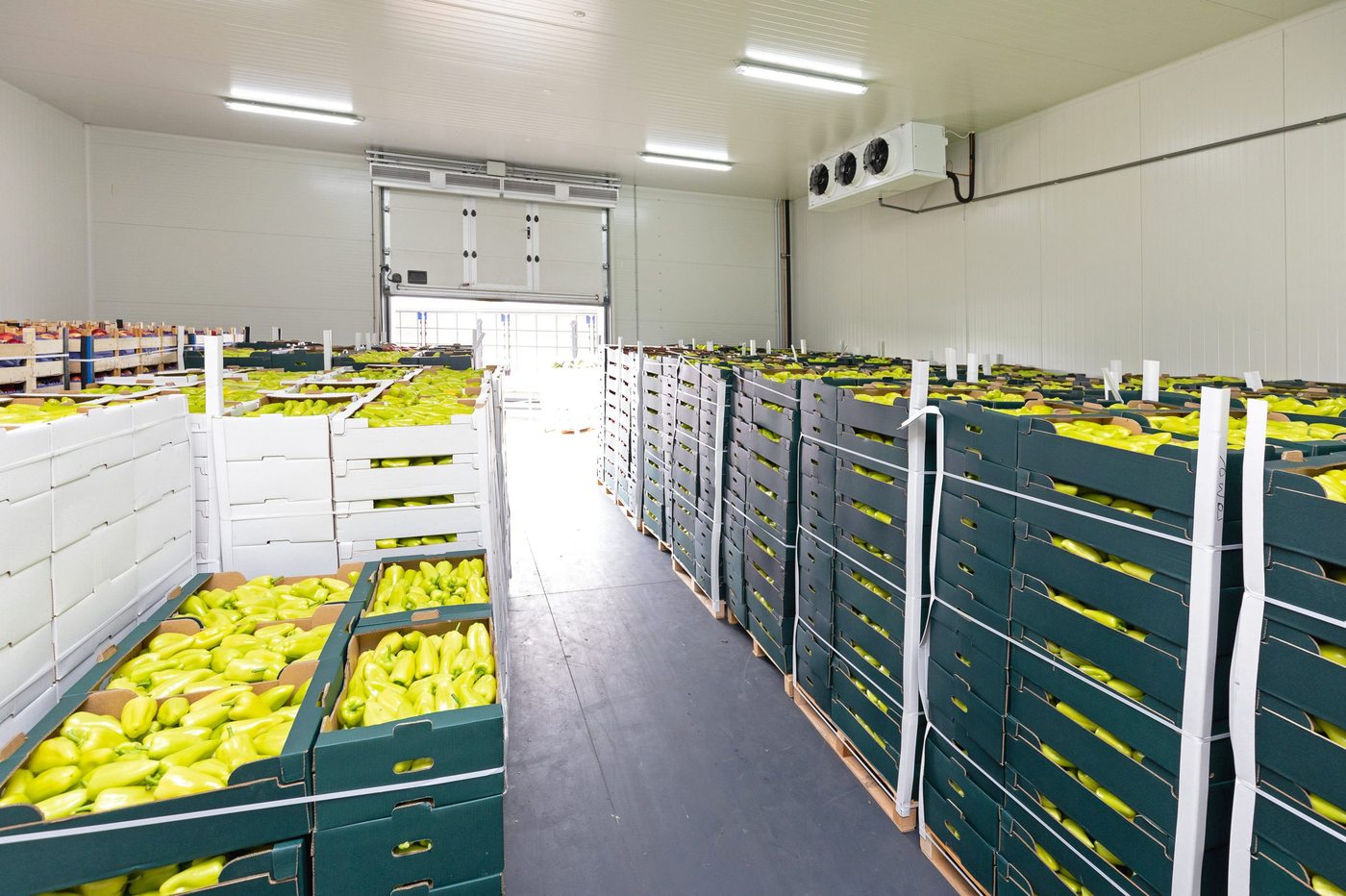
Inside: food grade surfaces, sealed floors, shelving that keeps rotation honest and lighting good enough to read a case label at 5 a.m. The refrigeration plant holds its setpoint through door traffic and summer afternoons, and the external display reports the temperature to anyone walking past. Staff treat it like a room within a day. That's the design intent, and it's also the review we hear most, usually phrased as some version of 'we forgot it was a rental.'
The engineering choice that matters most is recovery. Coolers live with constant door swings (that's simply the job description), so the plant is sized to pull the box back to temperature quickly after every single entry rather than merely holding a sealed room cold. It's the difference between equipment specced for storage and equipment specced for work. Ours is specced for work, and the crews who load it forty times a shift can tell inside a day.
"A cooler that recovers slow trains the crew to hurry, and hurrying crews break things," our refrigeration lead likes to say. We'd rather train the machine.

Farm stands, CSAs and school nutrition programs hold harvests crisp between delivery and use. Leafy product is the canary of cold storage (it wilts before anything else complains), and steady humidity in the working band keeps it presentable for days longer than an overworked kitchen cooler manages. Growers notice the difference at Saturday market, and their customers notice it in the bag on Tuesday.
The strict end of the band. Milk programs, cheese inventories and thawing proteins want their storage cold, steady and documented. The trailer supplies exactly that, day after identical day. School districts running federal meal programs point their auditors at our log and move on with their week. We've formatted that log with those exact reviews in mind since our first district client taught us what the audit actually reads.
Events buy cold drinks by the pallet and sell them by the fistful. Staging the inventory at serving temperature (instead of icing it down case by case all afternoon) converts somebody's full time chore into a short walk to the trailer, and the ice budget quietly halves. Bar managers calculate the labor savings unprompted, and we've watched more than one do it mid sentence during a site walk.
Wedding florists and event designers book coolers for the fragile 30 hours between studio build and ceremony start. Peonies and garden roses hold at their own preferred setpoint, arrangements stay intact on dedicated shelving and nobody stacks a beer case on the centerpieces. We've seen why that rule exists. Once. The florist still brings it up.
Caterers stage plated courses and prepped components in delivery order, so service runs off the trailer like a conveyor. The banquet captain gets a walkable map of the meal instead of a tetris puzzle inside the kitchen's one overworked box, and plates leave the trailer in service order because they went in that way, which sounds obvious and took the industry decades to standardize.
Clinics, biotech field programs and veterinary operations rent working cold for supplies whose labels specify refrigerated storage, CDC vaccine guidance style documentation included where the program requires it. The documentation habit transfers perfectly, and the setpoint holds regardless of what's on the shelf.

Monday: the trailer lands at the commissary, pre chilled, and the load plan goes up on the door before lunch. Tuesday and Wednesday belong to receiving. Vendors deliver straight into the box, invoices get checked against shelves instead of memory, and the chef discovers the peculiar luxury of seeing the entire event's inventory in one glance. More than one has photographed it for the group chat. Thursday: prep output moves in, staged by service order, while the kitchen's built in cooler keeps its day to day job.
Friday the trailer travels to the venue (cold travels with it, which is the entire trick) and parks behind the catering tent. Saturday is showtime. Courses come off the shelves in delivery order while the display reads correct at every glance, and the chef gets to check her watch instead of the thermometer. Sunday, our driver picks the unit up, sweeps the shelves for the forgotten half case (there's always one) and calls your office about it Monday morning.
One trailer just carried the food safety story of a 372 cover wedding from first delivery through last plate. And the following Monday it does the whole week again somewhere else. The fleet's schedule during wedding season is honestly a little smug about how well this works.

Our shelter feeds 340 odd people a day off a cooler built for a third that number. The refrigeration trailer became our produce and dairy room the day it arrived. Health inspection came through in month two and the inspector wrote one word next to it: adequate. In this work that's poetry, and I've quoted it in two grant applications since.

Four day member guest event, 27 vendors, one loading dock. The cooler trailer staged all 27 vendors' product, crudite and cut flowers included, and the catering leads stopped fighting over shelf space by breakfast on day one. It's in next year's budget already, first line, above the tent.

Pick season outruns my barn cooler every July, right on schedule. The rental holds our CSA shares crisp between Thursday harvest and Saturday pickup, runs off the barn's regular outlet and their guy checks it over while dropping the invoice. My lettuce has never looked better in 97 degree weeks.
First, don't open the door to double check. You already checked. It's dead. The cold you've got left is now inventory in its own right, so guard it like the asset it just became. Second, call us and your repair company inside the same ten minutes, in whichever order your panic prefers. The FDA Food Code gives refrigerated product a hard 4 hour window above 41 degrees before the discard conversation starts, and everything we do next is about never meeting that conversation.
Our dispatcher pulls the nearest pre chilled unit and gives you a real arrival window on that first call, stated in hours rather than adjectives. While the trailer rolls, you stage: clear a straight path and assign two people to one cart. Scribble a load order too: dairy and proteins first, produce behind them. Beverages ride last because beverages can take a joke. Box arrives, one organized pass, done. Most transfers finish inside 40 minutes with the path staged right.
"The kitchens that treat the transfer like a fire drill save everything. The ones that treat it like a debate save most of it," our dispatch lead says. She's been on well over a hundred of these calls. Take the script.
Placement follows the same script every time, and the script exists because coolers punish improvisation. The driver walks the spot first: level check, door swing clearance, circuit location, path from your receiving door. The trailer sets, levels on its jacks and connects. The plant gets verified at temperature under load (not just glanced at) and every shelf gets a shake test, because a shelf that walks under a few hundred pounds of dairy should fail at our inspection rather than yours.
Then the part clients keep mentioning in reviews: the load map. Our driver sketches your product mix onto the shelving plan, right there at the door. Dairy goes low and coldest while produce sorts by ethylene temperament. High turn items ride at reach height, and the delicate stuff stays out of the door's draft. It takes seven minutes and prevents a month's worth of small, silent losses. "Nobody ever taught me cooler geography until your driver did," a cafe owner wrote us afterward. It's the cheapest consulting we give away, and we give it away on purpose, at every single delivery.
Refrigeration is the middle of the cold chain, and the operations that run smoothest rent the whole chain from one dispatcher:
Deep reserve at sub zero, daily working stock in the cooler. Our freezer trailer rentals pair with refrigeration boxes on feeding programs, district kitchens and disaster deployments, delivered on the same truck day and serviced in the same visit.
A mobile kitchen trailer rental without cold staging is a cook line playing without a bench. Parked together, the pair passes health review as one coherent operation, and the food cost numbers behave because nothing spoils in a hot tent.
Summer feeding and event programs add a water station trailer rental so the same convoy that protects the food protects the people. One delivery window, one service schedule, one number to call.
Basecamps and disaster operations take the complete build: cold storage, kitchen, water, restroom trailers and housing. The refrigeration box is one line on that contract, and the dispatcher sequences the whole street of equipment so it lands in working order. Camp builds like these have gone up in under 48 hours when the situation demanded it, cold chain included, with the refrigeration box humming before the first crew bus arrived.
We keep a soft spot for renovation bridges because they prove what a rental does best: absorb somebody else's schedule risk without complaint. The pattern repeats across hospitals, school districts, church kitchens and restaurant groups. Demolition starts on time, more or less. Then the new walk in's delivery date moves twice, the inspection queue adds a month nobody discussed, and our trailer just keeps holding 38 degrees through all of it without an opinion. We've bridged gaps quoted at six weeks that ran seven full months. The invoice grew a line. Nothing else about the arrangement changed, including the temperature.
Our advice to anyone planning a kitchen rebuild is the advice we'd give a friend: book the bridge cooler before demolition, not after the surprise. The pre demolition transfer happens calmly on a Tuesday morning with coffee involved. The post surprise version happens at 7 p.m. with flashlights and strong language. We've catered to both moods and can confirm which one the staff prefers. And when the new equipment finally passes inspection, we schedule pickup for the following week, not the next morning, because the first week on new refrigeration deserves a safety net too.
Wedding season, festival season and harvest season all arrive holding hands, and the cooler fleet works its hardest quarter. May bookings get first pick. August callers meet the waiting list more often than we'd like, and we'd rather tell you that here, in writing, than on the phone in August with your event nine days out.
School nutrition offices call in cycles that track USDA delivery windows and the start of terms. We've learned the rhythm well enough that our dispatcher pre stages boxes near district clients in late July without being asked. Two of them now just email the word "usual" and a date, which might be our favorite purchase order format in the company's history.
Hurricane and wildfire response doesn't consult anyone's calendar. A slice of the refrigeration fleet stays emergency ready year round, pre chilled fast and paired with generators, because relief feeding operations order cold storage the way the rest of the world orders coffee. Immediately, and twice.
Late fall into winter is when smart operators schedule renovation bridges and negotiate seasonal contracts for the following year. The fleet is available, the calendar is soft and our dispatcher has time for long conversations about next summer. Use the quiet. It's a strategy, not an accident, and the clients who treat it that way spend their summers watching other people scramble.
Growth in cold storage rarely announces itself politely. A district's summer meal program picks up 2 more schools in June. A caterer lands the arts festival on the same weekend as a pair of weddings. Suddenly the walk in math is wrong by 40 percent. The graceful answer is a second box beside the first, and the graceless answer (cramming, stacking, praying) is the one we exist to prevent. "Just send a second one," is the entire procurement process, and the pair gets serviced as a single stop with one log and one invoice line per trailer.
Multi box sites also permit a discipline single boxes never can: true separation. Raw proteins in one trailer, produce and dairy in the other, allergens isolated where a program requires it, and each box holding the setpoint its cargo actually prefers instead of one compromise temperature. Food safety managers love the arrangement for the paperwork alone. Cross contamination risk drops to a diagram anyone can explain to an inspector in a sentence, and the inspector's follow up questions tend to end right there. When the surge season passes, the second box goes home. The first one carries the quiet months alone. Scaling down is the same phone call as scaling up, just cheerier.
A fair share of refrigeration work happens in places where the nearest live circuit is a rumor at best: vineyard crush pads, festival back lots, disaster staging areas and the far corner of a fairground where the vendor row happened to land this particular year. The generator package covers all of it. We pair the box with a generator sized for the compressor's startup surge (the number that actually matters, and precisely the one undersized rental packages get wrong), stake down the fuel schedule against your run hours and hand your site contact a one page runbook in plain English. From that point the trailer behaves exactly like its grid connected siblings, including the log. "Same box, louder neighbor," is how one of our techs describes generator duty, and the description holds.
Fuel anxiety is the question underneath every off grid conversation, so here's the answer we give on the phone: our service schedule owns the tank. Techs top the tank on scheduled visits, and the runbook shows your crew where the gauge lives. For the weekend nobody predicted, the after hours line picks up. Three layers, no gaps. The fuel question dies quietly. In several fire seasons of generator powered feeding support, our cold chain has broken exactly never. We intend to keep the streak alive indefinitely, and the dispatcher who tracks it considers the number a personal statistic worth defending at parties.
Refrigerated product lives closer to its failure point than frozen does. The distance between perfect and problem is a single digit numeral, so the monitoring habit matters more here than anywhere else in the fleet. Our system is layers: the external display for the everyday glance, service visit readings for the written record and optional remote monitoring for programs whose HACCP plans want a continuous curve. Each layer answers a different question, and together they answer the only one that counts: was the product in the band, the whole time, provably? Any vendor can say yes. The layered record is what lets you say it to a reviewer with your name on the form.
The log follows a format we've refined across years of audits: date, time, setpoint, actual, tech initials, corrective note if any. Boring on purpose. An insurance adjuster once told a client of ours that the binder was the fastest claim documentation he'd reviewed that quarter, and the claim (a delivery truck's failure, not ours, we're pleased to report) paid without a fight. Paper wins arguments that memory loses. We bring the paper, we keep bringing it every visit, and clients learn to stop worrying about the question entirely.
We ask new clients what they were doing before the trailer, and the answers form a quiet catalog of expensive workarounds. Ordering three deliveries a week instead of one because the cooler can't hold volume (the vendor's minimums send the invoice up 9 to 14 percent, and each extra delivery window eats a chunk of a manager's morning). Trimming wilted product every morning, weighing the bin now and then, and calling the whole ritual normal. Turning down a 273 guest booking because the kitchen's cold storage maxes out at maybe 170 covers' worth. That one stings twice, since the referral that booking would have generated dies with it. And the big one nobody budgets: the periodic purge, when something drifted warm overnight and a whole shelf goes into the bin along with its margin and half the week's mood.
Against that catalog, a monthly trailer rate stops looking like a cost and starts looking like the cheapest employee the kitchen ever hired. It shows up cold, works around the clock and never calls out. In return you get back the bookings, the bulk pricing and the trim waste, all in the first month. Our longest running cooler client, a shelter kitchen, has renewed for 31 consecutive months and counting. Their director does the ledger math for other nonprofits at conferences now, unprompted. We just deliver the trailer, keep it cold and enjoy the word of mouth.
We keep loose notes on why the phone rings, because patterns in the notes become fleet decisions later. A recent seven day stretch, lightly anonymized. Monday brought a district nutrition office ahead of a USDA commodity delivery. Midweek added a brewery taproom prepping a festival pour and a hospice kitchen mid renovation. By Friday an ag co-op was staging peaches, and a caterer called about a venue cooler she described (memorably) as decorative. Five different worlds. One identical need, held between 33 and 41 degrees, and one dispatch board treating them all as the same solvable problem.
District kitchens, university dining and hospital food service run refrigeration at a scale their buildings rarely keep up with. Summer programs and renovation seasons drive the calls, and the federal program paperwork drives the appreciation for our logs. A district that feeds 12,000 students doesn't get to improvise refrigeration, and the nutrition directors who run those programs don't want creativity from a vendor. They want the number, held, in writing.
Weddings, PGA style member tournaments, county fairs and festival vendor rows all rent working cold by the weekend. The trailer travels loaded, parks behind the service tent and turns the food safety plan into something an inspector can walk through in three minutes flat.
Harvest surges, CSA staging and farmers market prep, all seasonal, all urgent when the field decides it's time. Post harvest cooling is the whole ballgame for quality, and a cooler at the barn beats a truck ride to rented warehouse space by every measure that matters. Field heat comes out of the crop within the hour instead of after a commute across the county, and the shelf life difference reads in whole days.
Feeding operations scale in bad weeks, and refrigerated capacity has to scale the same day. Our boxes have staged fresh food at shelters through hurricane recoveries and cold snaps alike, at church halls and fairground buildings and once, memorably, on the second level of a convention center parking structure (the height clearance came down to four inches), generator powered when the grid was part of the problem, from Gulf Coast recoveries through Sierra foothill fire seasons.
Every cooler that ships runs a yard protocol first. The plant runs a full pull down cycle under observation, not just a spot check. Gaskets get the dollar bill test on all four door edges (if the bill slides out easy, the gasket's done, and it gets changed at the yard rather than diagnosed at your dock during a delivery you were counting on). Shelving gets torqued and drains get flushed. The interior gets a full sanitize, and the display gets calibrated against a reference thermometer our shop treats like a family heirloom, because a display that lies is worse than no display at all.
Then the box pre chills overnight before its delivery slot, because arriving at temperature buys you hours of product safety you'd otherwise spend waiting on a pull down. None of this shows up on your invoice as a line item, and every bit of it shows up in how the rental behaves in week six of a hot summer. "Ship it like it's going to your mother's restaurant," is the yard manager's standing instruction, and we've never needed a second slogan.
New clients arrive with stories, and the stories rhyme. A bargain trailer that arrived warm and took nine hours to pull down while the product waited in a box truck. Gaskets so tired the compressor ran flat out through all 31 days of July and still lost the band by 3 p.m. A rental company whose after hours number rang to a voicemail box that was, in the client's words, emotionally full. And the recurring classic: no temperature log at all, discovered the week an auditor asked for one.
We built this program as the point by point rebuttal. Pre chilled delivery, verified under load. Gaskets replaced at the yard on a schedule, not at your dock during a crisis. A dispatch desk that answers after hours with a human who can actually move a truck. And the log, always the log, maintained by our techs so your file grows a page every visit without anyone on your staff lifting a pen. None of this is exotic. It's just the unglamorous baseline done every single time, which in the rental business turns out to be the rarest feature of all.
We'll size the box, set the band for your product mix and have working cold storage at your door with the log book already started.